Europe's biomethane production grows by a billion cubic metres in a year
USD 21,62
Popular
Biomethane production in Europe rose by a billion cubic metres over the past year, according to industry association CZ Biom. The bulk of this growth came from just three countries — Italy, France and Germany — which remain the undisputed leaders of the market.
According to CZ Biom, Europe's installed biomethane production capacity can now supply almost as much gas as the EU imports in liquefied natural gas from Qatar — 10.5 billion cubic metres in 2025. "The growth of European biomethane production by a billion cubic metres in just one year proves that, given the right conditions, the sector can quickly and flexibly support Europe's energy self-sufficiency and independence," said Adam Moravec, director of CZ Biom. According to him, biomethane is a domestically produced, environmentally friendly substitute for imported natural gas: the more of it is produced, the less money flows abroad.
The top three and overall growth rates
The biomethane sector as a whole is growing on par with other renewable energy sources: annual growth reached 16%, while the average annual growth rate of installed capacity over the past 15 years has stood at 21%. By comparison, Europe's installed solar capacity grew by 17.5% in 2024–2025, while wind capacity grew by less than 5%.
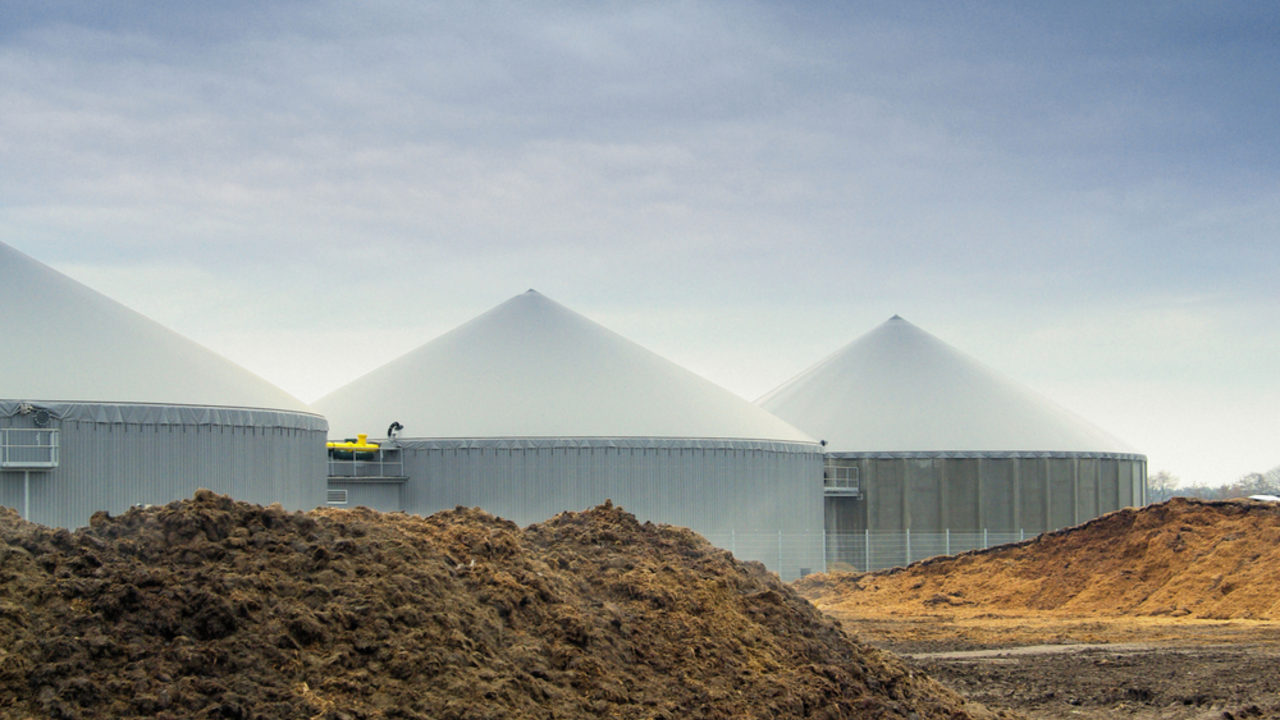
Biomethane is produced directly at biogas plants by purifying biogas using special membranes — a purely mechanical process that requires no chemicals. The resulting gas has properties identical to natural gas and can be fed directly into the gas distribution network or used as fuel for bioCNG vehicles.
As of mid-Q2 2026, the three largest biomethane markets in Europe by installed capacity are Italy, France and Germany. Italy has made the most striking leap: its capacity grew from 0.25 billion cubic metres in 2022 to roughly 1.6 billion cubic metres in 2026, thanks to a system of competitive auctions with direct subsidies. France leads in the number of plants — currently 829 are in operation, with a combined capacity of around 1.5 billion cubic metres, driven by differentiated purchase tariffs that encourage the development of small farm-based installations; more than 80% of French plants use agricultural residues as feedstock. Germany holds its leading position thanks to Europe's second-largest network of plants (282 facilities), with an average capacity above the European mean.
According to an IRENA report, global installed bioenergy capacity exceeded 155 GW in 2025, of which Europe accounted for 44 GW — nearly a third of the world total.
Czechia awaits its first auctions
For Czechia, which has one of the densest networks of biogas plants in Central Europe, this data is especially relevant, notes CZ Biom. Most local plants generate electricity and heat through cogeneration units, supporting local communities, and the state is interested in converting economically viable plants to biomethane production as quickly as possible — a move that would allow the gas sector to be "greened" without costly restructuring of existing infrastructure.
The Czech market is now awaiting the results of its first biomethane production auction, for which applications were accepted until the end of July. Currently, 13 biomethane plants operate in the country, having produced 0.017 billion cubic metres of gas in 2025.
"Our country has a huge advantage in the form of hundreds of stable biogas plants, some of which could be efficiently converted to biomethane production. However, the previous support conditions were neither motivating enough nor predictable — only three producers took advantage of them, and Czechia has fallen behind in biomethane development," said Adam Moravec. According to him, announcing a few rounds of auctions is not enough for stable development — without sustainable conditions, the effect will only be temporary.
The association also warns that plants for which conversion to biomethane is economically or technically unfeasible cannot be ignored. The state offers support for modernising ageing biogas installations, but its current terms, according to CZ Biom's assessment, are illogical and push operators toward inefficient solutions. If the parameters of modernisation support are not changed, Czechia risks irretrievably losing a significant part of its biogas infrastructure — the association has already recorded 6 shut-down biogas plants.
Read also: Transferring money from Czechia abroad: Wise, Revolut, bank
Source: ekolist.cz