Putin not ready for peace, US negotiators admit in Miami talks
USD 21,79
Popular
US negotiators admitted to a Ukrainian delegation in Miami last week that Vladimir Putin is not ready to negotiate an end to the war in Ukraine. Two people familiar with the meeting told the agency.
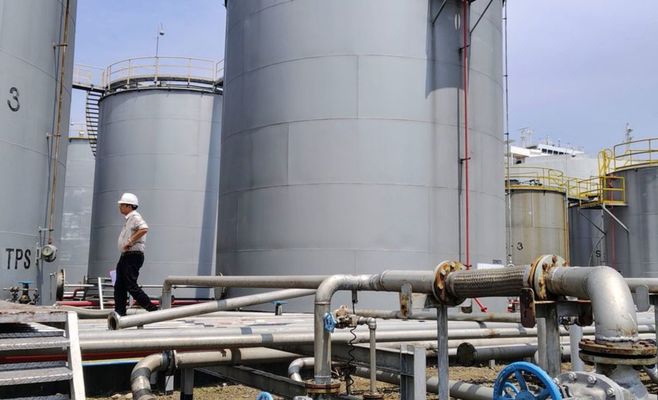
Paradoxically, it is the deal with Putin announced by Donald Trump on Friday that is supposed to bring Moscow back to the negotiating table. Under the agreement, Russia is to supply up to five million tonnes of diesel fuel to the United States and other parts of the world.
Trump sees it differently
On Monday Trump said that Putin wants to end the war more than Volodymyr Zelensky does: “I think Putin wants to make a deal more than Zelensky. Zelensky could have ended this war many times. Many, many times. But he decided not to. Very hard.”
A third source told the agency that the US informed the Ukrainians that the diesel deal could “soften” Moscow’s position, partly because it “sends a signal: Trump is open to cooperation” with Russia. Yet Trump himself previously told Fox News: “If you want to win, you can’t buy oil from Russia.”
A source close to the Kremlin told the agency that Putin will return to the negotiating table only after the Russian army takes the rest of Donbas — Ukraine’s Donetsk and Luhansk regions — which could be presented in Russia as a victory. Ukraine rejects territorial concessions, and it is unclear when, or even whether, Russia will be able to take Donbas: the US Institute for the Study of War wrote back in May that Moscow may not have the strength for it.
The deal has been criticised in both the US and Europe
The agreement has drawn a wave of criticism not only in the US, where even Republicans have criticised it, but also in other countries, including Czechia. The head of the White House defended the deal, among other things, by pointing out that the EU, too, had bought Russian oil. “I made the right decision for the American people,” he wrote on the Truth Social network.
Trump insists the deal will bring down diesel prices on the markets. Experts are not so sure. “The announced volumes are relatively small on the scale of the global market, and the main problem is a lack of refining capacity, not of oil itself,” Deloitte analyst David Marek told the Czech News Agency (ČTK). According to him, any long-term price drop depends on how the situation in the Middle East develops and on the actual volume of supplies from Russia.
Dan Pickering, founder and chief investment officer of Pickering Energy Partners, told CNN that it is “more of a political move than a fundamental change in the situation”.
Source: novinky.cz