How many people came to Letná in Prague: how crowds are counted
USD 22,18
Popular
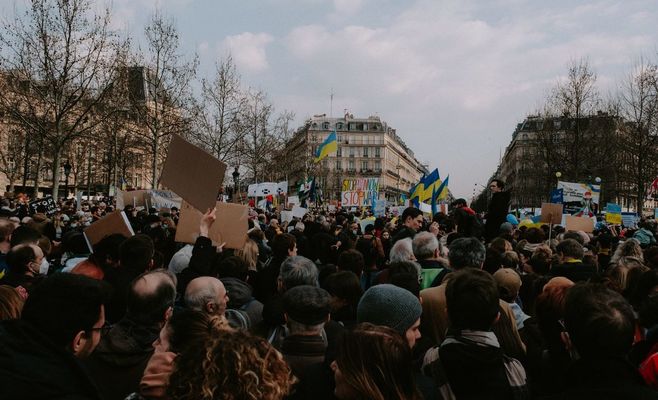
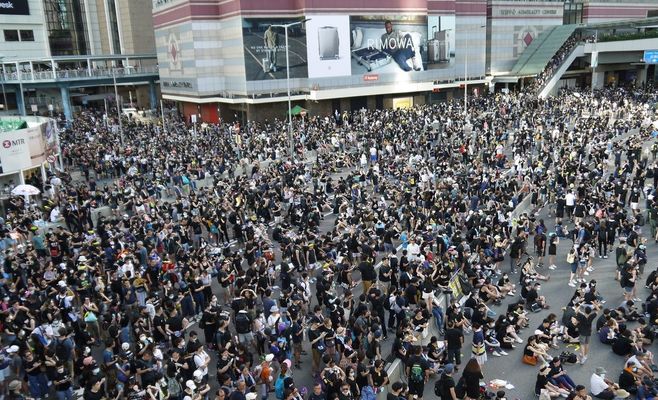
Organizers of the demonstration in Prague said that 350,000–450,000 people came to the Letná plain, and after it ended they put the final figure at “around 400,000.” An independent estimate based on photos and video from the site gave a far more modest range: from 78,000 to 175,000 people at one moment. The police did not give an overall number.
At 14:43 the police posted a 15-second drone clip on the social network X: the plain from the stage to the Hradčanská station, covered in people. The police added that new participants were still arriving at Letná, but gave no estimate. According to police spokeswoman Eva Kropáčová, the police do not publish crowd figures and leave that to the organizers.
How crowds are counted
The main method was devised in 1967 by American journalism professor Herbert Jacobs: estimate the area the crowd occupies and multiply it by the density of people. For reference, one person stands comfortably per square meter, two at an ordinary demonstration, at four participants are already “packed in,” and above five a dangerous crush begins.
The area of the main part of Letná is about 92,500 square meters, according to the land registry office. Density was measured from aerial photos by counting heads by hand in randomly chosen 4-by-4-meter sectors. Near the stage it was 2–3 people per square meter, in the first hundred meters from it 1.5–2.5, in the northern strip by Milady Horákové street 1–2, at the western edge of the plain 0.7–1.5, and in the southern part, in the park, no higher than 0.5.
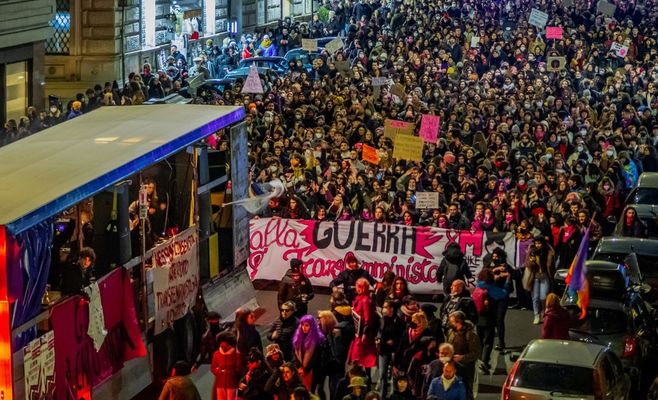
To put it visually: about 40,000 people are enough to make the plain look full, and when ten times as many come, the difference is almost impossible to see in some shots.
What the calculations showed
Multiplying area by density gave 108,000–175,000 people. A manual head count gave 90,000–106,000, and neural networks 78,000–130,000. The algorithms matched the manual count well where the images were sharp, but the farther from the lens, the more they were simply guessing. Errors are added by children who may be hidden behind adults, face masks, flags and banners.
These figures are a snapshot of a single moment, when frames from the police drone and from the tower behind the stage were available. How people arrived and left over several hours is unknown, so the total number of participants could have been noticeably higher.
How the estimates could be checked
Mobile operators can count most accurately: in 2019 T-Mobile produced such an estimate from the number of devices connected to its towers. This time no such data exists yet. Another option is a systematic police drone flight over the crowd, sector by sector: such video could be stitched into a high-resolution image, and neural networks would then give a far more accurate count.
Around Prague guide on the topic: Mobile operators in Czechia: which one to choose in 2026
Around Prague, based on reporting by seznamzpravy.cz