Science & Space By

A Cave Fossil in South Africa Suggests Homo Erectus Is 200,000 Years Older
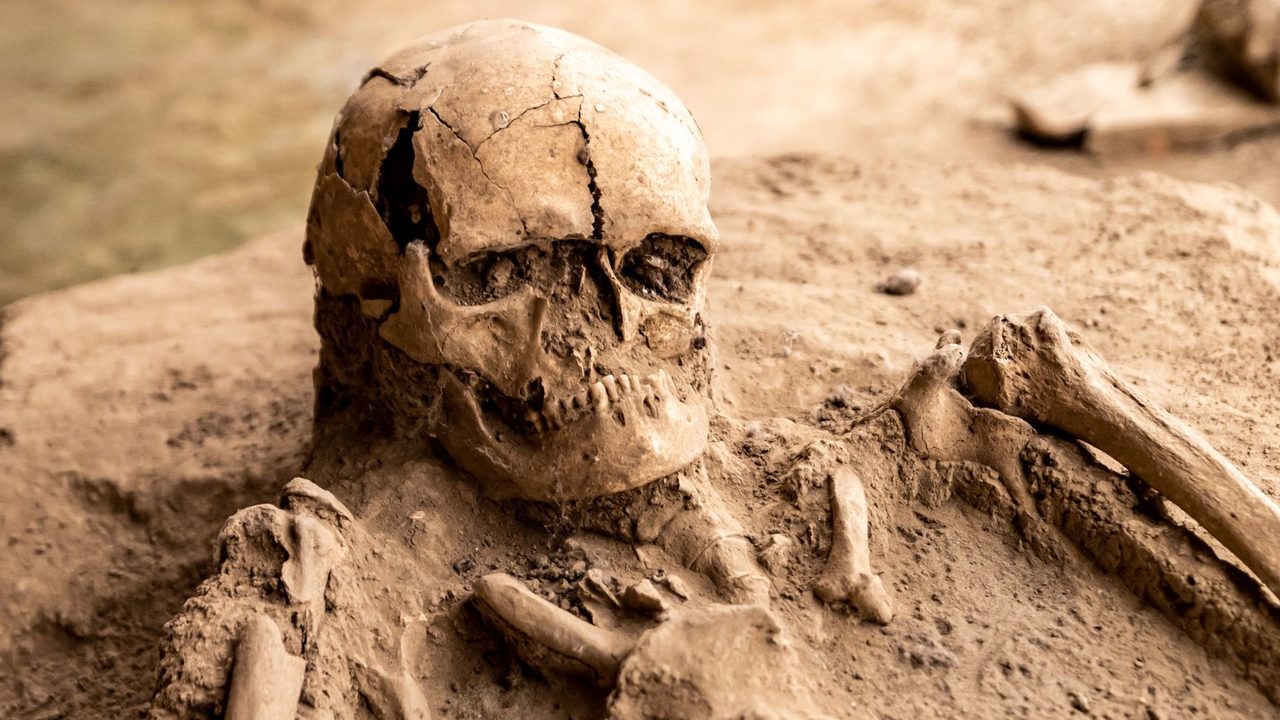
A newly analyzed fossil from a cave site in South Africa suggests that Homo erectus, an early human ancestor, appeared in southern Africa about 2 million years ago. That is roughly 200,000 years earlier than the species' emergence was previously placed, according to ScienceAlert's report on the study, which appeared in the journal Annals of Human Biology.

The work was carried out by an international team and centers on Drimolen Main Quarry near Johannesburg, part of the area known as the Cradle of Humankind. The same study also describes a large set of fossils from a more distant relative, Paranthropus robustus, offering a rare look at two ancient species that lived side by side.

What the researchers found

The new specimen, catalogued as DNH 127, is an adult fossil attributed to Homo erectus. Jesse Martin, an archaeologist at La Trobe University in Australia, said it provides further confirmation that the species first appeared in southern Africa 2 million years ago.

The earlier date is not entirely new. A skull fragment known as DNH 134 had already been dated to the same period. But that fossil came from a young child, which makes comparisons with adults difficult. An adult specimen from the same time gives researchers a more direct point of comparison.

In total, the team analyzed 18 fossils. Species were identified from the physical characteristics of the bones, while geological methods, including radioactive dating, were used to estimate their ages. Besides the single Homo erectus fossil, the researchers linked 14 fossils to Paranthropus robustus.

A second species that outnumbered our ancestors

Paranthropus robustus sits farther from humans on the family tree than Homo erectus does. It had heavy jaws and large teeth suited to processing hard, tough food. According to the report, while Homo erectus was developing larger brains and smaller teeth, the teeth of Paranthropus robustus were growing bigger and its chewing muscles stronger, as the shape of its jaws shows.

Martin said the two species shared the same landscape and are both preserved in the Drimolen cave. Homo erectus and the lineage leading to modern people eventually prevailed, he said, but 2 million years ago Paranthropus robustus outnumbered Homo erectus at the site by more than 10 to one. He described our ancestors at that time as looking like an outside, long-odds chance to survive.

The Paranthropus robustus fossils also support the idea that the species was changing over time. Specimens found at other sites point to larger, stronger individuals, a sign of that evolution. The new fossils revealed jaw features not seen before and several areas of variation. Martin said the large number of fossils from Drimolen allows an unprecedented look at the small-scale evolutionary changes that shaped human ancestors.

Why it matters

Homo erectus, whose name translates to upright human, was the first hominin to show signs of adapting to life on the ground, with longer legs and shorter arms. Dating the species correctly therefore matters for understanding how and where our own lineage took shape.

The study also adds detail to a picture scientists already knew was complicated: ancient human ancestry was not a single line, but involved several species overlapping in different places. This research adds clarity for two of them in the Drimolen region.

What remains uncertain

ScienceAlert noted that the fossils involved are relatively small fragments, and that further investigation will be needed to confirm the presence of Homo erectus and Paranthropus robustus this far back in time. The site has produced many fossils, and more are likely to be uncovered. Those finds may help explain why the Paranthropus robustus line eventually died out, while Homo erectus likely led on to modern humans.

Around Prague, based on reporting by ScienceAlert
Share: Telegram WhatsApp

More science news

A Giant Planet Vanished From NASA's View, and a Hidden Neighbor Is Why
A giant planet about 1,000 light years away has dropped out of sight in data from NASA's TESS space telescope, and astronomers now think a hidden neighbor is the reason, according to Universe Today. T
Antarctic Ozone Hole Swells to Its Biggest Size in a Decade, NASA Says
The Antarctic ozone hole grew in 2026 to a size scientists have not seen in a decade, but NASA and NOAA say the ozone layer is still healing and remains on track to recover later this century, accordi
SpaceX Plans First Full Starship Recovery With Back-to-Back Catches on Nov. 13
SpaceX plans to launch Starship Flight 15 on Friday, Nov. 13, in an attempt to bring both stages of its giant rocket back to the launch pad, Space.com reported. If it works, it would be the first full
Two Remote Pacific Atolls Teem With Sharks and Turtles, a Rare Look at Intact Reefs
Scientists who surveyed two far-flung coral atolls in the Pacific say the sites hold some of the most intact ocean ecosystems left in the region, according to ScienceAlert's report on a new study in F
Scotland's Rare Atlantic Rainforest Wins Nearly £6 Million Lottery Grant
A five-year project to restore Scotland's rare Atlantic rainforest has been awarded almost £6 million from the National Lottery Heritage Fund, the BBC reported. The money will pay for three community
Physicists Find a Math Fix for Time-Travel Paradoxes, With a Catch
Two physicists at the University of New Hampshire have built a gravity model in which time can only run forward, which would rule out looping back into your own past. The catch, according to ScienceAl

Related news

A giant planet about 1,000 light years away has dropped out of sight in data from NASA's TESS space telescope, and astronomers now think a hidden neighbor is the reason, according to Universe Today. The planet, a hot Jupiter named TOI-2535b
The Antarctic ozone hole grew in 2026 to a size scientists have not seen in a decade, but NASA and NOAA say the ozone layer is still healing and remains on track to recover later this century, according to ScienceDaily. The cause was weathe
SpaceX plans to launch Starship Flight 15 on Friday, Nov. 13, in an attempt to bring both stages of its giant rocket back to the launch pad, Space.com reported. If it works, it would be the first full recovery of an orbital rocket in histor
Scientists who surveyed two far-flung coral atolls in the Pacific say the sites hold some of the most intact ocean ecosystems left in the region, according to ScienceAlert's report on a new study in Frontiers in Marine Science. The atolls,
A five-year project to restore Scotland's rare Atlantic rainforest has been awarded almost £6 million from the National Lottery Heritage Fund, the BBC reported. The money will pay for three community hubs, and for training and work for loca
Two physicists at the University of New Hampshire have built a gravity model in which time can only run forward, which would rule out looping back into your own past. The catch, according to ScienceAlert, is that the model is unstable in it
Earth has a temporary new companion: a tiny asteroid called 2026 QQ8 that is circling the planet as a so-called mini-moon. According to Meteored's YourWeather, the Minor Planet Center, the clearinghouse for small-body observations run under
The dire wolf was not brought back from extinction, two U.S. scientists argue in a new paper. According to ScienceAlert, the animals that biotech company Colossal Biosciences announced in 2025 were gray wolves with a handful of dire wolf tr
Astronomers have made the first direct measurement of the large-scale structure of cosmic hydrogen, the gas that fed the first stars and galaxies, according to Universe Today. The team from the MeerKLASS Collaboration says the hydrogen foll
A giant planet that astronomers had tracked for seven years has dropped out of sight, and a new study says the cause is a second, unseen planet pulling it off course. The world, called TOI-2535 b, is about 1,000 light-years away. According
A team of Japanese astronomers has found a jet of cold molecular gas stretching 26 light-years from LMC P3, a strong gamma-ray source in the Large Magellanic Cloud, according to Universe Today. The finding strengthens the case that the obje
Astronomers at Johns Hopkins University say one of the James Webb Space Telescope's puzzling Little Red Dots could have started life as a primordial black hole, a type of black hole that would have formed in the first moments after the Big