Astronomers Map Cosmic Hydrogen From 4.5 Billion Years Ago in a First
USD 21,70
Popular
Astronomers have made the first direct measurement of the large-scale structure of cosmic hydrogen, the gas that fed the first stars and galaxies, according to Universe Today. The team from the MeerKLASS Collaboration says the hydrogen follows the same web-like pattern as the rest of the Universe's matter, a result published in the Monthly Notices of the Royal Astronomical Society.
The finding is a proof of concept for a way of mapping the cosmos that could help answer some of the biggest open questions in cosmology.
How the team found a faint signal
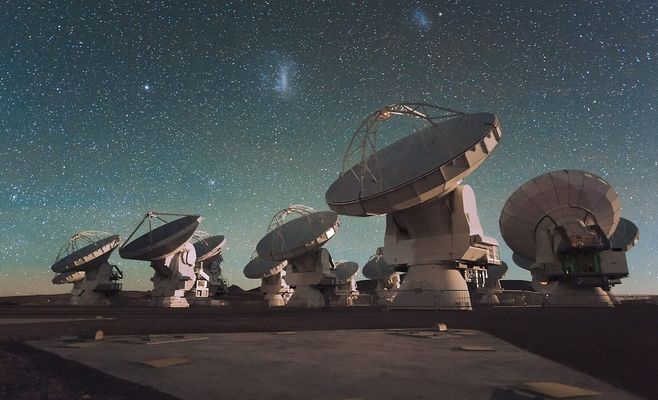
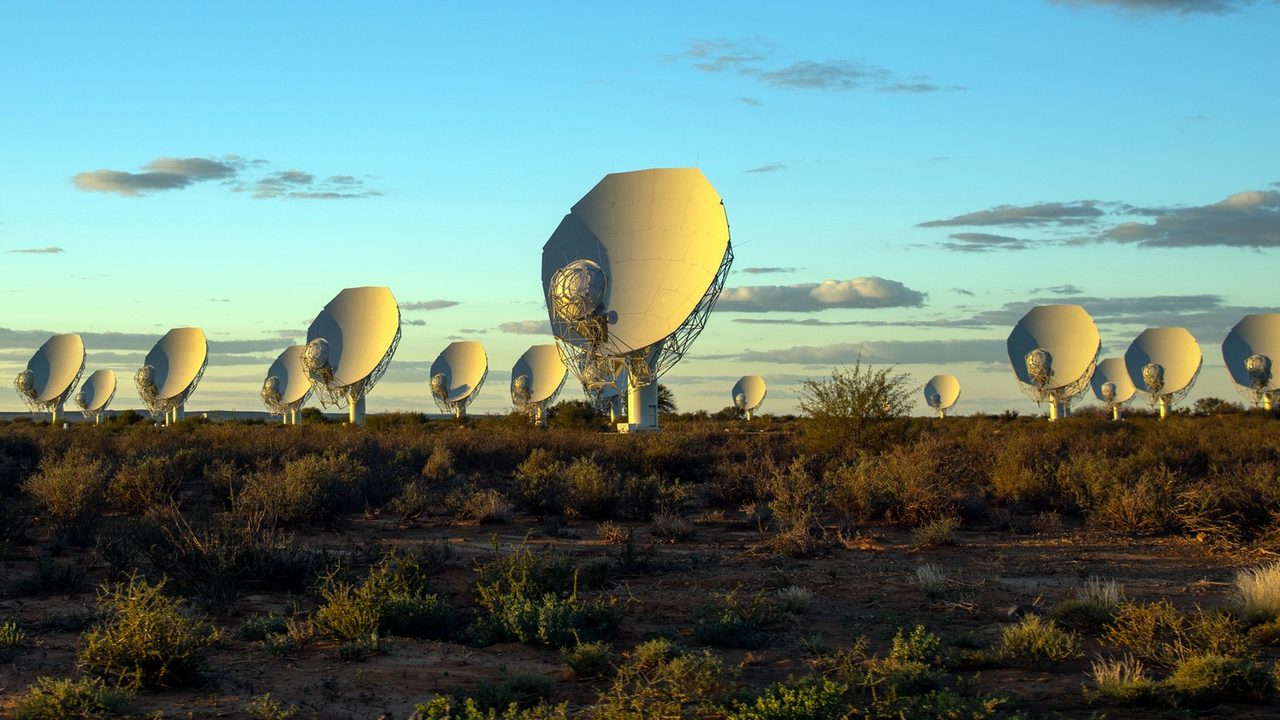
MeerKLASS, short for the MeerKAT Large Area Synoptic Survey, is an international group of astronomers that uses the MeerKAT radio telescope for cosmological surveys. Its method, known as HI intensity mapping or 21-cm intensity mapping, picks up the combined radio emission of many galaxies across large patches of sky. That makes it possible to build 3D maps showing how matter is spread through the cosmic web.
The hard part is that the hydrogen signal is buried. Other emissions from the sky, known as foreground noise, are about 10,000 times stronger. To pull the signal out, the team ran each of MeerKAT's 64 dishes as its own independent telescope instead of combining them into a single interferometer. Universe Today describes this as an entirely new observing mode for MeerKAT. It gave up sharp angular resolution in exchange for very high survey speed.
The researchers analyzed MeerKAT data covering about 250 square degrees of sky. They detected hydrogen signal that originated 4.5 billion years ago, or 9 billion years after the Big Bang. Many independent maps made from different dishes and observing times were cross-compared, which suppressed quirks of individual instruments and strengthened the real structure in the data.
What the result shows
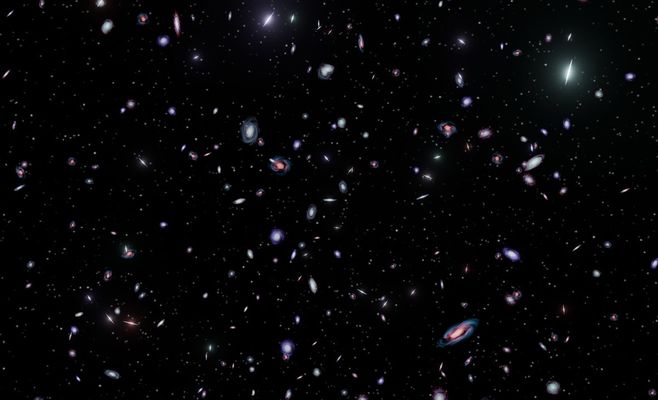
The maps show that cosmic hydrogen mirrors the large-scale structure of the cosmic web. Hydrogen was the only element in the Universe during the first few hundred million years after the Big Bang, a period known as the Cosmic Dark Ages. It remains the most abundant element today and provided the raw material for stars, galaxies and the web itself.
Dr. Steven Cunnington led development of the analysis pipeline that made the mapping possible and has co-led a MeerKLASS working group since 2015. In a University of Portsmouth release, he said the result is the culmination of a journey that began when he started his doctorate there more than a decade ago, and that many of the challenges addressed in the work shaped his research career.
Why it matters for cosmology
According to the report, this kind of hydrogen map can be used to narrow down some of the most pressing questions in cosmology: the expansion rate of the cosmos, the influence of dark energy and the distribution of dark matter. The study is a first measurement rather than the answer to any of those questions, but it shows that the technique works.
Professor Mário Santos of the University of the Western Cape, principal investigator of MeerKLASS, called the result a milestone in establishing 21-cm intensity mapping as a new tool for cosmology. He said it took a decade of patient work by researchers in seven countries on three continents, many of them early-career scientists. He also credited the South African Radio Astronomy Observatory, which built and operates MeerKAT. In his words, the project is “a reminder that science at this level is a large collaborative effort.”
Read next
Hydrogen Glow Pushed Gas Away From Baby Galaxies, Simulations Suggest
Mars Volcano Region Leaks Hydrogen Chloride, Hinting at a Hot Interior
Telescope Finds a 26-Light-Year Gas Jet, Hinting at a Black Hole Next Door
Around Prague, based on reporting by Universe Today
Cover photo: Square Kilometre Array Organisation (SKAO) / South African R / Wikimedia Commons, CC BY 3.0, cropped