Science & Space By

Bennu Asteroid Sample Reveals Huge Isotope Gap Inside One Molecule
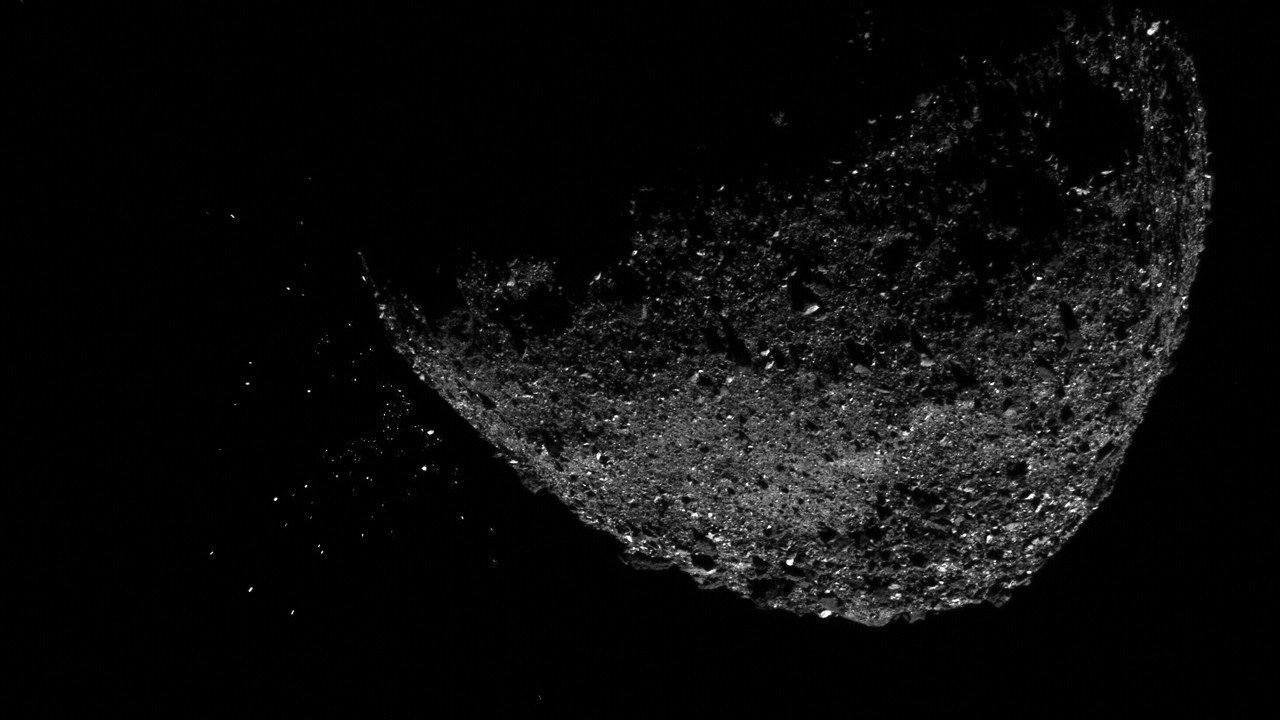
A new study of asteroid Bennu's sample has turned up a surprise inside a single molecule, according to Universe Today. Researchers at Penn State measured the carbon in a molecule called beta-alanine from Bennu and from the Murchison meteorite, and they found a large difference between two neighboring atom positions in the same molecule.

The work, published in Nature Communications Earth and Environment, offers a more detailed look at how the building blocks of life may have formed in the early Solar System.

What the researchers did

NASA's OSIRIS-REx mission returned the Bennu sample in 2023. Earlier examination of the material found 14 of the 20 amino acids that make up proteins in Earth life, along with four of the essential building blocks for DNA and RNA.

In the new study, the team compared one molecule, beta-alanine, in Bennu's material with the same molecule from the Murchison meteorite. Beta-alanine is not used by Earth organisms to build proteins, but it does play other roles in terrestrial life. Finding it in rocks from space is interesting because it can offer insight into prebiotic chemistry and the conditions in the very early Solar System.

The lead author is Ophélie Mcintosh, a former postdoctoral researcher in Penn State's Department of Geosciences. The paper is titled “Nitrogen and intramolecular carbon isotopic measurements of β-alanine in samples from asteroid Bennu and the Murchison meteorite.”

A finer isotopic fingerprint

Most earlier work on amino acids in meteorites and asteroid samples has focused on what is present and how much. Mcintosh said in a press release that the question of how these molecules form is quite new. Rather than comparing only overall compositions, the team measured differences among carbon atoms within the same molecule, a level of detail Universe Today described as new.

Two instruments made this possible. One is a device that exists only at Penn State, called pico-CSIA, which measures isotopic averages in extremely small samples. The other is a modified gas chromatography-Orbitrap mass spectrometer, which measured the composition at specific positions inside beta-alanine molecules.

Mcintosh said this position-specific information gives a much more detailed isotopic fingerprint, one that can help tell apart possible formation pathways. Christopher House, a Penn State professor of geosciences and a co-author, said isotope ratios act as a measurable tag that can link molecules to particular reservoirs or processes. In this study, he said, the isotopes gave clues to an older history for specific atoms in a molecule.

Katherine Freeman, a Penn State professor of geosciences, said she was “genuinely gobsmacked” by the enormous isotope difference between two neighboring atom positions in the same molecule.

Why it matters

The finding does not show that life exists elsewhere. Its importance is in what it adds to the picture of where life's ingredients come from. Universe Today noted that discoveries of amino acids on asteroids and comets suggest that some precursors of life could be widespread in the Solar System, and possibly in other planetary systems.

Bennu's sample is especially valuable because it was collected and kept in a sterile capsule before being opened under laboratory conditions. The authors write that it offers a chance to study amino acids in pristine material unaffected by contamination on Earth.

Scientists hoped that new laboratory techniques would be developed in the years between planning the mission and getting the sample in hand. In this case, Universe Today reported, that is what happened.

Around Prague, based on reporting by Universe Today

Cover photo: NASA/Goddard/University of Arizona/Lockheed Martin / Wikimedia Commons (public domain)

Share: Telegram WhatsApp

More science news

Space Station Laser Trap Chills Atoms to 10 Picokelvins, a Record
Scientists have set a new record for the coldest temperature ever recorded, according to Live Science: 10 picokelvins, barely above absolute zero. The measurement came from an experiment aboard China'
280 Ice Age Carvings Found in Spanish Cave Tourists Walked Past for Decades
Researchers have documented 280 Paleolithic motifs engraved on the walls of Cova de la Font Major, a cave in Catalonia, northeastern Spain, ScienceAlert reported. The figures sat in plain view for dec
Starship Heads to Orbit Nov. 13 With 26 Starlink Satellites You Might See
SpaceX is aiming to launch its Starship megarocket on its 15th flight test as soon as Friday, Nov. 13, and the mission may give people across much of the United States something to look up for. Space.
Physicists Beat a Quantum Fuzziness Limit by Using Hindsight, Study Claims
A team of physicists led by researchers at Shanxi University in China says it has found a way to get around a quantum measurement limit that has stood since 1927, by using information from both before
Star That Faked 27 Supernovas Is Being Fed On by a Hidden Black Hole or Neutron Star
A star that has imitated a supernova 27 times and counting is being drained by an unseen companion, either a black hole or a neutron star, according to Space.com. NASA's Chandra X-ray Observatory caug
Hubble Images Cosmic Lenses That Could Test a Dark Matter Theory
NASA has released a gallery of gravitational lenses photographed by the Hubble Space Telescope, and the images are meant to prepare the ground for the new Nancy Grace Roman Space Telescope. Astronomer

Related news

Scientists have set a new record for the coldest temperature ever recorded, according to Live Science: 10 picokelvins, barely above absolute zero. The measurement came from an experiment aboard China's Tiangong space station, where a laser
Researchers have documented 280 Paleolithic motifs engraved on the walls of Cova de la Font Major, a cave in Catalonia, northeastern Spain, ScienceAlert reported. The figures sat in plain view for decades while cave enthusiasts, treasure hu
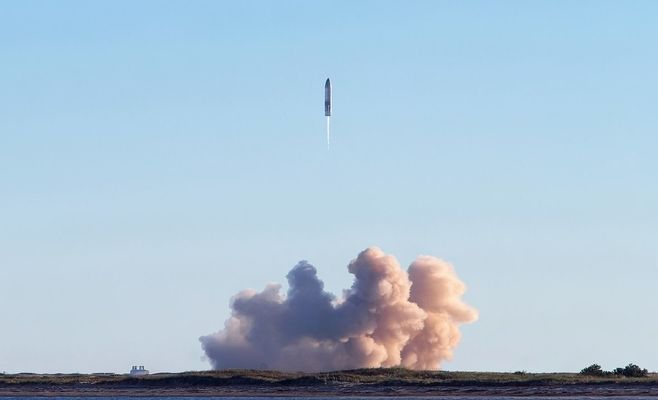
SpaceX is aiming to launch its Starship megarocket on its 15th flight test as soon as Friday, Nov. 13, and the mission may give people across much of the United States something to look up for. Space.com reported that the upper stage, calle
A team of physicists led by researchers at Shanxi University in China says it has found a way to get around a quantum measurement limit that has stood since 1927, by using information from both before and after the moment being measured, Sc
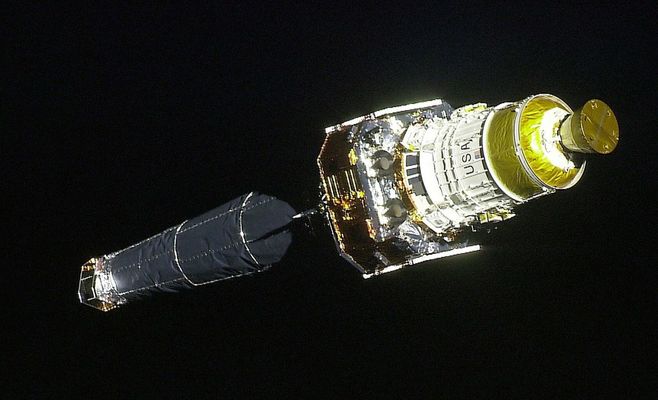
A star that has imitated a supernova 27 times and counting is being drained by an unseen companion, either a black hole or a neutron star, according to Space.com. NASA's Chandra X-ray Observatory caught the telltale X-rays that point to the
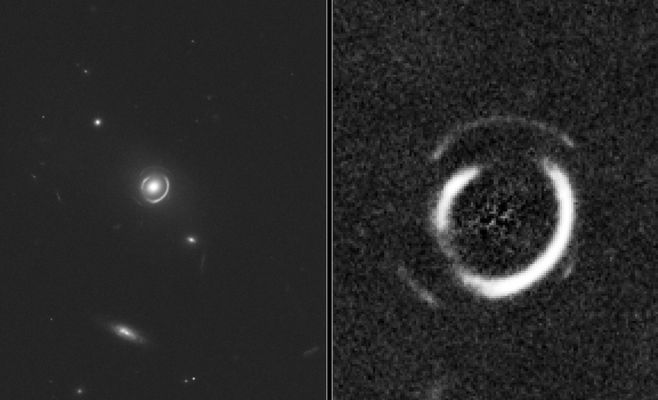
NASA has released a gallery of gravitational lenses photographed by the Hubble Space Telescope, and the images are meant to prepare the ground for the new Nancy Grace Roman Space Telescope. Astronomers plan to use them to weigh the invisibl
A committee led by 2004 Nobel laureate in physics David Gross has confirmed that computer code delivered by OpenAI proves pure Yang-Mills theory, the version involving only gluons, exists in four dimensions, according to the Pasquale Pillit
Black holes can fire narrow streams of superheated material into space, and astrophysicists may now have a way to see one coming. A new study in The Astrophysical Journal found that in four black hole systems, telltale changes in X-ray ligh
Researchers at the University of Waterloo in Canada have developed a coating made entirely from plant cellulose that can stand in for the polyethylene lining found inside paper coffee cups, ScienceAlert reported. The team says it could make
The European Space Agency's Euclid mission has published its first major batch of data, and it contains more than 900m galaxies, The Guardian reported. The release also includes about 15,000 potential cases of strong gravitational lensing,
Maritime archaeologists working on a 17th-century shipwreck off the coast of Sweden have recovered the rear half of an unusually fine man's shoe and two metal rings once used as currency in the transatlantic slave trade, Live Science report
Earth may have made much of its own water while it was still forming, instead of relying on icy comets or meteorites to deliver it, according to new research in Nature Geoscience reported by ScienceDaily. Lab experiments suggest that rocky