Committee Confirms AI-Built Proof That Yang-Mills Theory Exists, Not the Mass Gap
USD 22,01
Popular
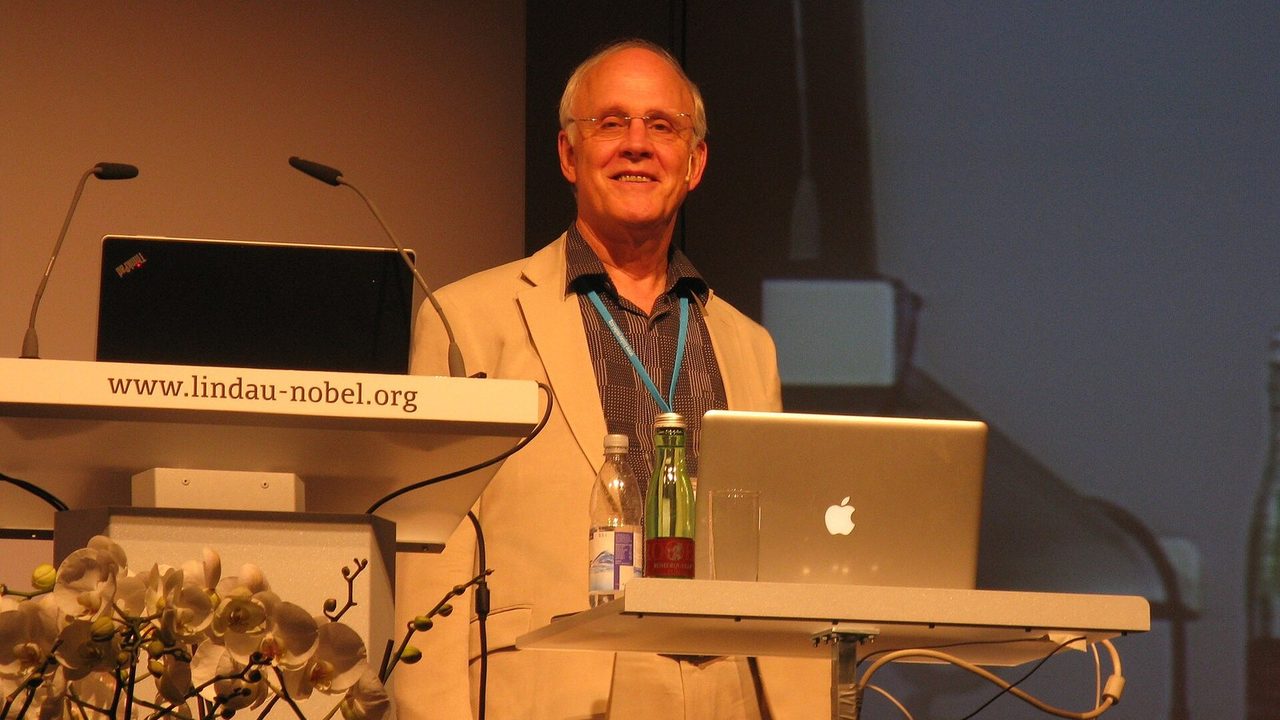
A committee led by 2004 Nobel laureate in physics David Gross has confirmed that computer code delivered by OpenAI proves pure Yang-Mills theory, the version involving only gluons, exists in four dimensions, according to the Pasquale Pillitteri news site. The committee published the code and a validation document on Nov. 10.
The result does not win the Clay Mathematics Institute's $1 million prize. The second half of that problem, the so-called mass gap, has not been proved, and OpenAI does not claim otherwise, the site reported.
The key figures behind the check
- Four dimensions: the proof covers a theory of three space dimensions plus time, which physicists have long used but had lacked a rigorous mathematical definition for, according to Harvard physicist and committee member Michael Douglas, as reported by Scientific American.
- 9,470 modules: the number compiled in a clean rebuild of the code on a Mac with an Apple chip. It took about 184 minutes and finished without errors.
- 250,319 declarations: the inventory the committee went through. It found no axioms added by the project and no placeholder marking an unfinished proof.
- 17 main results: all rest only on three standard foundational axioms.
- $1 million: the prize the Clay Mathematics Institute attached in 2000 to each of seven problems, including Yang-Mills and the mass gap, which the institute still lists as unsolved.
What was actually proved
Yang-Mills theory was formulated in 1954 by physicists Chen Ning Yang and Robert Mills. It underpins the Standard Model and describes the weak and strong nuclear forces. The pure version leaves out quarks and covers only gluons, the particles that carry the strong force.
The code, written in the Lean programming language, proves that a relativistic quantum field theory satisfying the Wightman axioms exists for every compact simple gauge group. The theory is obtained as the scaling limit of Wilson's lattice gauge theory. The approach divides spacetime into a grid, does the calculation there and then refines the grid until it approaches continuous space, checking at each step that the theory stays consistent.
Mathematician Tadeusz Bałaban took a similar route in the 1980s and handled one and two dimensions. The four-dimensional case stalled, partly because the remaining calculations were too painful to do by hand, according to mathematician Antti Kupiainen, as told to Science.
The construction has limits. It reaches infinite volume only through subsequential limits and does not prove that the limit is unique. It then splits each chosen limit into component theories and applies a reconstruction theorem, also proved in the code, to arrive at the final theory.
Why it matters: verified is not the same as validated
The committee drew a line between two kinds of checking. Formal verification shows the proof follows from the definitions to the stated result using only permitted axioms. Validation asks whether that statement truly captures the Yang-Mills construction physicists meant. For the first, the committee used a clean rebuild and a tool called Comparator, which compares the proved statement with a separately fixed reference. For the second, members reread the definitions by hand.
Comparator returned a positive result on Oct. 30 for OpenAI's public statement and on Nov. 3 for a combined statement the committee wrote. The committee measured the work against the four requirements that Arthur Jaffe and Edward Witten set out in the official problem statement. Jaffe is part of the group.
For readers, the practical meaning is a clearer picture of what AI-assisted mathematics has and has not delivered. The existence question for a foundational theory now has a machine-checked answer, but the harder question of why the particles carry positive mass is still open.
A correction and the wider context
After submitting the code, OpenAI told the committee that its public target, called YangMills.jointExistence, left out some links to the lattice construction that the proof does establish. The committee said this weakness does not affect its review, because its combined statement requires those links explicitly.
OpenAI delivered the code on Oct. 28, after presenting three results together on Oct. 26. The company has previously claimed progress on other major problems, including Navier-Stokes in September and pieces of the Riemann and Hodge problems in October, the site reported.
Read next
Floppy Molecules Let MIT Team Build Nanoparticle Crystals Never Seen Before
Quantum “Cosmic Lockdown” May Keep the Universe From Tipping Into a New State
Quantum Chip Learns to Tame Chaos by Checking and Resetting Its Own Qubits
Around Prague, based on reporting by Pasquale Pillitteri
Cover photo: https://www.flickr.com/photos/theterrifictc / Wikimedia Commons, CC BY-SA 2.0, cropped