Deep-Sea Worm Hides Bacteria Farms in Cells Wrapped in 20+ Membranes
USD 22,10
Popular
Researchers in Japan and China report that a rare deep-sea mollusc carries a type of cell compartment not known in any other animal. They call it a “dragonball,” and they argue it is the first organelle dedicated to chemosynthesis, according to ScienceAlert, which covered the findings published in Nature Communications.
The compartments sit inside the digestive gland of the divine dragon glistenworm, and each one is packed with bacteria that make food from chemicals rather than sunlight.
What is the divine dragon glistenworm?
It is a rare, elusive mollusc, Chaetoderma shenloong, that lives buried in mud at methane seeps on the seafloor. Until this study, it was known from two such seeps in the South China Sea. ScienceAlert reported that when the species was first described in 2024, the World Register of Marine Species ranked it among the top 10 most remarkable finds of the year.
What exactly is a dragonball?
The name is a nod to the manga series by Akira Toriyama. In the animal, it describes a structure inside the membranes of certain cells in the digestive system. When the team examined these microscopic compartments, they found a surprisingly complex interior: each one is bound by more than 20 membrane layers and holds hundreds of bacteria.
DNA sequencing showed that each dragonball contains just one species of symbiotic bacteria, a type that oxidizes sulfur to produce organic matter. The researchers compare the compartments to small farms for these microbes.
Is it unusual for deep-sea animals to host bacteria?
No. Since the discovery of the first deep-sea hydrothermal vent on the Galápagos Rift in 1977, scientists have known that many animals near hot vents and cold seeps get energy and nutrients from symbiotic bacteria that use inorganic chemicals. Some already were known to keep these bacteria in specialized cells called bacteriocytes. What is new here is a distinct compartment inside those cells, which has not been seen in other molluscs or in tube worms.
Why would the worm pack bacteria into these compartments?
The researchers do not know yet, but they offer two ideas. Glistenworms spend most of their lives in seafloor sediment where oxygen is especially scarce. One possibility is that the animal occasionally breaks down some of the dragonball membranes, releasing bacteria into the rest of the cell to be digested, so it can harvest food from its internal farms. The team found no lysosomes, the cell’s digestive sacs, inside the dragonballs, so digestion probably does not happen within them.
The second idea is that enclosing the bacteria keeps them from using up limited oxygen, leaving more for the worm itself.
How certain are the findings?
The structure itself was described from specimens collected from a methane seep in the South China Sea. The explanations for its purpose are far less settled. The authors say that because no living specimens were available for experiments, the hypothesis rests on correlative evidence and “requires physiological validation.” In other words, what the dragonball does remains a proposal, not a demonstrated fact.
Why does it matter?
For readers, the story is a reminder of how much of life in the deep ocean is still unmapped. If the researchers are right, the animal has evolved a way to manage its food-producing partners that was not previously documented in any other mollusc.
The finding also widens the known range of the species. One of the animals used in the analysis was collected by chance at a seep near a mud volcano off the coast of Japan, a third known site. The authors say the discovery highlights how little is known about the potential of marine invertebrates, especially those living in deep-sea sediment.
Read next
Gooey Ocean “Snow” Can Carry Six Times More Carbon to the Deep Sea
Armored Amphibian Fossils From China Suggest a Creature That Never Left the Sea
How Cold Temperatures Help Worms Live Longer, and Why Muscle Is the Key
Around Prague, based on reporting by ScienceAlert
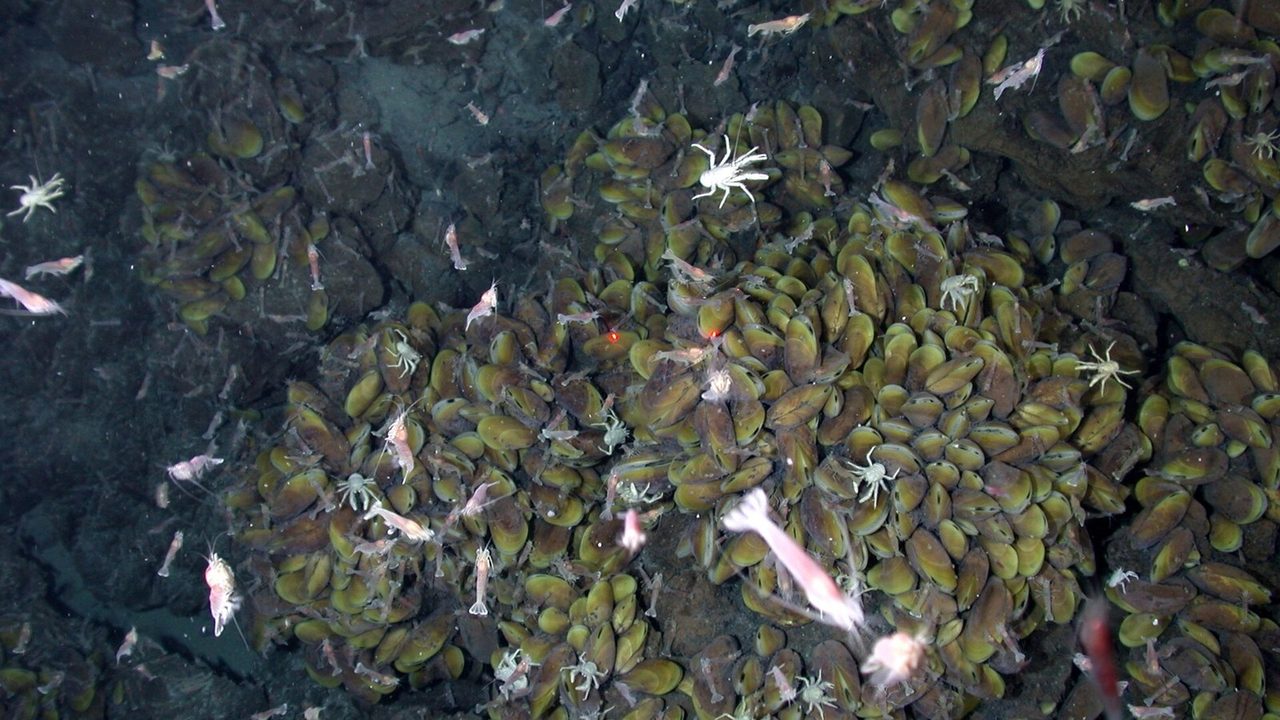
Cover photo: Image courtesy of Submarine Ring of Fire 2006 Exploration, N / Wikimedia Commons (public domain)