Science & Space By

How Cold Temperatures Help Worms Live Longer, and Why Muscle Is the Key
Scientists have long known that cooler temperatures extend life in many animals. A new study in the journal Nature suggests part of the reason is an active chemical signal that starts in muscle, according to ScienceAlert. The work was done in tiny worms and in human cells in the lab, not in people.

The research team, which includes molecular biologist David Vilchez of the University of Cologne in Germany, identified a metabolic substance called dihydrobiopterin, or BH2, that appears to carry the benefit of cold from muscle to the rest of the body.

What did the researchers find?

In experiments with the roundworm Caenorhabditis elegans, mildly cold conditions of 15 degrees Celsius (59 degrees Fahrenheit) raised production of an enzyme called CAT-4, mostly in the worms' muscles. That enzyme in turn drives production of BH2, which muscle tissue makes, stores and later releases, ScienceAlert reported.

Once BH2 reaches other tissues, it is converted into a molecule called tetrahydrobiopterin, or BH4. That molecule lets another enzyme, PAH-1, make the amino acid tyrosine.

Is the effect just a side effect of a slower metabolism?

The study points away from that idea. When the team disrupted this pathway, worms in the cold lost part of their longer lifespan. That suggests the longevity effect of cold is not only a passive result of slower body chemistry but is partly an actively regulated process that begins in muscle cells.

Researchers had long wondered how cold worked. Early explanations focused on simple thermodynamics, but more recent work has pointed to specific biological pathways that help organisms survive.

Does it work without the cold?

In worms, it seems to. By genetically raising CAT-4 levels in the worms' muscles, the team extended their lifespan even at normal or warmer temperatures. Vilchez said the researchers were “genuinely surprised” by how much supplementation extended life at those temperatures.

The finding suggests some benefits of cold might be reproduced without lowering body temperature, though only in these experiments so far.

What did the experiments show about protein damage and disease?

The pathway also supported healthy protein balance, known as proteostasis. In a worm model of Huntington's disease, it suppressed the clumping of harmful proteins.

In human cells engineered to produce proteins linked to Huntington's disease and amyotrophic lateral sclerosis, or ALS, adding BH2 reduced the buildup of the abnormal proteins. In another experiment, BH2 and tyrosine reduced signs of programmed cell death in human motor neurons that carried an ALS-linked mutation. That hints the pathway could help guard against nerve cell damage.

The same team had reported a few years earlier that cold helps clear harmful protein clumps in the worms by activating cell structures called proteasomes, which break down protein waste.

Why does it matter?

If the same chain of events works in people, treatments could one day mimic the benefits of cold without anyone having to change their body temperature. Vilchez said the results suggest that targeting a single tissue, such as muscle, could protect the whole organism, and that this opens new avenues for therapies.

That is a long way from a treatment, however. So far the results come only from worms and human cells grown in the lab. ScienceAlert stressed that much more research is needed before anyone can consider whether these effects could be transferred safely to living human patients.

For now, the study offers a clearer picture of how cold may support a longer, healthier life in animals, and a specific molecule that scientists can follow up on.

Around Prague, based on reporting by ScienceAlert
Share: Telegram WhatsApp

More science news

Physicists Imagine a Hidden Periodic Table Made of Dark Matter Atoms
A team of physicists in the U.S. and Canada has proposed that dark matter could contain its own versions of familiar chemical elements, a sort of hidden periodic table, according to ScienceAlert. The
Physicists Flipped an Atom's Nuclear Spin in an Experiment Theory Says Can't Work
Physicists at Delft University of Technology in the Netherlands have flipped the spin of an atom's nucleus using a scanning tunneling microscope, an effect that current understanding says should not h
Why Frozen Mars Dunes Look Like Forests of Trees in a NASA Photo
A photograph taken in 2008 by NASA's Mars Reconnaissance Orbiter appears to show thickets of scraggly trees standing upright on frozen dunes near the Martian north pole, ScienceAlert reported. The tre
A Spacecraft Has Reached Mercury, and It Is About to Enter Orbit
A joint European-Japanese space mission has arrived at Mercury after a voyage of more than eight years, The Guardian reported. Flight controllers are due to fire the spacecraft's thrusters on Saturday
Hera Probe Turns Heat Vision on the Asteroid NASA Slammed Into
Four years after NASA deliberately crashed a spacecraft into an asteroid, Europe's Hera probe has returned its first images of the target system, Universe Today reported, based on a European Space Age
Euclid Telescope Finds 15,000 New Candidates for Cosmic Magnifying Lenses
The European Space Agency's Euclid space telescope has identified 15,000 new candidates for strong gravitational lenses, according to Universe Today. Astronomers say these rare cosmic magnifiers are o

Related news

A team of physicists in the U.S. and Canada has proposed that dark matter could contain its own versions of familiar chemical elements, a sort of hidden periodic table, according to ScienceAlert. The idea, laid out in a long preprint paper,
Physicists at Delft University of Technology in the Netherlands have flipped the spin of an atom's nucleus using a scanning tunneling microscope, an effect that current understanding says should not happen, according to New Atlas. The resul
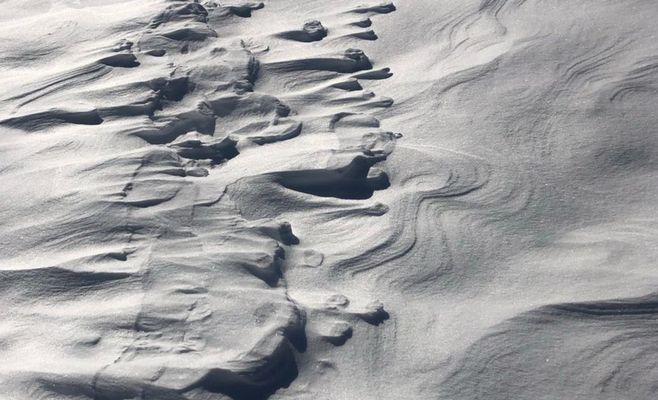
A photograph taken in 2008 by NASA's Mars Reconnaissance Orbiter appears to show thickets of scraggly trees standing upright on frozen dunes near the Martian north pole, ScienceAlert reported. The trees are an illusion. The dark streaks are
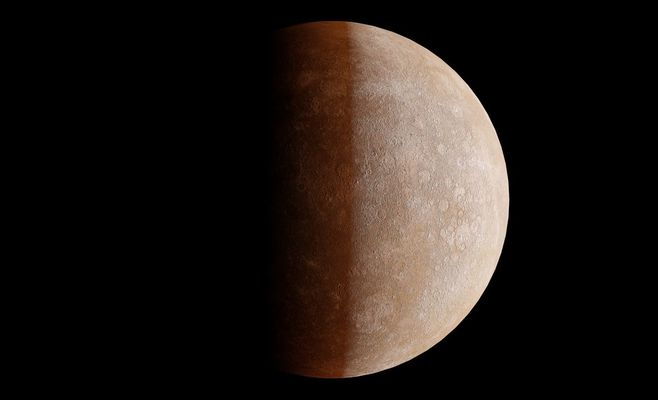
A joint European-Japanese space mission has arrived at Mercury after a voyage of more than eight years, The Guardian reported. Flight controllers are due to fire the spacecraft's thrusters on Saturday to send it into orbit around the smalle
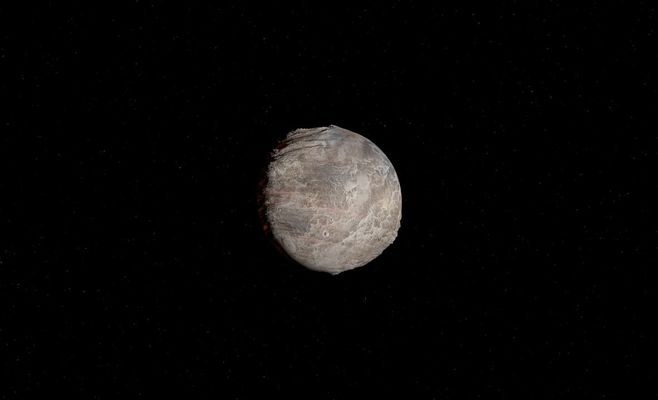
Four years after NASA deliberately crashed a spacecraft into an asteroid, Europe's Hera probe has returned its first images of the target system, Universe Today reported, based on a European Space Agency press release. The pictures are the
The European Space Agency's Euclid space telescope has identified 15,000 new candidates for strong gravitational lenses, according to Universe Today. Astronomers say these rare cosmic magnifiers are one of the best ways to trace dark matter
A black hole no bigger than an atom could destroy an entire star from the inside, and the resulting flash might be bright enough for today's telescopes to spot, according to a new study by physicists at MIT and other institutions. The findi
Scientists on a NASA-backed project have grown potatoes in simulated moon soil, and with enough added compost the harvest matched what the same plants produced in ordinary Earth soil, according to a study in the journal npj Microgravity. Th
The rapid growth of data centers built for artificial intelligence harms air quality and health in regions far from the buildings themselves, according to a new study by MIT researchers. The team estimates that extra air pollution from the
A traditional Thanksgiving dinner for 10 people will cost an average of $58.63 this year, about 6% more than in 2025, according to the American Farm Bureau Federation's annual survey, released Wednesday. It is the first yearly increase sinc
Researchers in Germany have put a virtual version of Los Angeles underwater to make a point about climate change. Timed to the launch week of Grand Theft Auto VI, the study simulates coastal flooding in Los Santos, the fictional city from G
People who ate dinner earlier, ate breakfast earlier and did not snack in between tended to have lower body mass index five years later, according to a Spanish study of 7,074 adults. The findings do not prove cause and effect, but they add