Euclid Telescope Releases Map of Over 900 Million Galaxies
USD 22,01
Popular
The European Space Agency's Euclid space telescope released its first major batch of data on Thursday, Nov. 12, capturing light from more than a billion objects across a huge stretch of sky, Space.com reported. The release, called DR1-Foundation, is the mission's first big data drop since it launched in mid-2023.
Euclid has been nicknamed the “Dark Universe Detective” because it is built to study dark matter and dark energy, two poorly understood parts of the cosmos. The new data is meant to underpin one of the largest 3D maps of the universe ever made.
The release in six numbers
- 13 months: the length of the observing campaign that produced DR1-Foundation, which also comes with many images, including large sky mosaics.
- 9,500 full moons: the size of the patch of sky covered, according to Space.com.
- Over 900 million: the number of galaxies in the release.
- 160 million: the number of sources for which the release includes light spectra.
- 60 million: the number of quasar candidates, which are regions of space dominated by feeding supermassive black holes.
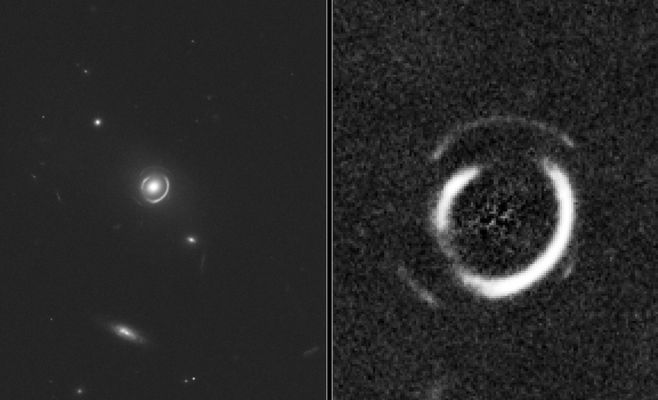
- 15,000: the number of strong gravitational lensing candidates catalogued.
What is behind the numbers
ESA says the release is a big step up in scale. Euclid project scientist Valeria Pettorino said earlier releases covered a few days of observations over around 60 degrees squared of sky, while this one spans more than a year of data over a much larger area. The package includes raw data, calibrated images, catalogues and spectra, with enough statistics to turn up even rare objects.
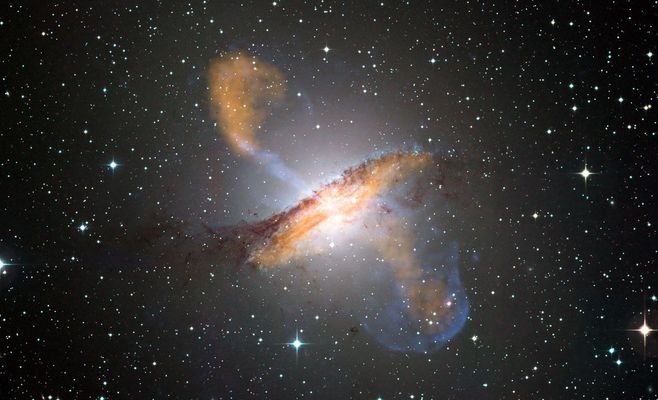
Space.com said Euclid can see so many objects because its position in space keeps it clear of interference from Earth's atmosphere. The data covers galaxy clusters and even larger superclusters, some of the biggest structures in the universe. Studying them can show how matter gathered across the cosmic web, the network of gas, dust and dark matter.
Barbara Sartoris, a Euclid Consortium member, said the survey offers an unprecedented view of large samples of ancient galaxy clusters that were previously out of reach. Her team plans to explore them in the coming months to learn how those clusters grew.
Why gravitational lenses matter
Gravitational lensing follows from Einstein's general theory of relativity, which he published in 1915. Massive objects such as galaxies or galaxy clusters warp space, and that bends the path of light passing by. A strong lens can greatly amplify a faraway background source and make light from it arrive at telescopes at different times.
Space.com noted that the James Webb Space Telescope already uses this effect to study galaxies in the early universe. Natalie Lines of the University of Portsmouth, a Euclid Consortium member, said strong lensing makes it possible to “weigh” individual galaxies, including their invisible dark matter, and to study how the universe is expanding. Space.com described the prospect of mapping 15,000 strong lenses as monumental for measuring the expansion rate and the effect of dark energy.
These are candidates, so each one still has to be confirmed by further study.
Why it matters
For readers outside astronomy, the release is a milestone in a search for answers about what most of the universe is made of. Dark matter and dark energy are described by Space.com as the universe's most mysterious stuff and the force speeding up its expansion, and neither is yet understood. A catalog of this size gives researchers around the world a common data set to test their ideas against.
ESA's director of science, Carole Mundell, called it the largest space-based survey of its kind. The agency also presented it as a showcase of European technology, science and international collaboration.
What happens next
This is only the start. The area of sky observed from spring 2024 to spring 2025 makes up 14% of Euclid's target for its full six-year survey, according to Space.com. Scientists expect to use the new data to map the large-scale structure of the universe in far greater detail, and Pettorino said much more discovery is still to come.
Read next
Euclid Telescope Maps More Than 900m Galaxies and 15,000 Cosmic Lenses
Planned Giant Telescope Could Probe Dark Matter in Puffy, Dim Galaxies
NASA Plans a Space Telescope That Sees the Sky in Ultraviolet, Launching 2031
Around Prague, based on reporting by Space.com