Science & Space By

Euclid Telescope Maps More Than 900m Galaxies and 15,000 Cosmic Lenses
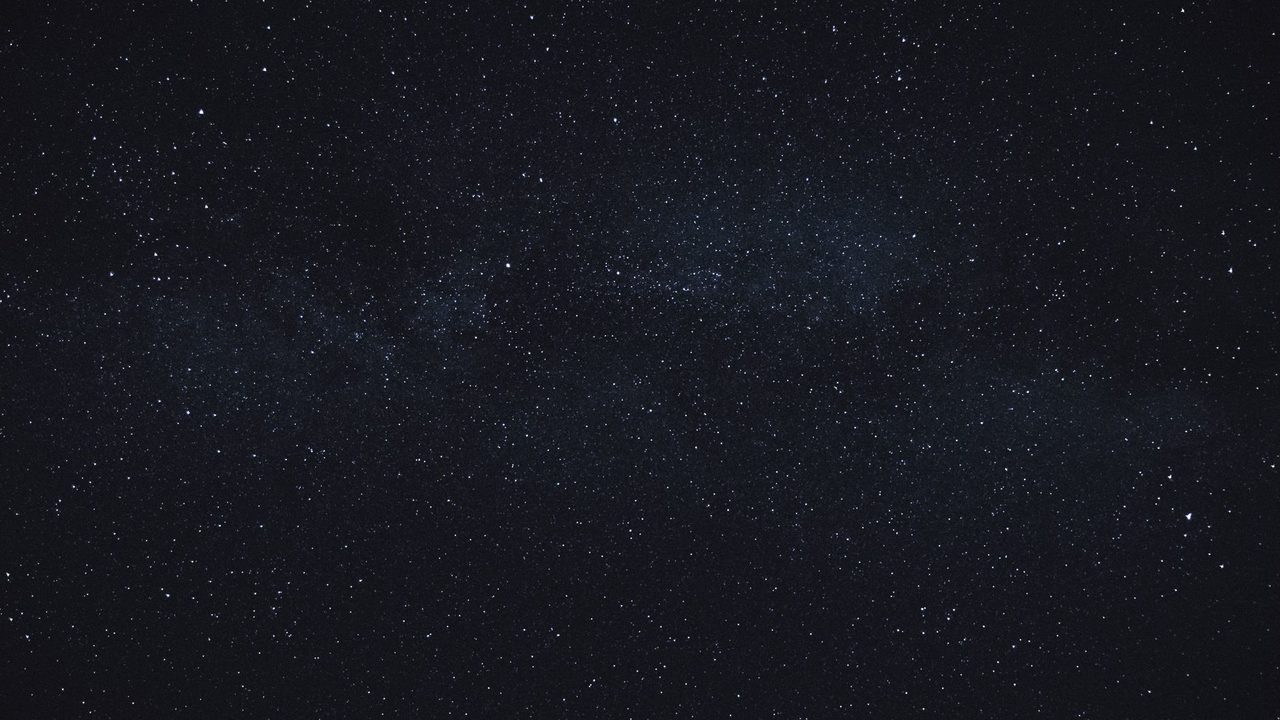
The European Space Agency's Euclid mission has published its first major batch of data, and it contains more than 900m galaxies, The Guardian reported. The release also includes about 15,000 potential cases of strong gravitational lensing, a phenomenon researchers hope will help them understand the "dark universe."

Euclid was launched in July 2023 to build the largest cosmic map ever made, covering a third of the sky and more than 10bn years of cosmic history.

What is Euclid trying to do?

The mission aims to shed light on dark energy and dark matter, two of the biggest mysteries in science. They are thought to make up about 70% and 25% of the universe respectively, according to The Guardian.

Prof. Andy Taylor of the University of Edinburgh, who leads the UK science ground segment for the mission, said other surveys of the sky are bigger, but none matches Euclid's detail and information content.

What is in the new data release?

The release covers about 14% of the total sky area Euclid will eventually map. Within it are more than 900m galaxies and more than 60m potential quasars, which are bright objects at the centers of distant galaxies powered by supermassive black holes.

Taylor described it as the biggest high-resolution image of the universe ever produced. He contrasted it with the Hubble telescope, which delivers images of remarkable resolution but covers a much smaller area of sky. Euclid, he said, keeps that sharpness while mapping huge volumes of the universe.

What is strong gravitational lensing?

It happens when one galaxy, often inside a galaxy cluster, sits in front of a more distant one. As Einstein predicted, the foreground galaxy's gravity distorts space-time and bends the light of the background galaxy, producing bright arcs or rings.

Dark matter strongly boosts the effect because it adds to a galaxy's mass and therefore its gravitational pull.

Why does it matter?

Lensing offers a way to test ideas about what dark matter is. Taylor said that because the effect depends on how dark matter is spread through a galaxy, which in turn depends on its properties, studying lenses may allow scientists to rule out some theories.

Stephen Serjeant, a professor of astronomy at the Open University, agreed. He said lensing reveals how dark matter clumps, which is a strong clue to its type, because different kinds of matter clump differently. He said there is a good chance, though not a certainty, that the next breakthrough on dark matter will come from strong lensing.

The scale is a leap from earlier work. Researchers previously knew of about 1,000 cases of strong lensing, while the Euclid release holds about 15,000 probable ones. Taylor said an estimated 170,000 are expected to be found by the end of the mission. These are candidates, not confirmed cases.

What comes next?

Taylor said another data release is expected next summer. It is due to include results on how galaxies are distributed and on weak gravitational lensing, the subtle distortion of distant objects by dark matter in the foreground.

Scientists can use that pattern of distortion to map where dark matter lies across the universe, Taylor said, then work out its statistical properties and compare them with different theories. Different types of dark matter and dark energy should leave slightly different patterns on the sky.

The sheer volume of data is also a challenge. Taylor said the dataset has grown too large for any person to inspect it all, which means many objects and phenomena remain to be discovered.

Around Prague, based on reporting by The Guardian
Share: Telegram WhatsApp

More science news

Rare Elite Shoe and Slave-Trade Rings Found on Danish Ship Sunk After Mutiny
Maritime archaeologists working on a 17th-century shipwreck off the coast of Sweden have recovered the rear half of an unusually fine man's shoe and two metal rings once used as currency in the transa
Earth May Have Made Its Own Oceans: Hundreds' Worth Brewed in Fiery Air
Earth may have made much of its own water while it was still forming, instead of relying on icy comets or meteorites to deliver it, according to new research in Nature Geoscience reported by ScienceDa
Physicists Measure Gravity Between Two Specks Weighing 7.6 Milligrams Each
Physicists in China have measured the gravitational attraction between the smallest pair of masses yet, and Newton's law of gravity still held, ScienceAlert reported. The team, led by Shan-Qing Yang o
First Land Animals Could Barely Turn Their Heads, Study Finds
The first animals to move from water to land nearly 380 million years ago may have been able to barely turn their heads, according to a study published Oct. 14 in the journal Nature. The result challe
Supercomputer Simulation Recreates 2 Billion Years of the Early Universe
Researchers at MIT, Harvard University and other institutions have built a supercomputer simulation that follows how the first stars, galaxies and black holes pulled the universe out of its cosmic dar
New Study Says Rising Mantle Erased 1.2 Billion Years of Grand Canyon Rock
A gap of 1.2 billion years in the rock record of the Grand Canyon may have been caused by slow movements deep inside the planet, according to new research published Nov. 4 in the journal Nature. Live

Related news

Maritime archaeologists working on a 17th-century shipwreck off the coast of Sweden have recovered the rear half of an unusually fine man's shoe and two metal rings once used as currency in the transatlantic slave trade, Live Science report
Earth may have made much of its own water while it was still forming, instead of relying on icy comets or meteorites to deliver it, according to new research in Nature Geoscience reported by ScienceDaily. Lab experiments suggest that rocky
Physicists in China have measured the gravitational attraction between the smallest pair of masses yet, and Newton's law of gravity still held, ScienceAlert reported. The team, led by Shan-Qing Yang of Sun Yat-sen University, used two silic
The first animals to move from water to land nearly 380 million years ago may have been able to barely turn their heads, according to a study published Oct. 14 in the journal Nature. The result challenges a decades-old explanation for why n
Researchers at MIT, Harvard University and other institutions have built a supercomputer simulation that follows how the first stars, galaxies and black holes pulled the universe out of its cosmic dark age. The model, called Lumina, covers
A gap of 1.2 billion years in the rock record of the Grand Canyon may have been caused by slow movements deep inside the planet, according to new research published Nov. 4 in the journal Nature. Live Science reported that a model of Earth's
A single nuclear explosion high above Earth could knock out almost every satellite in low-Earth orbit within a month, according to a new study reported by ScienceAlert. The work, by researchers at the University of Wisconsin–Madison and Pri
NASA has started a fresh effort to work out how to bring Mars rock samples back to Earth, Space.com reported. The effort is called the Perseverance Sample Retrieval Architecture, or PSRA, and it follows years of cost concerns that have trou
The magnetic fields of Uranus and Neptune may change dramatically within a few decades, according to new computer modeling reported by Universe Today. If the models are right, the fields that Voyager 2 measured on its flybys were a snapshot
Archaeologists in Kazakhstan have found a gold figurine of a bear in a burial mound that is about 2,200 years old, Live Science reported. The mound had been looted in ancient times, but the thieves did not empty it completely. The bear is d
Tiny grains of dust that drifted to Earth from the Kuiper Belt carry the chemical fingerprint of ancient water that looks nothing like the water in our oceans, according to ScienceAlert. A team led by planetary scientist Lindsay Keller of N
Whether you are a mosquito magnet may depend on which mosquito is biting. A new study from Florida International University found that three of the world's most dangerous mosquito species each go after a different set of people, and not one