Gold Bear Figurine Found in 2,200-Year-Old Kazakhstan Burial Mound
USD 21,91
Popular
Archaeologists in Kazakhstan have found a gold figurine of a bear in a burial mound that is about 2,200 years old, Live Science reported. The mound had been looted in ancient times, but the thieves did not empty it completely.
The bear is described as unique in Kazakhstan, and the mound also held far more human bones than experts expect from a single burial of this kind.
What the gold bear looks like
The figurine shows a bear standing on its hind legs and holding a pot-like container between its front paws. According to a translated statement from the Kazakhstan government, it would have been worn as part of a headdress. Holes at its base suggest it could have been sewn onto the garment.
It was unearthed at the Karagaily burial ground in the southern city of Almaty, in a mound from the Early Iron Age. The figurine dates to the Saka period. The Saka, as Live Science described them, were a nomadic, horseback-riding people from Iran who lived on the Eurasian Steppe and the Tarim Basin of what is now western China.
It is not clear which bear species the figurine is meant to show. Live Science noted that Kazakhstan today is home to two subspecies of brown bear, one in the Tien Shan Mountains in the southeast and the other in the Altai Mountains in the east.
Why researchers call it unique
Gold animal figures are not new to the region. A headdress piece shaped like a small leopard was found earlier at the Almaty Kok-Kainar burial ground, which dates to the fourth century B.C. The headdress of Kazakhstan's famous “Golden Man,” a young Iron Age warrior buried in an extraordinarily lavish grave, also carries a gold decoration shaped like a sheep.
The bear, however, is the first of its kind. Lyazzat Sagyndykova, director of the Almaty Museums Association, which carried out the excavation, said in the statement that no similar finds had been made before. She added that the discovery lets researchers trace cultural parallels across Eurasia, from the Black Sea region to the Altai.
More bones than expected
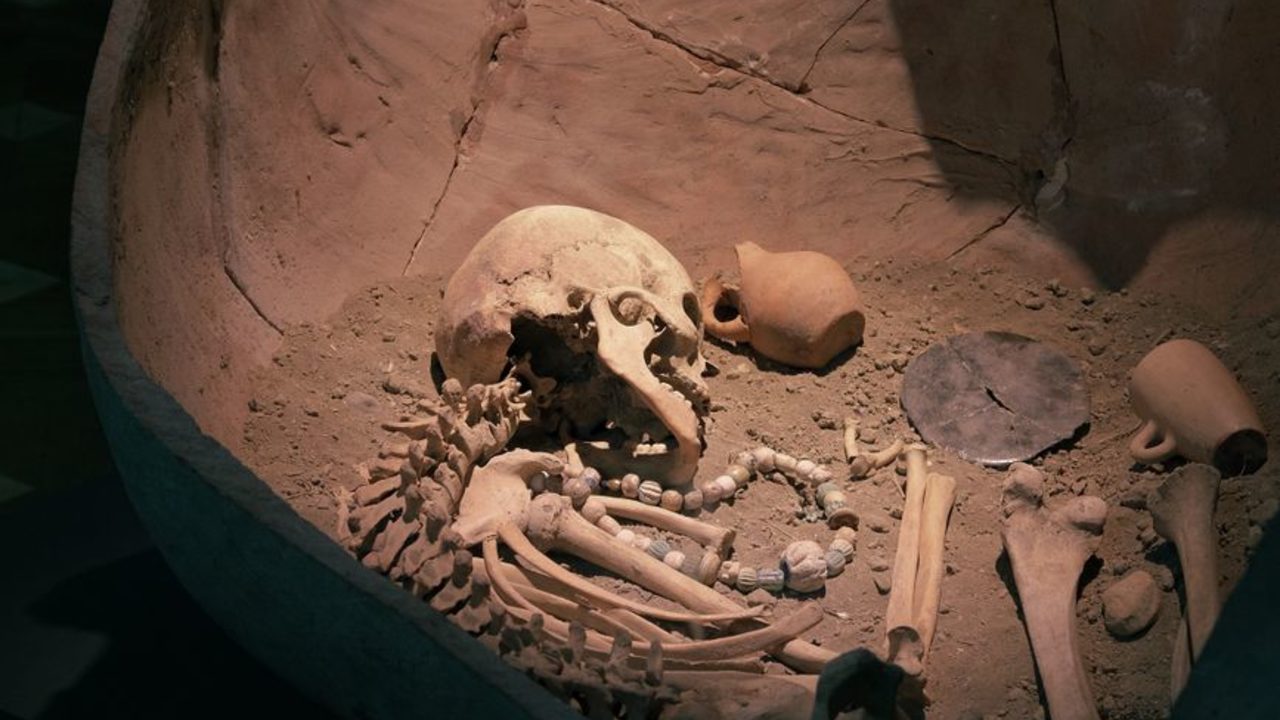
Preliminary analyses date the site to the fourth to third centuries B.C. The mound is around 8 feet (2.4 meters) tall and roughly 85 feet (26 m) wide. Judging by the number of bones recovered, experts suspect it may have been the final resting place of four adults and three children.
That is unusual. Marat Mugalovich Nurpeisov, a senior research fellow at the Almaty Museums Association, said such burials are atypical for Kazakhstan, because mounds of comparable size were usually meant for one or two people.
The team also found pieces of Saka pottery, most of them scattered after the burial was looted in ancient times. The thieves left behind a 10-foot (3 m) looting pit.
Why it matters
For readers, the find offers a closer look at how people lived and honored their dead on the steppe more than two thousand years ago. A headdress ornament in the shape of a bear adds to the small set of known gold animal figures from the Saka world, and it points to cultural links that stretch across a very wide stretch of Eurasia, according to the museum director.
The unusually high number of people in one mound also raises questions that have no answer yet. Researchers have not said why so many people were buried together, and the exact number of individuals is still unconfirmed.
What happens next
Work at Karagaily is continuing. Nurpeisov said further analyses are planned to clarify the circumstances of the burial and establish how many people were interred, including the involvement of anthropologists.
Once all of the investigations are finished, some of the artifacts will go on display at the Almaty Museum, according to the statement.
Read next
Possible Red Blood Cells Found in a 115 Million-Year-Old Dinosaur Bone
Giant Neutrino Detectors Go Up in an Old Gold Mine to Ask Why Anything Exists
A Cave Fossil in South Africa Suggests Homo Erectus Is 200,000 Years Older
Around Prague, based on reporting by Live Science