Magnetic Fields of Uranus and Neptune May Swing by Tens of Degrees
USD 21,91
Popular
The magnetic fields of Uranus and Neptune may change dramatically within a few decades, according to new computer modeling reported by Universe Today. If the models are right, the fields that Voyager 2 measured on its flybys were a snapshot of a moving target, and they may look quite different today.
The work was published in Communications Physics and led by Chi Yan, a research associate at the University of Texas Jackson School of Geosciences. It is a modeling study, not a new set of measurements from the planets themselves, and the authors stress that observations of the ice giants remain very limited.
The numbers behind two strange magnetic fields
- About 60 degrees: the tilt of the Uranus field away from the planet's axis of rotation. The field also does not originate at the planet's center, and its strength varies unevenly across the surface.
- About 47 degrees: the tilt of the Neptune field from its rotation axis. The field is similarly strange but weaker than the one at Uranus, and it also sits off center.
- 32 years: how long it took for the best-matching model snapshots of each planet to lose their close resemblance to the observed fields in the study's simulations.
- Once: the number of times each planet has been measured up close. Voyager 2 is the only spacecraft to have done it.
- A degree or so over 50 years: how much Earth's magnetic tilt drifts, according to Yan. Earth's magnetic north pole moves between about 5 and 60 km per year.
Why the ice giants behave differently
Earth's magnetic field is produced by its molten core and the convection within it, and it has clear north and south poles that drift slowly and flip over long spans of time. Uranus and Neptune are different. Their fields are tilted and have several peaks, and the researchers describe them as unlike those of any other known planet.
Universe Today reported that the fields are likely produced by electrically conductive fluids deep inside the planets. These are water, ammonia and methane ices that, under extreme pressure and temperature, change into ionic and superionic forms. Convection and the planets' rotation also play a role.
The new models assume that electrical conductivity rises with depth. Under those conditions, Yan said in a press release, water molecules can break apart into ions, and the material may grow steadily more conductive the deeper it lies. With that setup, the models produced large-scale magnetic features consistent with what Voyager 2 observed at both planets, according to the authors.
What the models say about change over time
The more striking result concerns time. In the simulations, the lopsided fields varied substantially, although the rate of change fluctuated and could be transiently slow. Yan said the tilt can swing by tens of degrees within decades in some stretches, while in others it shifts only slightly over the same span.
That contrasts sharply with Earth, where the tilt barely moves over the same period. The authors say both the strength and the orientation of the ice giants' fields could have changed in the decades since Voyager 2 passed by, though they note that the extent of any change is poorly constrained by observations.
Why it matters
For most readers, this is a story about how well scientists understand the outer solar system. Much of what is known about the magnetic fields of Uranus and Neptune comes from a single pass by one spacecraft. If those fields move as much as the models suggest, then a picture built from that one visit may be out of date, and comparisons between the two planets and Earth need to account for that.
The authors also argue that explaining oddball fields helps scientists understand how magnetic dynamos work across planets and stars. Universe Today noted that studying outliers in a group often sheds light on how processes operate in the whole group.
Because the results come from models and not from new observations, they show what is plausible, not what has been confirmed. Only fresh measurements of the planets could show how much their fields have actually changed since Voyager 2.
Read next
Physicists Say Gravity Could Break and Reconnect Like the Sun's Magnetic Fields
Rubin Observatory Spots Object Past Neptune Orbiting Against the Planets
Earth's Magnetic Shield Takes Harder Hits on Its Winter Side, Simulations Show
Around Prague, based on reporting by Universe Today
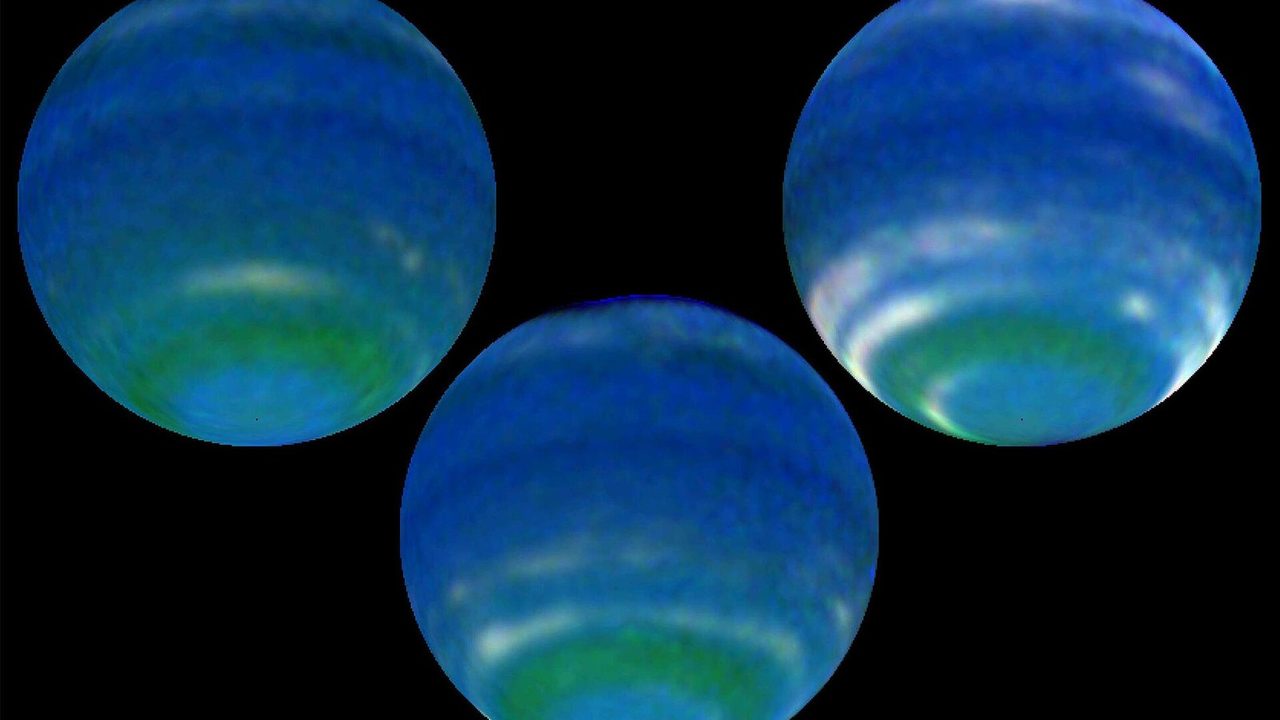
Cover photo: NASA Hubble / Wikimedia Commons, CC BY 2.0, cropped