Science & Space By

Earth's Magnetic Shield Takes Harder Hits on Its Winter Side, Simulations Show
Earth's magnetic field does not absorb the solar wind evenly. New computer simulations suggest some regions of the shield come under noticeably more stress than others, which could sharpen forecasts of space weather that threatens satellites and ground stations, Universe Today reported.

The work, by researchers from the United States and Finland, appeared in the journal Geophysical Research Letters. It examines wave-like patterns that form where the solar wind strikes the edge of the magnetic field, and it may also help scientists understand magnetic fields on other worlds.

What the researchers simulated

The team ran a series of computer models of how Earth's magnetic field interacts with the solar wind, the stream of high-energy particles flowing from the Sun. The interaction produces a long-known phenomenon called the Kelvin-Helmholtz instability, which shows up as waves along the boundary of the magnetic field.

According to Universe Today, the main motivation was the continuing effort to understand space weather and build better models for predicting it.

An uneven pattern of waves

The central result is that these waves are asymmetric. Their activity in the northern hemisphere does not mirror their activity in the southern hemisphere, which indicates the magnetic field receives different levels of impact from the incoming solar wind depending on where one looks.

The researchers tie the differences to several factors: whether a region lies on the dawn or dusk side of the planet, which hemisphere is in winter and which in summer, and the orientation of the magnetic field. In the simulations, the winter hemisphere showed the strongest wave activity. The magnetic field carried by the solar wind determined whether the dawn or the dusk side saw stronger activity.

Lauri Holappa, an Academy Research Fellow at the University of Oulu and lead author of the study, described the finding as the product of a long process of thinking through what he was seeing. He said he first noticed unusual simulation images of the magnetosphere in 2020 while visiting NASA as a postdoctoral researcher. Only later did he realize they showed Kelvin-Helmholtz waves at the edge of the magnetosphere, and that the different behavior of the waves on different sides belonged to the same phenomenon.

Why it matters for satellites and space weather forecasts

Earth's magnetic field shields the planet from harmful space weather, including solar radiation and cosmic rays from outside the solar system. Universe Today noted that without it, the solar wind would slowly strip away the atmosphere, making life impossible. The outlet said the field takes most of its burden from solar radiation.

The practical stake is protecting technology. Studying the solar wind has become essential in recent decades to safeguard satellites and electronic ground stations. If scientists know which parts of the magnetic field are stressed most, and how that shifts with the seasons and the orientation of the solar wind's own magnetic field, they have a better chance of predicting when and where space weather will bite.

The article frames the question as one of where the magnetic field does the heaviest lifting in filtering incoming radiation. The new simulations point to an answer that depends on the season and on the solar wind itself, rather than a single fixed pattern.

A long history of watching the Sun

Universe Today placed the study in a long tradition. Galileo Galilei observed sunspots with his new telescope in the 1600s. In 1843, German astronomer Heinrich Schwabe discovered the 11-year cycle of the Sun's activity. Research stayed largely theoretical until the Space Age in the mid-20th century, when satellites began measuring the solar wind directly. The term space weather came into use sometime in the 1990s, according to the outlet.

What is still open

The findings come from computer models, not from direct measurement of the full boundary of the magnetic field, so they describe what the simulations produce. The researchers say the results could improve understanding of how space weather interacts with Earth's field and with magnetic fields on other planets. What further insights follow in the coming years remains to be seen.

Around Prague, based on reporting by Universe Today
Share: Telegram WhatsApp

More science news

Leonid Meteors Peak This Week, Striking the Sky at 71 km/s Beside Mars and Jupiter
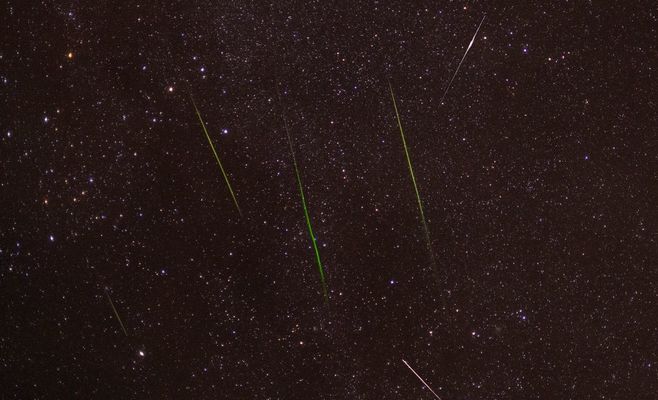
The annual Leonid meteor shower reaches its peak on the night of Nov. 17-18, and the best viewing comes in the hours before dawn on Nov. 18. The Guardian and Space.com both say the shower is known les
Neanderthal DNA Tucked in Our Genes Shrinks a Brain Region and Lowers Schizophrenia Risk
A tiny piece of DNA that modern humans inherited from Neanderthals is tied to a slightly smaller occipital lobe, the vision-processing region at the back of the brain, and to a lower risk of schizophr
How a $5 Billion AI Push Is Reshaping Which U.S. Science Gets Funded
While funding cuts and delays have hit public health and climate research during President Donald Trump’s second term, artificial intelligence and quantum science have found firmer footing, Science Ne
Young Mathematicians Are Using AI Daily, and Most Say It Is Making Them Rethink Their Careers
Nearly every early-career mathematician who responded to a new survey says they use artificial intelligence, yet many feel uneasy about what it means for their future, Scientific American reported. Se
How Did a Field of Pure Sulfur Rocks End Up on Mars? Two New Studies Offer Answers
Scientists now have two possible explanations for a puzzling discovery on Mars: a field of rocks made of nearly pure elemental sulfur. NASA's Curiosity rover first found them in 2024, according to Sci
BMI Alone Missed Obesity in Up to 8.6 Percent of People in a Study of 844,108 Adults
Body-mass index may misclassify obesity for a meaningful share of people, according to a new international study published in Nature. ScienceAlert reported that the researchers compared BMI with a bro

Related news

The annual Leonid meteor shower reaches its peak on the night of Nov. 17-18, and the best viewing comes in the hours before dawn on Nov. 18. The Guardian and Space.com both say the shower is known less for its numbers than for bright, fast
A tiny piece of DNA that modern humans inherited from Neanderthals is tied to a slightly smaller occipital lobe, the vision-processing region at the back of the brain, and to a lower risk of schizophrenia, according to a new study in the jo
While funding cuts and delays have hit public health and climate research during President Donald Trump’s second term, artificial intelligence and quantum science have found firmer footing, Science News reported. Researchers are excited abo
Nearly every early-career mathematician who responded to a new survey says they use artificial intelligence, yet many feel uneasy about what it means for their future, Scientific American reported. Seven in 10 respondents say they are now l
Scientists now have two possible explanations for a puzzling discovery on Mars: a field of rocks made of nearly pure elemental sulfur. NASA's Curiosity rover first found them in 2024, according to ScienceAlert, and two studies published thi
Body-mass index may misclassify obesity for a meaningful share of people, according to a new international study published in Nature. ScienceAlert reported that the researchers compared BMI with a broader definition of obesity proposed by e
President Donald Trump heads to Asia this week for a trip that will end with an unprecedented three-way summit with Chinese President Xi Jinping and Russian President Vladimir Putin, according to The New York Times, The Guardian and the Hon
Thousands of people in England who are at higher risk of esophageal cancer could soon be offered a seven-minute test on the National Health Service that involves swallowing a small capsule on a string. The National Institute for Health and
Researchers who analyzed online chess games say strong engines keep the board in a state of high strategic tension deep into a game, while human players tend to simplify their positions as the game goes on. Scientific American reported on t
SpaceX caught its Starship upper stage with the giant mechanical arms of its launch tower on Saturday, after the vehicle returned from a full orbital flight. La Voce di New York reported that it was the first time a rocket's upper stage has
Engineers at the University of Pennsylvania have built an artificial muscle that can make fine, steady movements, the kind needed to move a finger or hold an eye in place. Popular Science reported that the team tested it on a robotic hand t
Manchester City striker Erling Haaland has played down talk that an ongoing appeals process could affect his future at the club. He said he signed a long-term contract in 2024, according to the London Evening Standard. The newspaper reporte