Science & Space By

Physicists Calculate How Far Time Could Run Backward: One Femtosecond
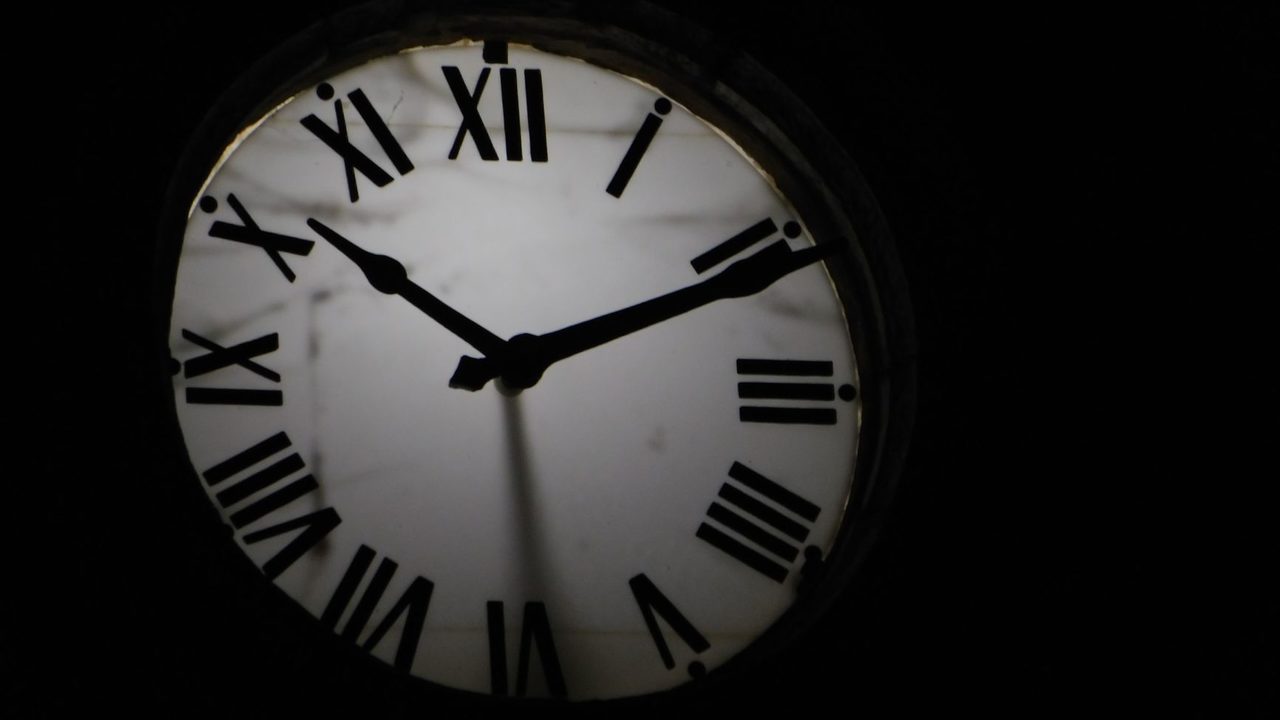
A new mathematical study asks how far time could effectively be made to run backward in a quantum system, and the answer is almost nothing. According to ScienceAlert, physicists Yakir Aharonov of Tel Aviv University and Avshalom C. Elitzur of the Israel Institute for Advanced Research found that in the simplest model they examined, the reversal could last only about a femtosecond, or one quadrillionth of a second.

The work is purely theoretical and appears in a preprint uploaded to arXiv. No experiment has made time run backward, and the researchers used mathematics because the idea has not been realized in a lab.

What exactly did the physicists study?

They revisited a theoretical device that Aharonov and colleagues proposed in 1990, called a quantum time-translation machine. ScienceAlert reported that it would use the strange rules of quantum mechanics to make a system behave as though time had sped up, stopped or run backward. Now, 36 years later, the pair set out to measure how far that negative time could go, working through four slightly different versions of the machine.

How could a clock appear to run backward?

The idea rests on superposition, in which a system exists in a combination of possible states at once. Picture a clock in two positions in a gravitational field at the same time, with gravity strong enough in one place to slow time compared with the other. When the two versions of the clock are brought back together, they interfere with each other.

By picking out one particular outcome of that interference, a step called post-selection, physicists can in theory make the clock act as if it had experienced a span of time outside the range of either path. That could be more time than either path saw, no time at all, or a negative amount, as if the clock had run in reverse.

How would anyone prove time had run backward?

The researchers chose atomic decay as the test. When an atom absorbs energy, an electron jumps to a higher level, and later it drops back, releasing a photon in a process called spontaneous emission. Under ordinary conditions this only goes one way.

ScienceAlert gave an example: start with 100 excited atoms and wait until only 80 remain excited. If the theoretical machine then leaves more than 80 excited, it has reversed part of the decay. To keep the emitted light from escaping, the researchers imagined sealing the atoms in a cell along with the light and walls that could absorb it.

Why is the limit so short?

Even in a sealed cell, the atoms interact with the surrounding electromagnetic field as they emit light, leaving traces of what happened. For the simplest version of the machine, reversal works only while the two possible histories stay quantum-coherent, which means they can still interfere. In the researchers' optical example, that window lasts around one femtosecond.

After that, the environment has retained too much information about the emission. ScienceAlert's summary is that the limit comes not from time itself but from the environment's memory of the light. More elaborate machines could in theory reverse longer intervals, but only by adding many more quantum branches, with increasingly improbable chances of success.

Why does it matter?

For ordinary readers, nothing changes: no device can turn back the clock, and the result does not suggest one is coming. The finding matters as a piece of basic physics. It suggests that if effective time reversal is possible at all in these models, the surrounding quantum environment sets a hard practical ceiling on it. Because the study is a theoretical preprint, its conclusions rest on the researchers' models and have not been tested in an experiment.

Around Prague, based on reporting by ScienceAlert
Share: Telegram WhatsApp

More science news

Leonid Meteor Shower Peaks Nov. 17, but Expect Just 15 an Hour
The Leonid meteor shower, famous for storms that once rained tens of thousands of meteors an hour, is heading for a lean year. Space.com reported that this year's display is expected to be weak, with
Distant Galaxy Group Is Low on Star-Making Gas, Astronomers Find
Astronomers have measured how much of the raw material for new stars remains in a dense, distant group of galaxies, and the answer is not much. According to Universe Today, galaxies in the group, know
Radio Pulses Every Eight Minutes Traced to a Dead Star Orbiting a Sun-Like One
Astronomers have tracked a mysterious repeating radio signal to a pairing of a white dwarf, the remnant of a dead star, and a living star much like the sun, Space.com reported. The system, called GPM
Leonid Meteors Peak Nov. 17, but a Storm Isn't Expected This Year
The Leonid meteor shower peaks on Nov. 17 at about 3:00 Universal Time, and the Moon is cooperating this year, according to Universe Today. Forecasters expect only a modest show of roughly 20 meteors
Earth’s Own Air Fueled 85% of Particles in May 2024 Solar Superstorm
Earth’s own atmosphere may have helped turn the May 2024 solar storm into one of the most powerful in decades, according to a study in Science Advances. Satellite measurements showed that roughly 85%
Superheated Magma Held Off Crystals for Over Eight Hours in Lab Tests
Magma that is heated beyond the point where its crystals would normally stay stable can go for more than eight hours without forming new crystals, according to a University of Manchester-led study. In

Related news

The Leonid meteor shower, famous for storms that once rained tens of thousands of meteors an hour, is heading for a lean year. Space.com reported that this year's display is expected to be weak, with long stretches when not a single Leonid
Astronomers have measured how much of the raw material for new stars remains in a dense, distant group of galaxies, and the answer is not much. According to Universe Today, galaxies in the group, known as COSMOS-Gr30, hold only about 20% to
Astronomers have tracked a mysterious repeating radio signal to a pairing of a white dwarf, the remnant of a dead star, and a living star much like the sun, Space.com reported. The system, called GPM J071507−114153, sits about 5,000 light-y
The Leonid meteor shower peaks on Nov. 17 at about 3:00 Universal Time, and the Moon is cooperating this year, according to Universe Today. Forecasters expect only a modest show of roughly 20 meteors per hour, not the dramatic storm the sho
Earth’s own atmosphere may have helped turn the May 2024 solar storm into one of the most powerful in decades, according to a study in Science Advances. Satellite measurements showed that roughly 85% of the charged particles fueling the dis
Magma that is heated beyond the point where its crystals would normally stay stable can go for more than eight hours without forming new crystals, according to a University of Manchester-led study. In the same experiments, magma that had no
Earth has a temporary new companion. Astronomers have confirmed that a tiny asteroid called 2026 QQ8 was pulled into orbit around the planet in April, and it is expected to stay until January 2027, Live Science reported. The object is about
SpaceX is preparing its most ambitious test yet of Starship, its giant new rocket, and the company's own plans could leave NASA with a problem, NPR reported. As SpaceX shifts resources to Starship, it has said it will stop flying the smalle
The European Space Agency's Euclid space telescope released its first major batch of data on Thursday, Nov. 12, capturing light from more than a billion objects across a huge stretch of sky, Space.com reported. The release, called DR1-Found
A new study of asteroid Bennu's sample has turned up a surprise inside a single molecule, according to Universe Today. Researchers at Penn State measured the carbon in a molecule called beta-alanine from Bennu and from the Murchison meteori
Scientists have set a new record for the coldest temperature ever recorded, according to Live Science: 10 picokelvins, barely above absolute zero. The measurement came from an experiment aboard China's Tiangong space station, where a laser
Researchers have documented 280 Paleolithic motifs engraved on the walls of Cova de la Font Major, a cave in Catalonia, northeastern Spain, ScienceAlert reported. The figures sat in plain view for decades while cave enthusiasts, treasure hu