Science & Space By

Physicists Find a Math Fix for Time-Travel Paradoxes, With a Catch
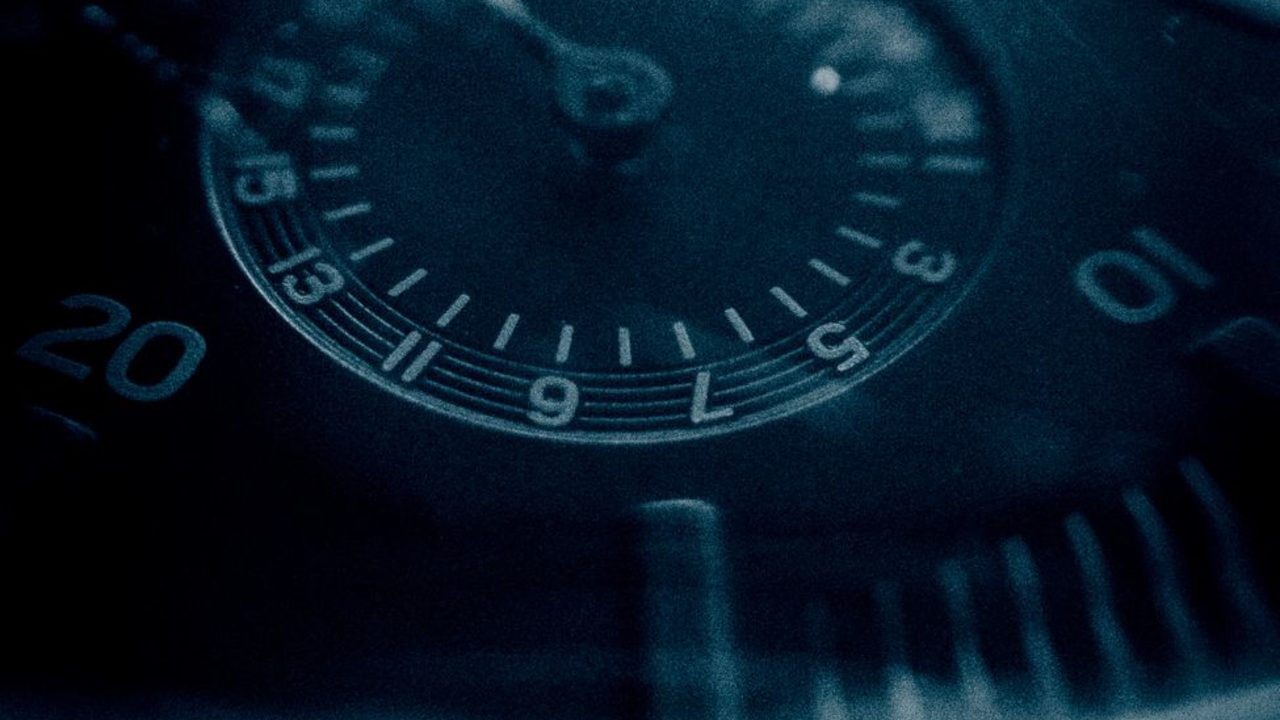
Two physicists at the University of New Hampshire have built a gravity model in which time can only run forward, which would rule out looping back into your own past. The catch, according to ScienceAlert, is that the model is unstable in its current form, so it is a research step rather than a working theory.

The study was published in Physical Review D.

What problem is the model trying to solve?

Einstein's general theory of relativity allows closed timelike curves, which are paths through spacetime that can, at least mathematically, lead a traveler back to their own past. That raises the classic grandfather paradox: if you went back and prevented your grandfather from having children, you could never have been born to make the trip.

Stephen Hawking proposed his chronology protection conjecture in 1992, which says the laws of physics do not allow closed timelike curves to appear. ScienceAlert reported that physicists have not yet shown that the universe actually enforces this, and no one has conclusively identified the mechanism, though Hawking suspected quantum effects.

What did the researchers do?

Moustafa Ismail and David Mattingly asked whether gravity itself might supply the answer. General relativity is the best framework for gravity, but not the only one. In it, spacetime has a geometry, described by a metric, and a mathematical connection that describes how directions change along that geometry, and the two are tied together in a particular way.

An alternative called metric-affine gravity loosens that link. Using it, the pair built a model in which spacetime has a built-in direction of time. Under the right conditions, time moves forward along every path a traveler could take, so no loop back is possible. They named it Metric-Affine Gravity Imposing Chronology, or MAGIC.

What is the catch?

In general relativity, gravity can fluctuate in two ways, matching the two ways gravitational waves stretch and squeeze space. MAGIC adds a third, called the scalar mode. On the cosmological background the researchers studied, that mode suffers from a gradient instability: disturbances can grow exponentially, with shorter wavelengths growing faster. As a result, MAGIC cannot yet describe the universe stably.

There are smaller problems too. The model establishes protection against time loops only locally, and guaranteeing it everywhere requires an extra assumption about the overall structure of spacetime that the researchers have not shown follows from the model. A safeguard meant to keep the metric from breaking down also does not work in every circumstance. The researchers have not shown such breakdowns occur, but have not ruled them out.

What does this mean for ordinary readers?

Nothing changes in daily life. This is theoretical work, and ScienceAlert described it as a demonstration of how chronology protection might be built into gravity, not a finished solution. It does not show that time travel is possible or impossible.

What happens next?

The researchers write that stabilizing the scalar mode without losing the model's timelike, closed projective mode is the natural next step. That would move the idea toward a more complete description of the physics, according to the report.

Around Prague, based on reporting by ScienceAlert
Share: Telegram WhatsApp

More science news

Tiny Asteroid Becomes Earth's Mini-Moon, Circling Farther Out Than the Moon
Earth has a temporary new companion: a tiny asteroid called 2026 QQ8 that is circling the planet as a so-called mini-moon. According to Meteored's YourWeather, the Minor Planet Center, the clearinghou
Dire Wolves Weren't Really Revived, Researchers Say: They Were Edited Gray Wolves
The dire wolf was not brought back from extinction, two U.S. scientists argue in a new paper. According to ScienceAlert, the animals that biotech company Colossal Biosciences announced in 2025 were gr
Astronomers Map Cosmic Hydrogen From 4.5 Billion Years Ago in a First
Astronomers have made the first direct measurement of the large-scale structure of cosmic hydrogen, the gas that fed the first stars and galaxies, according to Universe Today. The team from the MeerKL
A Hot Jupiter Vanished From View After Seven Years. A Hidden Planet Did It
A giant planet that astronomers had tracked for seven years has dropped out of sight, and a new study says the cause is a second, unseen planet pulling it off course. The world, called TOI-2535 b, is
Telescope Finds a 26-Light-Year Gas Jet, Hinting at a Black Hole Next Door
A team of Japanese astronomers has found a jet of cold molecular gas stretching 26 light-years from LMC P3, a strong gamma-ray source in the Large Magellanic Cloud, according to Universe Today. The fi
Could Webb's Mysterious Red Dots Be Black Holes Born Before the First Stars?
Astronomers at Johns Hopkins University say one of the James Webb Space Telescope's puzzling Little Red Dots could have started life as a primordial black hole, a type of black hole that would have fo

Related news

Earth has a temporary new companion: a tiny asteroid called 2026 QQ8 that is circling the planet as a so-called mini-moon. According to Meteored's YourWeather, the Minor Planet Center, the clearinghouse for small-body observations run under
The dire wolf was not brought back from extinction, two U.S. scientists argue in a new paper. According to ScienceAlert, the animals that biotech company Colossal Biosciences announced in 2025 were gray wolves with a handful of dire wolf tr
Astronomers have made the first direct measurement of the large-scale structure of cosmic hydrogen, the gas that fed the first stars and galaxies, according to Universe Today. The team from the MeerKLASS Collaboration says the hydrogen foll
A giant planet that astronomers had tracked for seven years has dropped out of sight, and a new study says the cause is a second, unseen planet pulling it off course. The world, called TOI-2535 b, is about 1,000 light-years away. According
A team of Japanese astronomers has found a jet of cold molecular gas stretching 26 light-years from LMC P3, a strong gamma-ray source in the Large Magellanic Cloud, according to Universe Today. The finding strengthens the case that the obje
Astronomers at Johns Hopkins University say one of the James Webb Space Telescope's puzzling Little Red Dots could have started life as a primordial black hole, a type of black hole that would have formed in the first moments after the Big
Voyager 1, the most distant human-made object, will have traveled one light-day from Earth on Wednesday, Nov. 18, NASA said. That is more than 16 billion miles (25.9 billion kilometers), and it means any light sent from Earth would need 24
NASA will hold a public homecoming event for the Expedition 74 crew at Space Center Houston at 6 p.m. CST on Tuesday, Nov. 17, the agency announced. Six astronauts and cosmonauts from the International Space Station mission will share highl
Gravity may be able to break and reconnect in new arrangements, much like the magnetic fields that power solar flares, according to a new theoretical study reported by ScienceAlert and Live Science. The work comes from physicists Luca Comis
A robot in orbit has assembled a structure without a human working the controls, which Caltech researchers and DARPA describe as a first for space construction, Space.com reported. The robot built part of a reflective antenna, and the finis
A new study argues that millions of small whirlpools of hot gas, churning across the Sun's surface, could supply the energy that keeps its outer atmosphere, the corona, far hotter than the surface below it. Universe Today reported on the pa
NASA's twin ESCAPADE spacecraft have each completed an engine burn close to Earth that is meant to send them on to Mars, Space.com reported. The first probe did it on Nov. 7 and the second followed on Nov. 9, and NASA says both maneuvers we