Czech air humidity is falling, yet it holds more water vapor
USD 21,69
Popular
Relative humidity in Czechia is indeed falling, but that does not mean the air contains less water: according to measurements by the Czech Hydrometeorological Institute (ČHMÚ), the amount of water vapor is, on the contrary, rising. That is the conclusion of a meteorologist and climatologist in an opinion column on the Ekolist portal.
Two kinds of humidity, two different pictures
Relative humidity shows only how saturated the air is with vapor compared with the maximum at a given temperature and pressure. The actual amount of vapor is described by specific humidity: grams of vapor in one kilogram of air.
The air's capacity to hold vapor depends strongly on temperature: according to the laws of thermodynamics (the Clausius–Clapeyron equation), it grows by about 7% for every 1 °C of warming. At 41.9 °C, the record for Czechia, the air can hold about 52 g of vapor per kilogram.
A simple example: at 20 °C and 55% relative humidity, specific humidity is 8.03 g/kg, while at 30 °C and 45% it is already almost 12 g/kg. Relative humidity has dropped, yet there is more water in the air.
What the ČHMÚ stations show
The author compared two stations: Třeboň-Lužnice, surrounded by ponds, and Doksany in the dry Elbe lowlands. At both, relative humidity is declining while specific humidity is rising, and in “dry” Doksany it is rising even faster. The increase is also recorded by the aerological station in Prague’s Libuš at altitudes of roughly 750, 1,500 and 3,000 metres, meaning it covers the whole lower troposphere, not just the surface layer.
It is not drought that heats the climate, but the other way round
From this the author concludes that the theory that warming is caused by the landscape drying out is not supported. If the land were drying because of reduced evaporation, air humidity should be falling, yet it is rising.
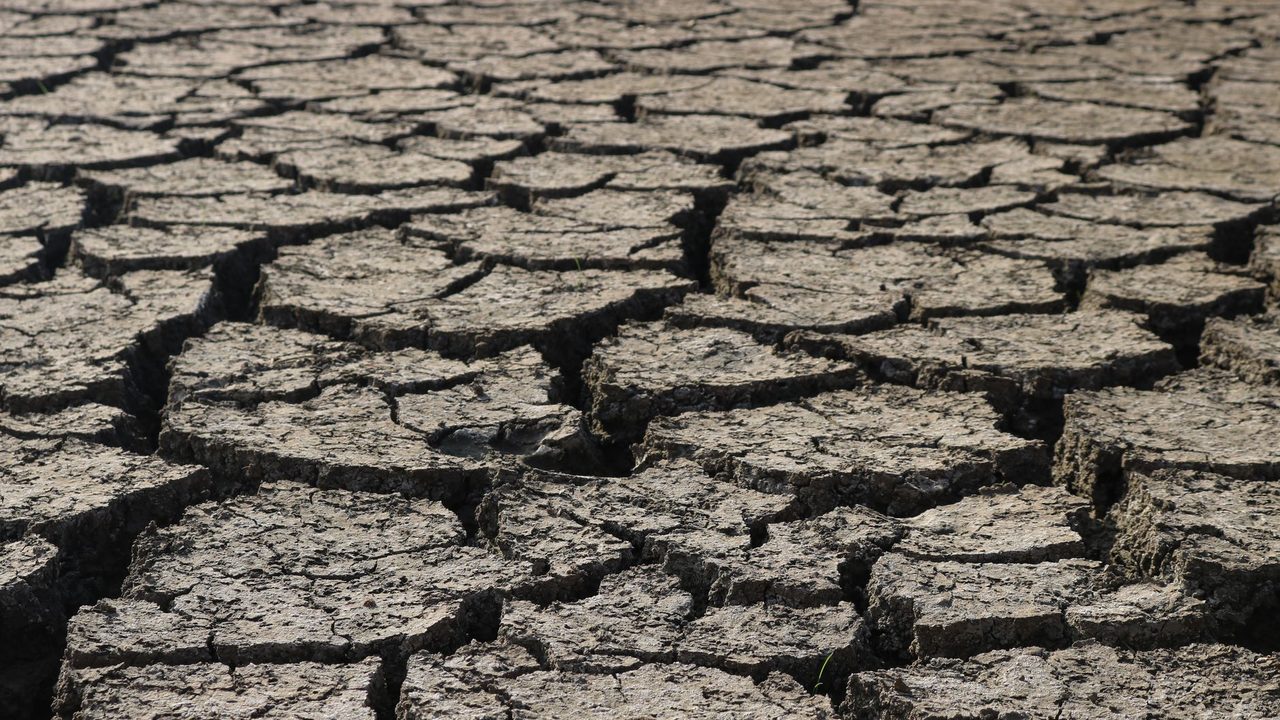
In his explanation, it all happens in reverse: higher temperatures intensify evaporation, vapor escapes into the atmosphere, and the soil dries out faster. A larger share of the rain that falls evaporates, leaving less water for runoff and for soaking into the ground.
Source: ekolist.cz