Czech public transport discounts stay at 50%: no money for 75%
USD 22,26
Popular
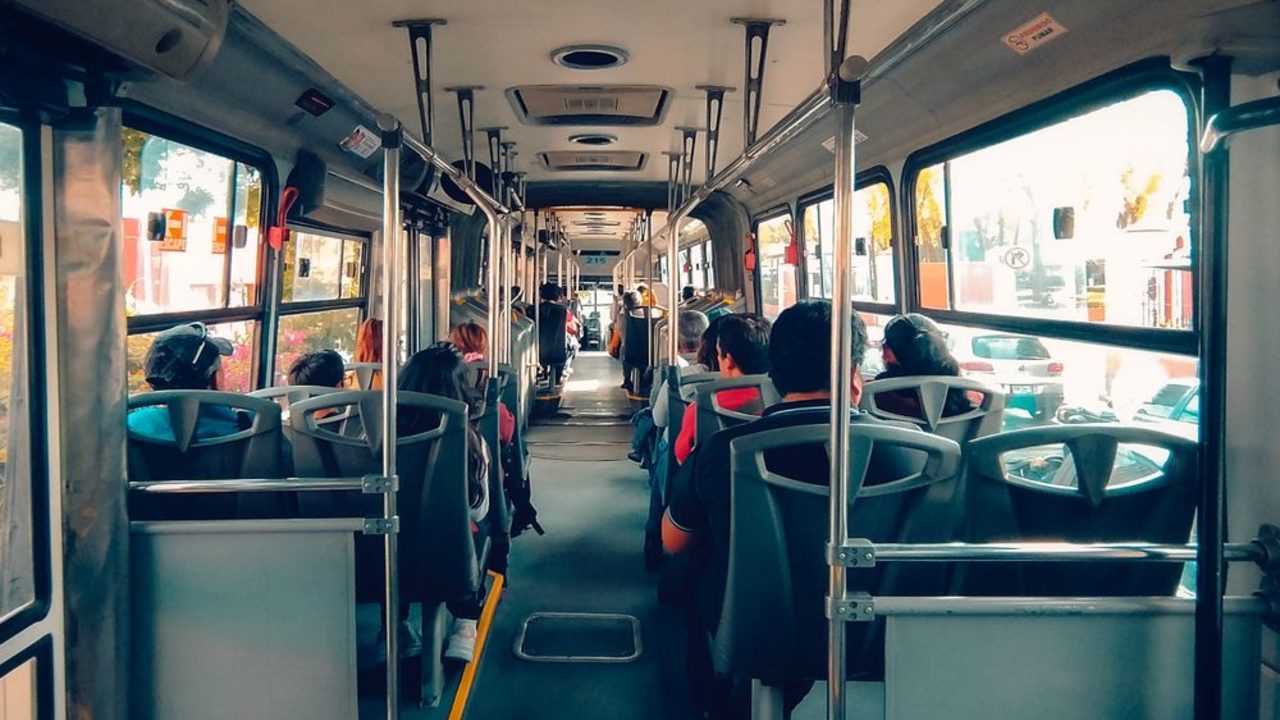
Children, students and pensioners in Czechia will keep riding public transport at a 50% discount rather than 75%: Andrej Babiš's government is delaying the promised return of the former discount because the budget is short of money. Even from January 2027 the higher discount will not be introduced, and some regions are scaling back their own extra discounts.
“We will give you back what the Fiala government took away” was the slogan the ANO movement used when it promised to reverse all the previous cabinet's cuts, including a fare discount of three quarters of the ticket price instead of the current 50%. The current ruling coalition also committed to bringing back the larger discount in its programme statement. For now, however, the promise keeps being put off.
At first the talk was of introducing 75% discounts for children, students up to 26 and pensioners over 65 this year, from September. The next deadline was mid-December, when the new timetables for next year take effect. That did not happen either. Then the start of 2027 was mentioned, but the discount will not go up from January either.
Two billion short
The reason is simple: there is no money in the state treasury. This year the Czech budget deficit is already expected to reach 310 billion crowns, and 386 billion in 2027. Raising the discount by a quarter would put an extra burden on the budget. Last year the state paid carriers more than five billion crowns in compensation for the current 50% discounts, and a higher discount from the start of 2027 would require roughly two billion more.
That money is not in the proposed state budget for next year. So the state will continue to pay “only” half the ticket price for children, students and pensioners. “We will definitely introduce the discounts, but we have some time to do it. We will try next year, and if that doesn't work, the year after,” Babiš said.
Transport Minister Ivan Bednárik (SPD) spoke in a similar vein: he said the government has its entire term to meet the goal. He also warned that before the 75% discounts return, controls on carriers' claims will have to be introduced. “The task is to set up control mechanisms so that money is not wasted and there are no ‘ghost passengers’,” Bednárik said. He added that bringing the discounts back is important for public transport: “Public transport must be affordable for everyone,” the minister wrote on the social network X, noting that ridership has still not returned to pre-pandemic levels.
The minister's words were backed by Lenka Desatová, chair of the Council of Senior Citizens of the Czech Republic: “The data from the period when the higher discount applied clearly show that the number of pensioner passengers rose. We cannot say how much of that was trips to the doctor or to see family. But the fact is that the motivation to use public transport was definitely there.”
Regions are dropping their discounts
In response to the cut in the discount from three quarters to half in April 2022, under Petr Fiala's (ODS) government, some regions where the ANO movement won the elections and took over the leadership began introducing additional 25% fare discounts for children, students and pensioners in 2025. Eight regions introduced them: Karlovy Vary, Plzeň, Ústí, Hradec Králové, Olomouc, Zlín, Moravia-Silesia and Vysočina.
Now, however, the regions are gradually giving these discounts up. Only four regions currently offer them — Olomouc, Ústí, Karlovy Vary and Vysočina — and next year there will be even fewer. The Karlovy Vary Region is not planning the project next year, though applications for reimbursement of the discount can be filed until the end of January. The Ústí Region has not yet decided; its governor (regional head) is former environment minister Richard Brabec (ANO), and regional councillors will discuss continuing the project in December.
Residents of Vysočina and the Olomouc Region, by contrast, can still count on a 25% discount on top of the state's 50%. It is particularly praised in the Olomouc Region: from January to September this year almost three quarters of a million more tickets were sold. “The data clearly show that thanks to the discounts, more people are using public transport. That is the goal we wanted to achieve. So the region will continue the discounts,” explained Olomouc Region head Ladislav Okleštěk (ANO).
Economists opposed, pensioners not insisting
The experts surveyed oppose across-the-board discounts because of the state of the budget and the growing deficit. “Pensioners are a large part of the population, and therefore of the electorate, but at the same time the only group whose income is automatically indexed. You certainly can't say that about people in work. I understand it as an attempt to keep an election promise, but I would not look for support for public transport here,” said Petr Dufek, chief economist at Creditas bank. In his view, a deeper analysis of the effect of the money spent would be needed.
Tomáš Volf, an analyst at Citfin, added: “Across-the-board discounts are an inefficient tool of social policy, because people with low and high incomes receive the same support.” If the aim is to help households, he said, it makes more sense to direct help to groups that truly need it, support employment, raise the mobility allowance for people with disabilities, help transport in remote regions, cut taxes on labour and, above all, reduce the public finance deficit.
Although the government often talks about supporting the elderly, they themselves are not demanding this benefit. According to Desatová, back when the cut was being discussed with the previous government, a significant share of the organisation's members asked that the discount be kept first of all for children and students, while for pensioners it could be lower. Such models work in many countries, where the discount is either the same or higher for children and students.
Compensation to carriers, according to the Ministry of Transport, was: 2025 — 5.04 billion crowns, 2024 — 4.99, 2023 — 4.66, 2022 — 4.86, 2021 — 3.86, 2020 — 3.79, 2019 — 5.76 billion crowns.
What this means for foreigners
This applies to everyone who uses discounted travel: children, students up to 26 and pensioners over 65, foreigners included. The discount remains 50% of the ticket price. The Olomouc Region and Vysočina offer an additional 25% discount, and in the Karlovy Vary Region an application for its reimbursement can be filed until the end of January.
Around Prague, based on reporting by denik.cz