“Green drought” in Czechia: expert warns of looming water shortage
USD 21,65
Popular
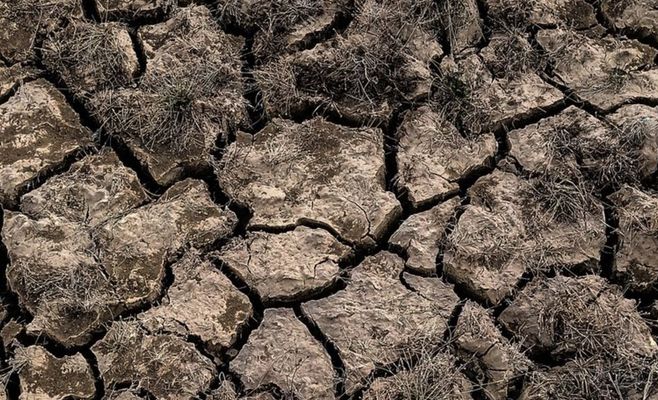
The green of autumn in Czechia is deceptive: on the surface the landscape looks alive, but in the deep layers of soil, underground and in the rivers there is still a serious water deficit. That is the warning from author Matěj Pomahač, who calls this condition a “green drought”.
Why the surface is misleading
As he explains, the light rain in early autumn wetted only the upper root zone. Plants felt the moisture, started photosynthesis and quickly turned green. But rain is still scarce, the water does not seep deeper, wells remain half empty and the rivers barely flow.
The hardest-hit basins are in the south and west of Czechia, in South Moravia and in parts of Vysočina. According to Pomahač, these areas belong to the broad dry belt of Europe along the Danube basin, from the Alps to Ukraine and most of the Balkans. He believes everything looks like the end of the first year of a long dry spell, similar to the period of 2015–2019. To make up the deficit, hundreds of millimetres of precipitation are needed, and winters that snowy have been rare over the past half century.
Soil or reservoirs
Experts disagree about how much the precipitation itself is to blame and how much is down to decades of draining a landscape that now fails to hold even the water that does fall. The public debate has come down to the question “keep water in reservoirs or in the soil”. Pomahač sees greater potential in restoring soil fertility: by his estimate, soil can be a reservoir many times larger than any bodies of water that are realistically being built. At the same time, in his view, new small or medium-sized water structures on the upland stretches of rivers will also be needed, along with larger protection zones around drinking-water reservoirs and major investment in water treatment.
He also points out the limits of Czech geology: in the south, west and part of the centre of the country water cannot seep deep, and deep aquifers suffer from excessive pumping and from drainage pipes in the fields.
Money and politics
Pomahač claims that the authorities react only to acute crises, while preparing for drought requires a strategic approach. He calls money the second problem: the Czech Hydrometeorological Institute has identified a thousand municipalities and places most at risk from drought, while the Ministry of the Environment, as the author writes, has allocated a “completely inadequate” 500 million crowns for measures. He proposes covering the cost of adaptation through additional taxes, above all on billionaires, corporate windfall profits and digital services.
There is also something to build on. In 1989 water consumption was 171 litres per person per day; in recent years it has been around 90 litres. In industry, water use has fallen by almost two thirds. The author believes that further savings will require public investment, and he also warns that there may be less water for cooling power plants, seeing this as an argument for solar and wind power.
Another problem is water quality: with low flow and heat, the number of cyanobacteria in rivers and reservoirs is growing, and many small streams around Prague were fed mostly by treated wastewater this summer. Pomahač will be watching closely to see what winter brings: it will determine how hard the coming year turns out to be for agriculture, industry and the water supply.
Around Prague guide on the topic: 8 best places to swim near Prague: lakes, quarries and beaches within an hour of the capital
Around Prague, based on reporting by ekolist.cz