STAN's Prague mayoral candidate: I'll cut parking spaces by 1% a year
USD 21,01
Popular
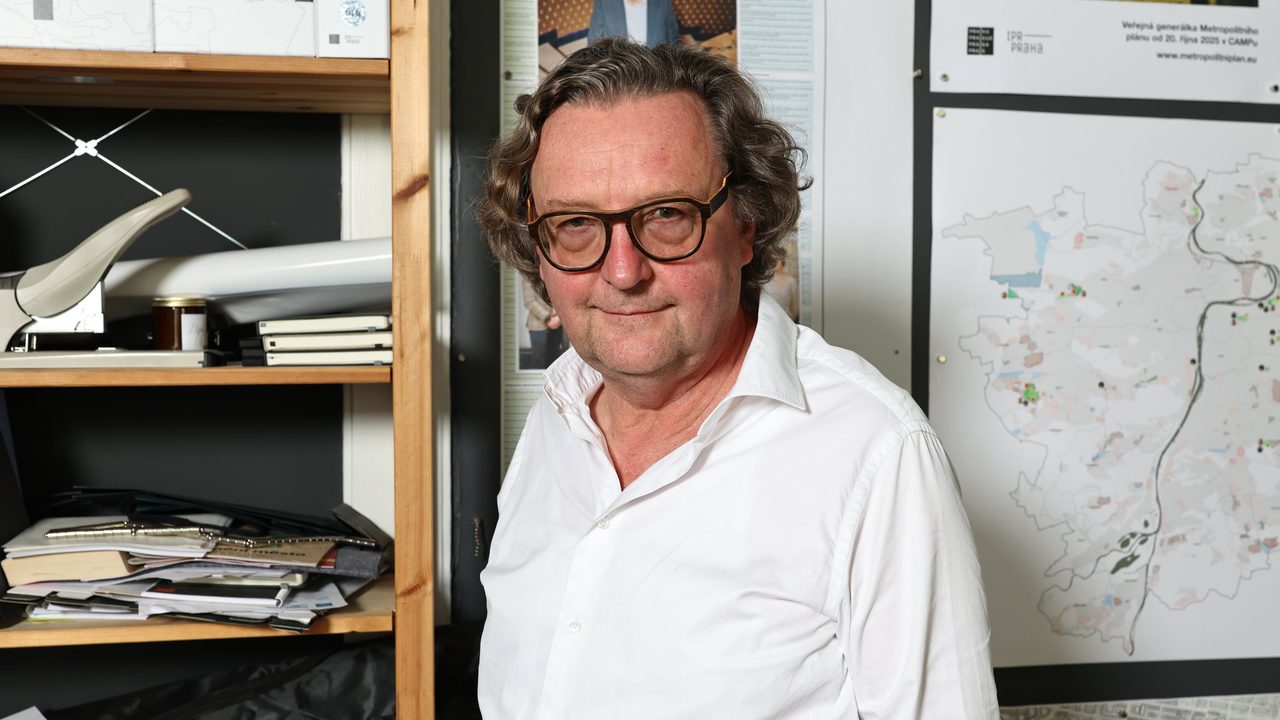
The STAN movement's candidate for Prague mayor, architect and urban planner Petr Hlaváček, who has spent nearly eight years as deputy mayor for territorial development in Prague's ruling coalition, has unveiled his plan to tackle the capital's traffic congestion ahead of the municipal elections. He proposes raising parking and public transport fares while gradually weaning the city off cars.
"It's important that public transport remain an attractive, natural choice for residents, so that we can regulate car use in the city that way. Prices for travel passes, parking and the upkeep of public space need to be fairly balanced," Hlaváček said.
Pricier parking, cheaper travel pass
According to the politician, he is ready to double the cost of parking for a family's first car and raise the price of the "Lítačka" travel pass by a third. He points to the experience of European cities, particularly Danish ones, which cut roughly one percent of parking spaces in certain districts each year. Hlaváček proposes applying the same approach in Prague — on condition that freed-up space doesn't stay empty but is turned into, say, a green area with trees.
As for the idea of tripling the parking fee for a family's second car, as proposed by Pirates leader Tereza Nislerová, Hlaváček sees this as open to negotiation, noting that the tradition of a family owning three cars is unusual even by the standards of densely populated European cities.
City housing and the Prague Development Company
Hlaváček admitted that in nearly eight years in city leadership he failed to change the law on cooperative housing, calling it one of the main unresolved problems. At the same time, he described the work of the Prague Development Company (PDS), set up six years ago to build city housing, as a success — even though it still doesn't have a single completed project to its name. He said the company has helped raise the value of city-owned land plots by three billion crowns, and he is firmly against selling them off into private hands — a topic he says will be one of the key sticking points in future coalition talks.
School shortages and staffing gaps
Responding to criticism of district education councillor Antonín Klecanda, who had previously downplayed the shortage of places in Prague's secondary schools, Hlaváček called it a "political mistake" but assured that the councillor is doing everything possible to increase the number of places within his four-year term. He predicts that the number of secondary school students will keep growing along with Prague and the surrounding region's population, peaking around 2040 before starting to decline — which is why new schools should be built with an eye toward possible repurposing down the line.
Philharmonic as a coalition condition
Hlaváček confirmed he is ready to join a coalition with any party that supports urban construction and planning, including the concert hall project — the Vltava Philharmonic. He said building the philharmonic will be a basic condition for any future coalition, and he can't imagine allying with anyone opposed to the project. A scandal-plagued, hundred-million-crown tender to promote the philharmonic was scrapped earlier, but according to the politician, the budget for promoting it is approved afresh by the city council every year.
Read also: The Lítačka travel pass in Prague
Source: seznamzpravy.cz