Alphabet Loses About $500 Billion in a Day as Investors Question AI Spending

USD 21,81
Popular
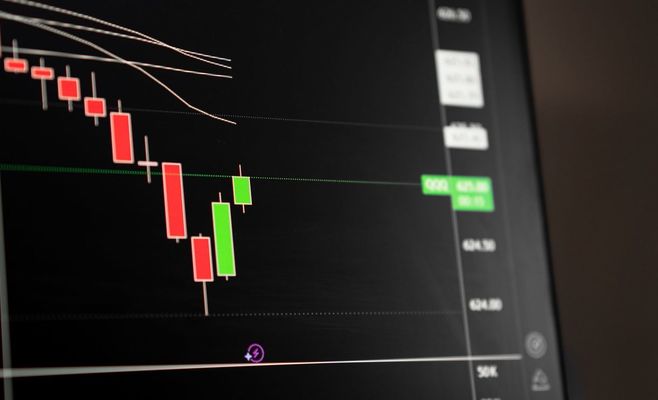
Alphabet, the parent company of Google, lost roughly $500 billion in market value on Thursday after its quarterly results raised doubts about the cost of the artificial intelligence race and the health of its search advertising business. Fox Business, citing The Wall Street Journal, reported the drop was the second-largest one-day market value loss in stock market history.
The sell-off spread to the wider technology sector. The Independent reported that the Nasdaq 100 index of large U.S. tech companies fell 1.4% on Thursday and was set to open 2.4% lower on Friday.
What happened to Alphabet's stock
According to Fox Business, Alphabet's Class A shares closed at $283.82, down 12.64%, erasing about $499.8 billion in market capitalization. The BBC reported that the company's total value fell to $3.46 trillion from $3.97 trillion the day before. Reports differ slightly on the size of the share decline: The Independent described it as almost 14%, while the BBC said over 12%.
The BBC said the shares hit a six-month low. Fox Business said the loss exceeded Alphabet's own previous single-day record of about $275 billion in July, according to Forbes. It said Nvidia still holds the record, having shed about $589 billion in January 2025.
What the earnings report showed
Alphabet reported third-quarter revenue of $127.6 billion, up 25% from a year earlier. The BBC and Fox Business both said that fell short of what Wall Street analysts expected, with the BBC pointing in particular to the advertising arm.
Fox Business reported that Google Search revenue grew 12%, down from 17% growth in the previous quarter. The company spent about $51.4 billion on capital expenditures in the quarter, much of it on data centers and computing infrastructure for AI. Fox Business said Alphabet expects capital spending of between $195 billion and $205 billion this year, with a significant increase projected for 2027.
The picture was not uniformly weak. Google Cloud revenue rose 103% to $30.7 billion, beating analysts' expectation of $29.2 billion, according to Fox Business. But Chief Financial Officer Anat Ashkenazi warned that cloud profit margins could come under near-term pressure because the company is relying on outside computing capacity to meet demand, Fox Business reported.
AI answers and search ads
The BBC reported that Chief Business Officer Philipp Schindler said Google's conversational “AI mode” is cutting into money earned from ads that appear beside traditional search results. He nonetheless said he felt “very good about our trajectory” with an AI-focused search engine.
Kim Scott, who formerly led Google's advertising business, told the BBC's Today programme that Google would rather undercut its own revenue than let a rival do it. She described the approach as a long-term bet on AI, consistent with the company's history of backing technology even when it hurts in the short term. The BBC noted that millions of people now use programs such as ChatGPT and Claude instead of Google.
Amazon and Microsoft also report
The BBC said Microsoft and Amazon also issued updates this week and, like Google, plan to keep spending heavily on AI.
Amazon reported quarterly sales growth of 11% to $201 billion, but also negative cash flow of $42 billion. The BBC said spending rose six-fold over three months, and Amazon shares fell 6% in after-hours trading. CEO Andy Jassy said the company sees a chance at two businesses that could each bring in $1 trillion in the future. He did not name them, though he repeatedly cited Amazon's own computer chips and its AI developer platform Bedrock.
Microsoft's shares fell by less than 1%. Its revenue grew 19% to $92.3 billion, and its cloud business grew 30% to $63 billion, the BBC reported. The company spent about $5 billion less on AI-related investments and has announced plans to cut thousands of workers. CEO Satya Nadella said daily Copilot users grew by 500% from a year ago.
Why it matters for readers
The episode shows how closely investors are watching whether enormous AI spending will pay off. In Alphabet's case, the concern is twofold: the cost of building AI capacity and the risk that AI summaries erode the advertising that funds Google's free search. For people who use Google daily, the company's own executives are acknowledging that the way answers are delivered is changing, and that it affects how the business earns money.
The reaction also reaches beyond one company. A broad tech index fell on Thursday, and Kathleen Brooks of trading platform XTB told The Independent it was unlikely the AI trade would recover on Friday, with attention shifting toward non-tech sectors and safe havens as October trading closed.
Around Prague, based on reporting by BBC News, Fox Business, The Independent