Democrats Split Over Using Dec. 11 Funding Bill to Cut Off Iran War Money
USD 22,33
Popular
A majority of Democrats want Congress to use the next government funding bill to cut off money for the Iran war, even if that risks a shutdown or a presidential veto, according to a University of Maryland poll reported by Truthout. The poll was taken over the weekend, with the current funding deadline set for Dec. 11.
The finding lands as lawmakers prepare to return from Thanksgiving break on Nov. 30, according to Independent Voter News. Top Democrats disagree on the strategy, and Truthout reports that some Republican leaders have signaled they may be open to a version of it.
What the poll found
Truthout reported that 51 percent of Democrats back using the funding bill to defund the war despite the risks, while 16 percent oppose the idea and 32 percent are unsure. Among all respondents, 31 percent support it and 28 percent oppose it. Truthout said 48 percent of Republicans are opposed.
The poll also asked about ending the war. According to Truthout, 80 percent of Democrats want it to end now regardless of the terms. So do 55 percent of all respondents, compared with 21 percent who prefer the current course and 18 percent who favor escalation. Truthout said U.S.-Israeli strikes have killed roughly 3,500 people in Iran.
The case for attaching a funding cutoff
Four senators have pushed the approach: Chris Van Hollen of Maryland, Michael Bennet of Colorado, Bernie Sanders of Vermont and Tammy Duckworth of Illinois. In a joint statement earlier this month, they said they would oppose any funding bill that pays for the war. They said they intend to “fund the government and stop funds for this war.”
Truthout, which framed the story favorably toward the approach, reported that supporters see the spending bill as one of the more effective ways to press President Donald Trump to end U.S. military involvement. It said war powers resolutions are unlikely to force his hand. Independent Voter News reported that Democrats argue Congress should not keep financing an increasingly unpopular war it never formally authorized.
The case for caution
Several leading Democrats are not on board. Truthout reported that House Minority Leader Hakeem Jeffries of New York said last week he opposes barring funds for the war and prefers a war powers resolution. Senate Minority Leader Chuck Schumer, who faces a leadership challenge from Van Hollen, has not publicly weighed in, according to Truthout.
Rep. Rosa DeLauro of Connecticut, the top Democrat on the House Appropriations Committee, told Reuters that shutting down the government would not stop the war. Truthout quoted her as saying the public wants the war to end but may not believe a shutdown would accomplish that.
Where Republicans stand
The Washington Post reported this week that some top Republicans are open to letting the bill restrict war funding in exchange for keeping the government open, according to both Truthout and Independent Voter News. The Post named Senate Appropriations Committee Chair Susan Collins of Maine and Senate Majority Leader John Thune of South Dakota. Thune said he is “open to anything that keeps the government funded” while meeting military needs.
Senate Republican leadership took a harder line in a Nov. 18 statement, according to Independent Voter News. It accused Democrats of holding funding hostage for unrelated goals and said the Schumer-Van Hollen leadership race was interfering with negotiations. Independent Voter News also reported that Trump has asked for $350 billion in additional defense spending, while Democrats want to limit money for continued military operations.
Republicans control the House, Senate and White House, but most spending bills need 60 votes in the Senate, so they need Democratic support.
Why it matters for federal workers and travelers
If Congress fails to act by Dec. 11, a funding lapse would begin Dec. 12, according to MyFederalRetirement. Independent Voter News said it would be the fourth full or partial shutdown of Trump’s second term.
The recent record shows how long lapses can last. The 2025 full-government shutdown ran 43 days, and a 2026 lapse affecting mainly the Department of Homeland Security lasted about 76 days, according to the sources.
For federal employees, a 2019 law provides for retroactive pay for both furloughed and required-to-work staff, MyFederalRetirement reported. But the site noted that Congress ultimately decides pay for furlough periods, and paychecks arrive late while bills come due on schedule. Health and life insurance premiums continue to accumulate and are collected once pay resumes.
Independent Voter News also noted that a full shutdown would affect air travel, following recent system failures and outages, including a nationwide ground stop earlier this month.
What happens next
Lawmakers return Nov. 30 and will have less than two weeks to act, according to Independent Voter News. The outlet said the likely vehicle is another temporary funding measure. Democrats favor a short-term bill that would give them more influence over spending next year, while Republicans want to pass at least some full-year spending bills before they give up control, it reported.
Earlier on Around Prague: Will There Be a Government Shutdown in December 2026? The Dec. 11 Deadline Explained
Read next
Gas Prices Up 38% Since Iran War Began as Democrats Win Midterms
Obama Campaigns in Ohio for Democrats, Targeting Trump on Iran War and Prices
Iran War Has Cost the U.S. Military at Least $47.1 Billion, CENTCOM Estimate Shows
Around Prague, based on reporting by Truthout, Independent Voter News, MyFederalRetirement
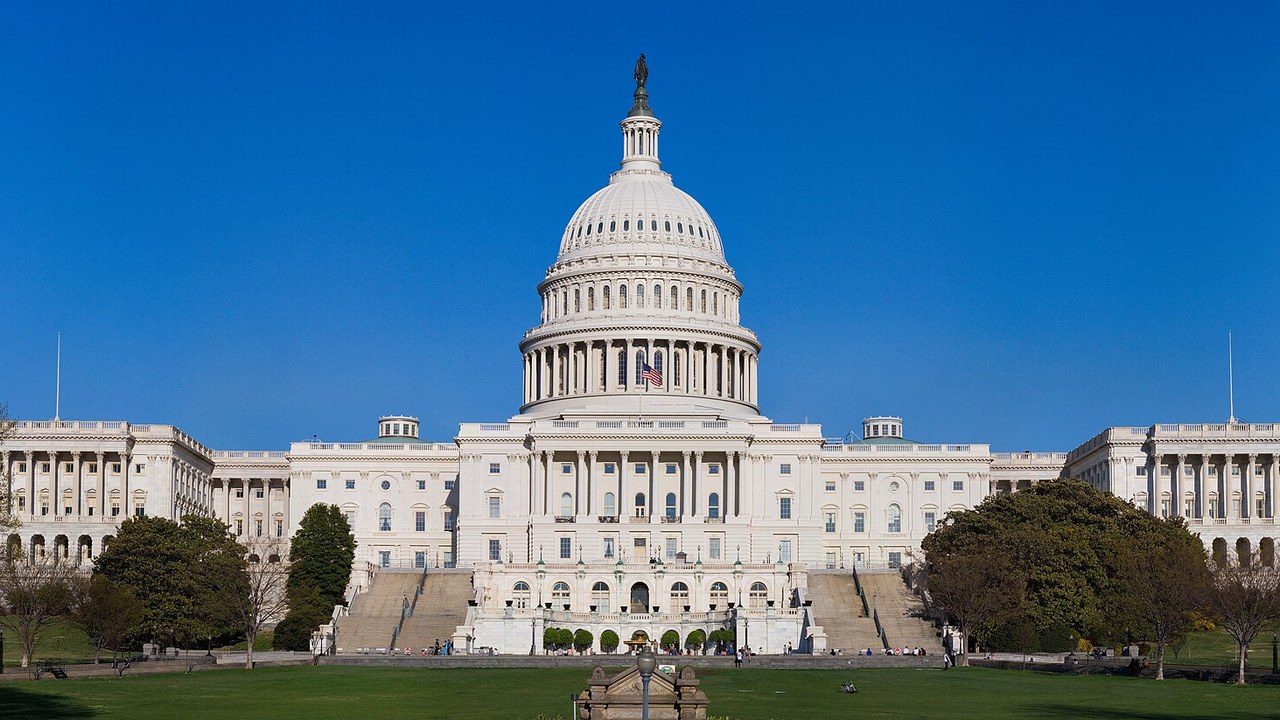
Cover photo: Noclip / Wikimedia Commons (public domain)