Beaver Moon Supermoon Lights Up Skies Worldwide; Next One Arrives Dec. 23
USD 22,33
Popular
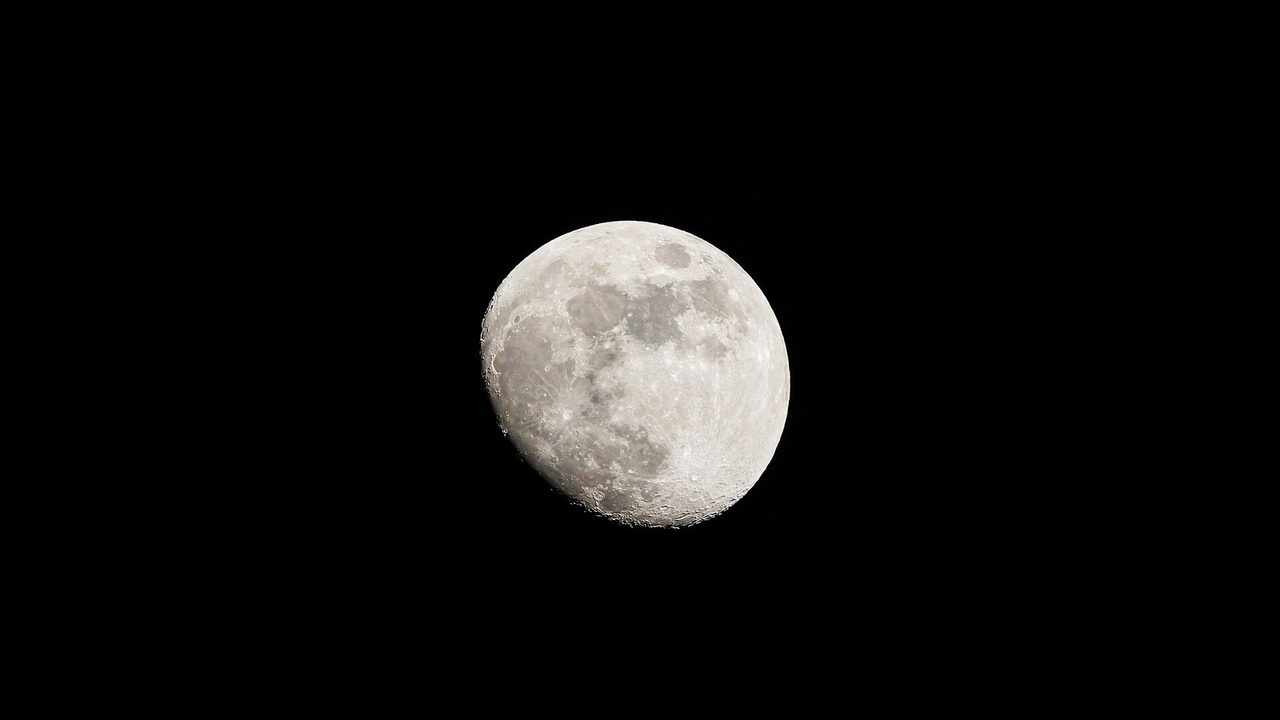
November's full moon, known as the Beaver Moon, rose on Nov. 24 as a supermoon, appearing larger and brighter than the smallest full moon of the year. Photographers from Asia to North America and across the Middle East captured it above skylines, temples and ancient ruins, according to Space.com.
It is the first in a series of four supermoons, Space.com reported. The next one is due on Dec. 23 and will be the closest full moon of 2026.
What makes a supermoon, and why is it called the Beaver Moon
A supermoon happens when the moon turns full around the time it passes closest to Earth in its 27-day elliptical orbit, Space.com explained. At that point it can look noticeably brighter and larger than the year's smallest full moon.
The "Beaver Moon" is one of several informal names given to each month's full moon, often tied to events happening at that time of year. Space.com said the November name is linked to the season when beavers get ready for winter and when trappers historically set beaver traps before waterways froze. Greek outlet To Vima gave a similar explanation, saying the name refers to beavers finishing their preparations before the deep cold arrives.
How the moon looked from around the world
Space.com collected images from photographers in many countries. Among them:
- Pongmanat Tasiri photographed the moon rising over the roof of the Wat Phra That Doi Suthep temple in Chiang Mai Province, Thailand.
- Gary Hershorn captured a yellow moon over the Chrysler Building in New York, and another shot of it between the buildings along 42nd Street shortly before moonset on the morning of Nov. 24.
- Mert Alper Dervis photographed the moon over Toronto as birds flew through the foreground. Space.com said atmospheric refraction made the lunar disk look slightly squashed.
- Allen Berman shot the moon low over downtown Los Angeles from a lawn in the Baldwin Hills area, with thin clouds over distant mountains.
- Robert Nemeti photographed moonrise above the medieval Boldogkő Castle in Hungary.
- Wang Zhao used a telephoto lens in Beijing to catch a passenger jet crossing the moon and leaving contrails.
- Karar Essa photographed the moon between the minarets of the Imam Ali Shrine in Najaf, Iraq. Space.com noted that the 53-mile-wide (85-kilometer) Tycho Crater is visible as a bright feature below the lunar equator.
- Aris Oikonomou captured the moon above the Parthenon in Athens, Greece, as night fell over the Acropolis.
Space.com's skywatching editor, Daisy Dobrijevic, photographed the almost-full moon over Nottingham in the U.K. a day early, on Nov. 23. She said the forecast for the night of the full moon looked disappointing, so she went out ahead of time and found a gap between two houses with a clear view.
Athens marks the moon with holiday lights
To Vima reported that the moon put on a spectacular show over Attica this week, just as Athens prepared to light the Christmas tree in Syntagma Square. Some of the most striking images showed the moon glowing behind the Hellenic Parliament building.
According to astronomical data cited by the outlet, the full moon peaked at 4:53 p.m. local time on Tuesday, Nov. 24, as dusk set in. It stayed bright and nearly full through the night.
What this means for skywatchers
For anyone who missed the Nov. 24 moon, another chance is coming. Space.com said the final supermoon of 2026 rises on Dec. 23. At the moment of maximum illumination it will be 221,668 miles (356,740 kilometers) from Earth, making it the closest full moon of the year.
Space.com also pointed readers to its guides on photographing the moon and choosing cameras and lenses for astrophotography. The outlet invited readers to send in their own pictures, with comments, name and location, for possible publication.
As the Nottingham photo shows, local weather can decide what is visible on any given night, and the moon can look nearly full for a day or so around its peak.
Read next
Beaver Supermoon Rises Nov. 24 With Orange Glow and a Star Cluster Nearby
Hunter's Moon Rises This Weekend, Starting a Run of Four Supermoons
Capella, the Flickering Goat Star, Lights Up Autumn Evening Skies
Around Prague, based on reporting by Space, tovima.com
Cover photo: Dinkun Chen / Wikimedia Commons, CC BY-SA 4.0, cropped