Nvidia Brings Back Jensen Huang: What the Reversal Means for Investors and AI Stocks
USD 22,28
Popular
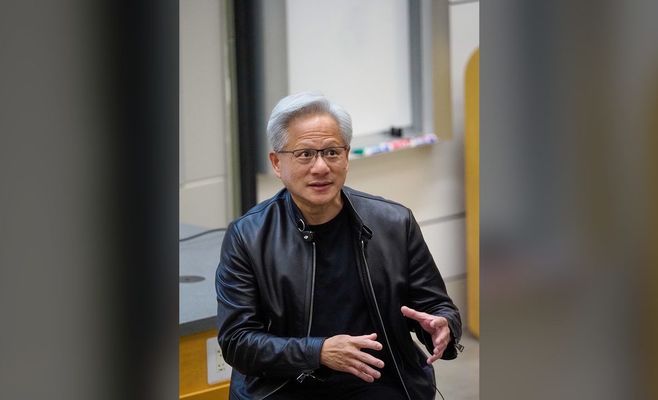
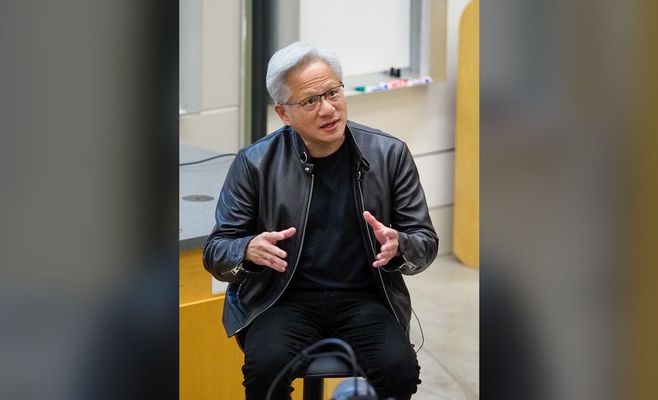
Nvidia's decision to reinstate Jensen Huang as chief executive is the event behind Monday's market rally, and its fallout is still spreading. According to Reuters, the company said it had gained confidence that Huang does not pose a national security risk. Nvidia shares closed up 31.5% at $165.05, the biggest one-day gain since May 2003, according to The Korea Daily.
The move also inflicted heavy losses on investors betting against the chipmaker and raised pointed questions about how the board handled the episode.
A record gain and a painful day for short sellers
The Korea Daily, citing MarketWatch and Reuters, reported that Nvidia's market capitalization rose by roughly $950 billion in one session. That is the largest single-stock increase in U.S. stock market history, according to the outlet.
Investors who had bet on a decline paid for it. Analytics firm ORTEX tracked mark-to-market losses of $11.2 billion for Nvidia short sellers on Monday, with paper losses reaching as high as $12.2 billion during the session. ORTEX said that was the largest single-day figure since it began tracking in 2019. The losses erased more than $10.5 billion in paper gains the short sellers had booked the previous week.
ORTEX co-founder Peter Hillerberg told Reuters that the jump was not a classic short squeeze, in which traders are forced to buy back shares. Short interest was just over 1% of the float, he said, which points to a reaction to the news rather than forced buying.
Leveraged products took the hardest hit
The Wall Street Journal reported that a 3x inverse Nvidia product listed on European exchanges fell 91% right after the U.S. market opened, and trading in it was halted. The Korea Daily noted that such products reset daily, so wild swings can erode value whichever direction an investor bets. For the year to date, the 2x inverse and 2x leveraged Nvidia ETFs are down 46.1% and 43%. Nvidia's own stock is down 11.3% over that period.
Why it matters for investors and the broader market
Nvidia's weight in the market means its leadership drama has spilled well beyond one stock. Reuters reported that the Nasdaq rallied almost 7% and the S&P 500 rose 4.7%, recouping Friday's plunge in AI-exposed shares, which was driven partly by uncertainty at Nvidia itself. Europe's STOXX 600 traded up nearly 2%.
Investors also moved out of safe-haven bonds. Short-dated Treasury yields rose 10 basis points on the day to 4.72%, according to Reuters.
Several analysts urged caution about what comes next. James St. Aubin, chief investment officer at Ocean Park Asset Management, said the market may not be able to reverse the broader downtrend and could see more selling once the relief rally fades. He argued that Huang's return does not answer investors' questions about the return on AI spending. Steve Sosnick of Interactive Brokers said he would not be chasing the stock at current levels.
Frederic Neumann, chief Asia economist at HSBC, told Bloomberg that Huang's leadership can reduce Nvidia's near-term risks. He said uncertainty over U.S. regulation of data center construction and technology transfers remains, and that tighter financial conditions are a strong headwind for an AI industry increasingly reliant on debt.
Reactions to the reversal and the governance questions
President Donald Trump welcomed the move in a social media post, calling it the "correct and proper decision," according to Reuters.
Many analysts focused on the board's process. Shay Boloor of Futurum Equities noted that the board accepted Huang's resignation, publicly ruled out bringing him back, and then unanimously reinstated him less than two weeks later. He said investors have regained confidence in the leadership but that restoring confidence in governance will take longer.
Nada Kakabadse, a governance professor at Henley Business School, said the board's statement does not explain what changed beyond political and market pressure. She also noted that an investigation into what Huang told the company is still open. Ben Barringer of Quilter Cheviot said the company appeared to feel cornered and that losing Huang to a competitor could have been a bigger problem for shareholders.
Anshel Sag of Moor Insights & Strategy said the reversal suggests much of the matter was political and changes the dynamic between Nvidia and the government. St. Aubin said the administration effectively shielded Huang and the board from Justice Department involvement. Sosnick said it is impossible to know how much the administration or shareholders pushed, but that it suggests Huang was "too big to be fired."
What to watch next
Sag said congressional hearings will still inevitably take place, and St. Aubin said Huang will still face tough questions from Congress. Tom Plumb of Plumb Balanced Fund said it will be interesting to see whether Nvidia addresses governance issues such as Huang's 60 direct reports and the makeup of the board. Nvidia has not detailed any changes in the sources reviewed.
Earlier on Around Prague: Why the Stock Market Rose Today: Dow Jumps 1,448 Points, S&P 500 +4.7%, Nasdaq +6.5%
Read next
What Jensen Huang's Nvidia Comeback Means for Markets, Washington and Investors
Nvidia Reinstates Jensen Huang as CEO: What It Means for Bitcoin and AI Stocks
Chip Stocks Rebound After Huang's Return as Congress Eyes Nvidia
Around Prague, based on reporting by The Korea Daily, Global Banking & Finance Review
Cover photo: Anders Eidesvik / Wikimedia Commons, CC BY 4.0, cropped