Senate Advances Bipartisan Permitting Bill 73-25, but Hurdles Remain
USD 21,70
Popular
The Senate voted 73-25 on Monday to move a bipartisan bill that would reshape how energy projects get approved and built across the country toward full debate, Axios reported. The wide margin masks a tentative coalition: several senators who backed the step say they will push for changes or could still oppose the final bill.
Any version that clears the Senate must also win approval in the House, where the bill's backers face a closely divided chamber and a limited legislative calendar.
How the vote broke down
Republicans were nearly united, voting 51-1 in favor. Sen. Mike Rounds of South Dakota was the lone Republican to vote no. On the Democratic side, 21 Democrats and independent Sen. Angus King of Maine voted yes, while 23 Democrats and independent Sen. Bernie Sanders of Vermont voted against moving the bill ahead.
Co-author Sen. Shelley Moore Capito, a West Virginia Republican, told reporters the result was at least as good as she had expected, according to Axios.
Why some supporters are still wary
Senate Minority Leader Chuck Schumer, a New York Democrat, said after the vote that he still has unresolved concerns and plans to try to address them through amendments. Sen. Catherine Cortez Masto, a Nevada Democrat, said she will oppose final passage unless changes to the National Historic Preservation Act are removed, citing concerns raised by tribes. Axios reported that Sen. Lisa Murkowski, an Alaska Republican, is in a similar position.
The vote also divided Democrats who are the Senate's most vocal voices on climate change. Sens. Brian Schatz of Hawaii, Sheldon Whitehouse of Rhode Island and Martin Heinrich of New Mexico backed the measure. Whitehouse and Heinrich are among its co-authors. Sens. Jeff Merkley of Oregon and Ed Markey of Massachusetts voted no, along with Sanders.
What it means for energy projects and consumers
Axios said the legislation could have far-reaching consequences for how energy projects are built nationwide. At a news conference before the vote, Heinrich and Whitehouse stressed lower energy costs, accountability for data centers and jobs before turning to the bill's limits on power-sector emissions, according to Axios. Whitehouse also told climate and environmental groups that he sees the bill as a starting point for further work rather than a final goal.
The details of those provisions may shift in the coming weeks, since senators are expected to offer amendments before a final vote.
The Trump factor
President Donald Trump added uncertainty shortly before the vote. Axios reported that he said he would not approve wind turbines, while also saying he fully supports the bill. The White House later reaffirmed that he is completely behind the legislation.
Whitehouse said in a statement that the bill's success depends on Trump administration officials getting wind power onto the grid to deliver affordable energy, and that progress on that front is needed before final passage.
What to watch next
Whitehouse has promised a vigorous amendment process, but the Senate is now working against the lame-duck calendar, Axios reported. Any changes must keep enough Democratic support without losing too many Republicans.
In the House, Minority Leader Hakeem Jeffries, a New York Democrat, criticized the bill last week and called for more engagement with his caucus. Asked Monday whether the Senate co-authors' revisions addressed his concerns, he told reporters they are still under review.
Axios said the main things to watch are the amendments as they are filed and the politics in the House.
Read next
How Michigan and Alaska Surprises Could Decide Which Party Controls the Senate
Senate Debates Turn Personal as Parties Fight for Control Before Nov. 3
Senate Debates in Michigan, Georgia and Maine Center on Costs, Tariffs and Personal Attacks
Around Prague, based on reporting by Axios
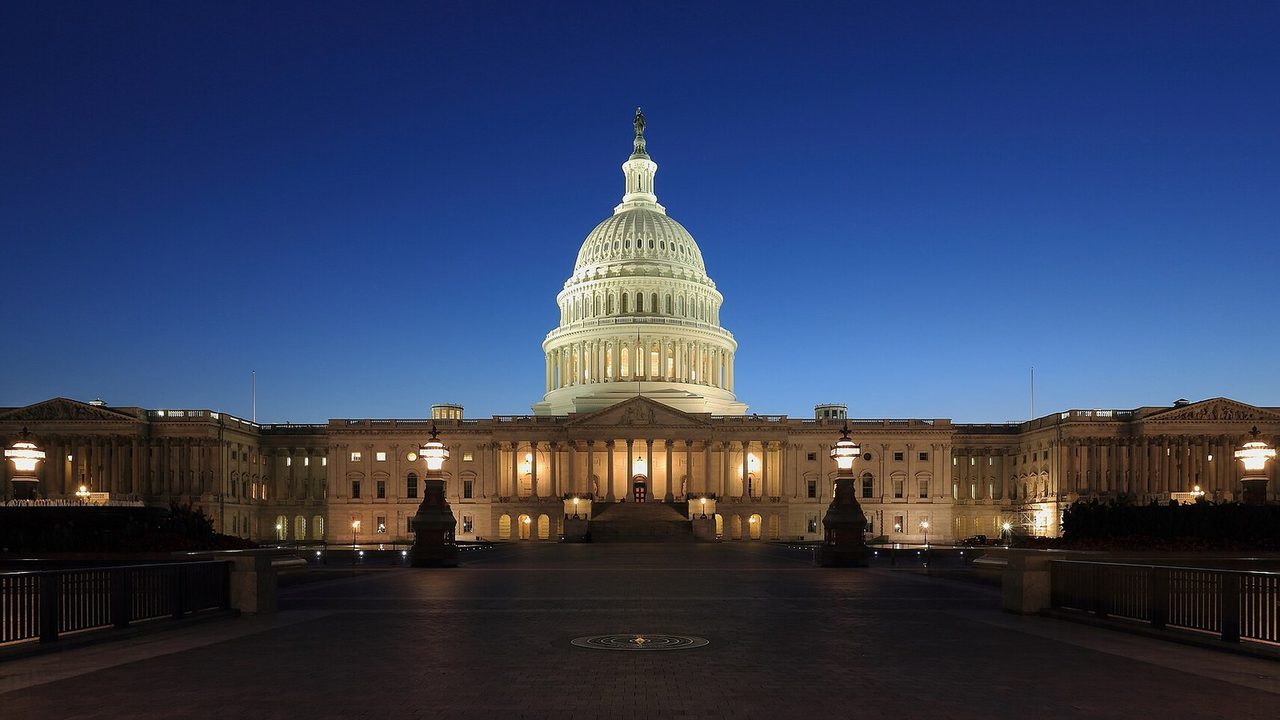
Cover photo: Martin Falbisoner / Wikimedia Commons, CC BY-SA 3.0, cropped