Irish Refinery's Alumina Exports to Russia Spark Calls for EU Sanctions
USD 21,91
Popular
Ireland is under growing pressure to stop shipments of alumina, a white powder used to make aluminum, from a Russian-owned refinery to Russia, ABC News and The Independent reported. Experts quoted in the reports say some of it ends up in weapons for the war on Ukraine, while the Irish government says it has found no evidence of that.
The calls come as dozens of European leaders gather in Dublin this week to discuss support for Ukraine. A summit of the 47-nation European Political Community on Thursday is followed by a meeting of European Union leaders.
The key numbers
- 491,307 metric tons: the amount of alumina the activist group Alumina 22, which lobbies for sanctions on the trade, estimates was shipped from Ireland to Russia between March and October.
- About 40%: how much Russia's alumina supplies were crimped after two factories, one in Australia and one in Ukraine, stopped exporting to Russia following the 2022 full-scale invasion, according to a 2026 report by the Economic Security Council of Ukraine (ESCU).
- Roughly 17%: the share of the Russian aluminum producer Rusal's alumina supply that now comes from Ireland, according to ESCU.
- 21st: the number of the EU sanctions package against Russia adopted in July, which did not include alumina.
- 27: the number of EU member countries that must agree unanimously before any sanctions can be adopted.
Where the alumina comes from and where it goes
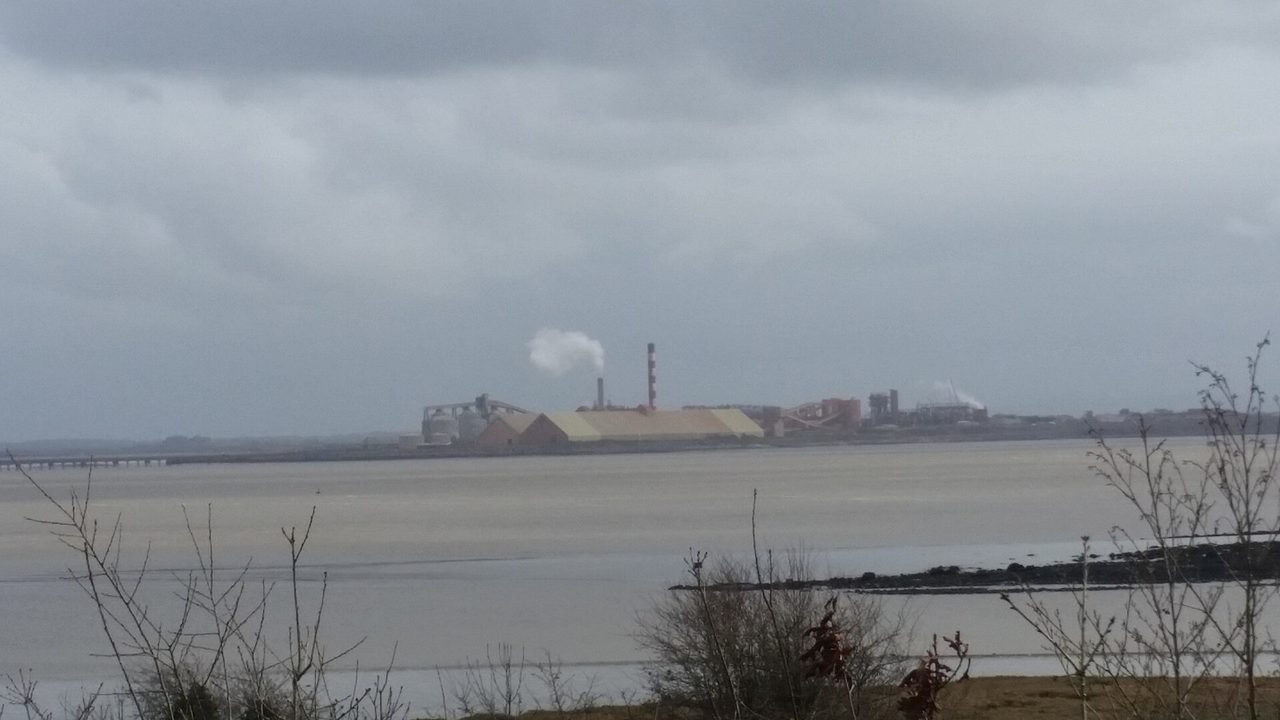
The Aughinish plant in County Limerick, built in the 1970s, is Europe's biggest alumina refinery. Rusal bought it in 2007. Rusal was founded by Oleg Deripaska, a sanctioned oligarch with ties to Russian President Vladimir Putin, and he still part-owns it. According to the U.S. and Australian governments, Rusal makes virtually all of Russia's aluminum.
While many ships leave Aughinish for Europe and beyond, a steady stream heads straight to St. Petersburg, according to ship-tracking data from MarineTraffic. This week the cargo ship Karin loaded alumina and set sail for Russia.
Alumina is refined from bauxite and smelted into aluminum, which is then alloyed to make materials used in missiles and aircraft. Aluminum is also used in rocket fuel and explosives, the reports said.
What each side says
Ivana Bacik, who leads Ireland's opposition Labour Party, said the material is "clearly ending up in military supplies" and called it unthinkable for Ireland to contribute to Putin's war machine, even indirectly. Olena Yurchenko of ESCU said virtually everything from Rusal is highly likely to reach Russian military enterprises.
An investigation by the Organized Crime and Corruption Reporting Project and the Irish Times found that Aughinish alumina is smelted into aluminum in Russia, with some sold to a metals trading company that supplies Russian defense contractors. EU sanctions envoy David O'Sullivan said he has read the Irish government's report and believes the journalists got it right.
Irish government minister Niall Collins said there is "absolutely no evidence" the material enters military supply chains. Enterprise Minister Peter Burke, who oversees sanctions enforcement, said Ireland has found no evidence of military use but also no proof that it does not happen, and that it was impossible to prove Rusal's claim that the alumina is used only for aluminum exported from Russia. Aughinish Alumina said its product has no connection to the Russian military supply chain and that an independent company provides monthly audits to Irish authorities.
Why it matters: a gap in European sanctions
Almost five years into the full-scale invasion, alumina has escaped European sanctions meant to weaken Russia's economy, leaving the refinery free to export. Ukraine's President Volodymyr Zelenskyy said in June that European companies owned or effectively controlled by Russia and sanctioned oligarchs keep supplying the aggressor with essential materials. Irish Prime Minister Micheál Martin said Ireland does not want material from an Irish plant to support the Russian war effort.
The Irish government has not made its investigation findings public, but it passed them to the European Commission, which drafts sanctions packages.
What happens next
The European Commission is sounding out member nations about the Irish alumina exports. The European Parliament passed a non-binding motion in July calling for a ban on alumina exports to Russia. A commission spokesperson said in July that sanctions policy is a delicate balance between thwarting Russia's war effort and limiting negative impacts on EU member nations.
Read next
Why a Democratic Lawmaker Calls Trump's Russia Sanctions Waiver a Surrender
Trump's Russia Sanctions Waiver Draws Fire as Energy Chief Defends It
Trump Waives Russia Sanctions and Questions Zelenskyy's Role as U.S.-Ukraine Rift Widens
Around Prague, based on reporting by ABC News, The Independent
Cover photo: Blight55 / Wikimedia Commons, CC BY-SA 4.0, cropped