Italy's New Protest Rules: What the Milan Decree Means for Rioters and Parents
USD 21,68
Popular
Anyone who takes part in a violent demonstration in Italy now faces up to five years in prison, and parents can be made to pay for damage caused by their children. The Italian cabinet approved the measures on Tuesday after riots in Milan over the weekend, according to ABC News and Al Jazeera.
The decree also sends 500 more soldiers to Milan through the end of the year. The government says it is aimed at the kind of unrest that left Milan's central shopping district damaged, with stores looted and property set on fire.
What changes for protesters and their parents
The decree creates a new criminal offense of violent participation in a demonstration. ABC reported that it carries up to five years in prison and a fine of up to 20,000 euros. Al Jazeera said the offense applies to people in a group of at least five who endanger public safety. Penalties rise if offenders hide their faces or if someone is injured.
Protesters will be responsible for paying for property damage, Meloni said. Al Jazeera reported that authorities can order prompt compensation and, when minors are involved, hold their parents liable.
What changes for teenagers
Much of the decree targets young people, who were prominent in the riots. According to ABC, Milan police said 2,000 youths took part on Saturday night. Of the roughly 50 people arrested over the weekend, more than 30 are minors.
The decree makes it easier to prosecute minors over 14. ABC reported that anyone above that age is now automatically presumed able to understand their actions unless proven otherwise. Until now, a judge decided that. Al Jazeera added that police may detain people aged 14 to 17 who have not committed a crime if there is evidence they pose a danger, extending a power that previously applied only to adults.
Meloni also said the government would add beds to detention facilities and more judges to the juvenile justice system.
What the soldiers will and will not do
Italy's Ministry of Defence said the military will help reinforce security at key sites, step up surveillance of sensitive locations and improve monitoring. Al Jazeera, citing Italian media, reported that the cabinet did not give soldiers policing powers, as had been expected, after opposition from President Sergio Mattarella.
What this means in practice
For people attending protests in Italy, the legal risk has risen: a demonstration that turns violent can now bring a prison sentence and a large fine, with harsher penalties for covering one's face. For families, the cost of a teenager's involvement can fall on parents, and teenagers over 14 can be treated as legally responsible for their actions. Residents and shoppers in Milan should expect a larger military presence at key sites through the end of the year.
Why the government acted
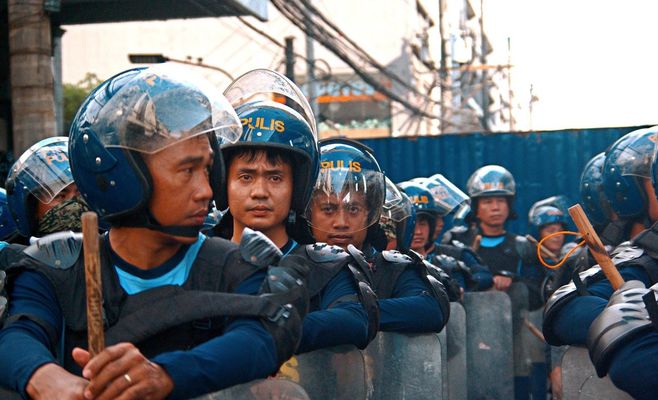
Police used water cannons and tear gas on Saturday to disperse rioters, many with covered faces, who clashed with officers, looted stores and set fires. ABC reported that looting and violence continued on Sunday and that more than 100 police officers were injured over two days. Milan police said the crowd included many naturalized Italians born to foreign parents as well as foreign nationals.
Al Jazeera said the demonstrations were driven by anger over soaring fuel and energy prices, high rents, low wages and the state of public services. The unrest coincided with protests in France over living costs, which also saw violence. The Meloni government also faces a separate wave of protests in southern Italy, where truck drivers angry about diesel prices have staged roadblocks that disrupt supply chains. Al Jazeera noted that rising prices are a concern for Meloni ahead of the 2027 national elections.
In a video posted on social media, Meloni called the presence of so many young rioters “painful and frightening.” She said the government must address the phenomenon seriously so the images do not become a model for others. After the cabinet meeting she wrote that “Destroying and stealing is not protest, it is crime.”
What happens next
Al Jazeera reported that the legal measures take effect immediately. Under Italian procedure, ABC reported, parliament must convert the decree into law within 60 days.
Sources: ABC News, Al Jazeera