How Ricard Boada and Sofia Gumuzio built Volta into a $2.4bn startup

USD 21,66
Popular
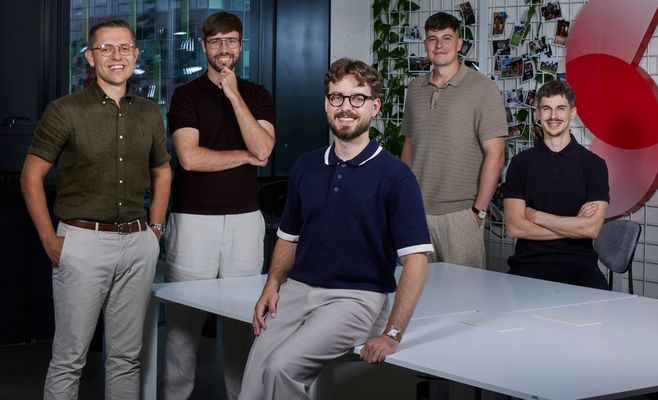
As recently as January, their company had capital of just one pound sterling and a simple idea. Seven months later, the startup Volta, founded by former financiers Ricard Boada and Sofia Gumuzio, is valued at $2.4 billion (about 50 billion crowns) and has signed a contract with Anthropic worth $10 billion.
Boada spent more than a decade at the investment giant Brookfield, where he financed data centres and energy projects worth tens of billions of dollars. His colleague Gumuzio, a civil engineer by training, ran multibillion-dollar infrastructure deals across Europe at the same firm. Together they concluded that the defining opportunity of our time lies in who can build and finance the infrastructure for artificial intelligence.
The idea proved so compelling that the industry’s biggest funds invested in Volta — Andreessen Horowitz and Altimeter, along with Nvidia itself, the chip market leader. It was this backing that helped the startup reach a $2.4 billion valuation within just a few months.
But the clearest proof of serious intent was the contract with Anthropic — the creator of the Claude chatbot and one of OpenAI’s main rivals. According to Bloomberg, the company has contracted Volta’s computing capacity for six years for $10 billion. For a startup that effectively did not exist at the start of the year, this is an extraordinary endorsement.
The capacity for Anthropic will be built not in California or Texas, but in the Norwegian village of Tydal. The choice is no accident: Norway offers cheap hydropower, a cold climate for cooling servers and stable energy infrastructure. Volta isn’t building everything from scratch — the company has teamed up with Bitdeer, which previously used the site for bitcoin mining and is now converting it for AI workloads.
“Every technological revolution has rested on infrastructure beneath it. Railways carried the industrial revolution, electricity lit up the factories, and fibre optics gave life to the internet,” says Boada, explaining the company’s philosophy. The name Volta is a nod to Alessandro Volta, who more than two centuries ago created the first device for a steady supply of electric current — the startup’s founders want to do the same with computing power, turning it from a scarce commodity into ordinary infrastructure.
The founders are already planning similar new projects in Europe and North America. To offer clients a complete service, Volta also acquired the company Genesis Cloud this year, which will let it lease out and manage computing capacity directly.