Prague Castle from the Inside: 9 Must-See Spots Within the Fortress Walls
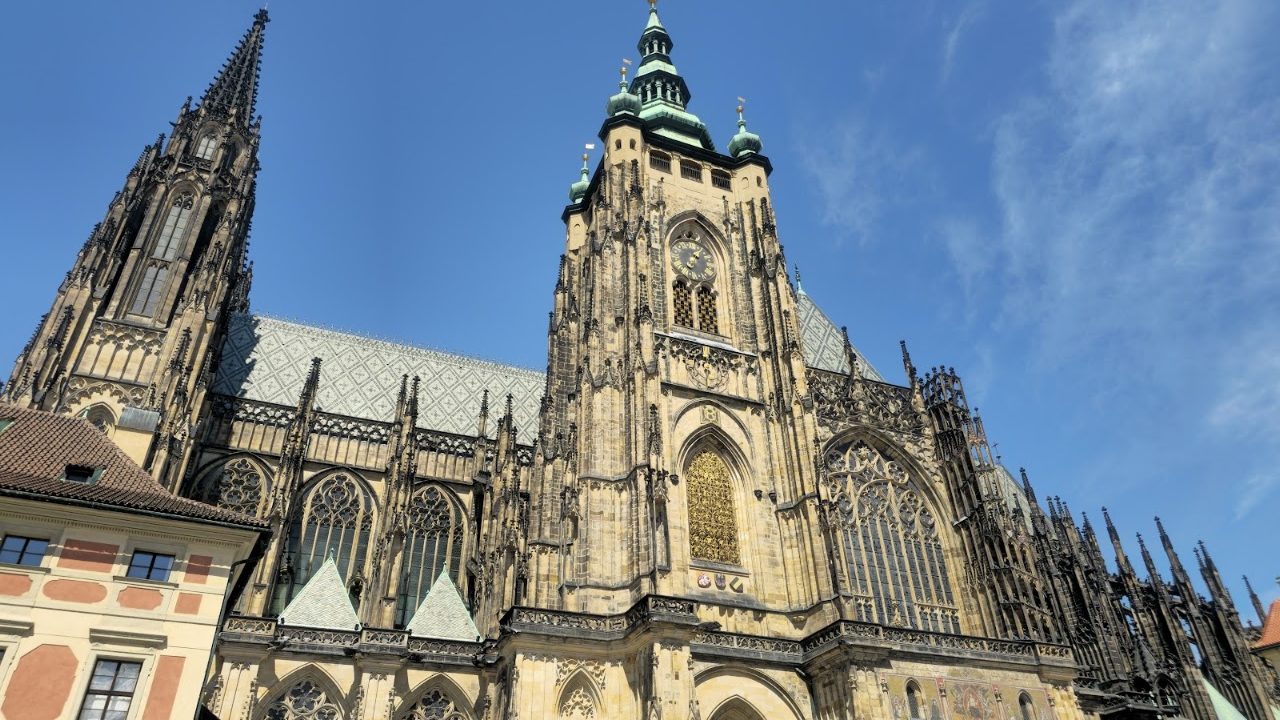
Prague Castle isn't a single building — it's a city within a city: cathedrals, palaces, gardens and lanes all tucked behind one set of fortress walls. If you've only got a couple of hours, it's easy to get lost among the courtyards and signposts. This guide rounds up the must-sees and a few lesser-known gems inside the complex — from the Gothic cathedral to a Renaissance garden — so you know exactly where to head first.
Katedrála svatého Víta, Václava a Vojtěcha (St. Vitus Cathedral)
The Gothic cathedral on the Third Courtyard (III. nádvoří) is the spiritual and architectural heart of the Castle. It's the most significant Gothic building in Czechia and the dominant landmark of Prague Castle, under construction since 1344, home to the coronation jewels and the relics of St. Wenceslas. The cathedral is part of the combined "Circuit A" ticket along with three other sites. The Castle grounds are open year-round from 6:00 to 22:00, while the monuments themselves — the cathedral, the Old Royal Palace, St. George's Basilica and Golden Lane — can be visited from 9:00 to 17:00 in summer and until 16:00 in winter. Last entry to the cathedral is at 15:40.
Starý královský palác (Old Royal Palace)
Located right next to the cathedral, in the Second Courtyard. This historic 12th-century building houses Vladislav Hall, once the largest secular hall in Europe. It's covered by the same "Circuit A" ticket (450 CZK full price / 300 CZK reduced).
Bazilika sv. Jiří (St. George's Basilica)
A Romanesque basilica on St. George's Square, just behind the Old Royal Palace. It's the oldest surviving church building on the Castle grounds, founded in 920, known for its Romanesque architecture and calm atmosphere — a striking contrast to the grandeur of the cathedral that makes it worth lingering a while.
Zlatá ulička s věží Daliborka (Golden Lane and Daliborka Tower)
A tiny, colorful lane along the northern wall, between the White Tower and Daliborka Tower. These little houses, built into the fortifications in the late 16th century, were inhabited right up until World War II; today nine of the sixteen houses hold exhibitions on 500 years of life on the lane. Franz Kafka lived and worked in house No. 22 from 1916 to 1917. During the day, entry requires the general ticket, but in the evening you can walk through for free — though without access to the house interiors.
Prašná věž Mihulka (Mihulka Powder Tower)
A sturdy powder tower on the Castle's northern side. Built by Benedikt Rejt in the late 15th century as the most powerful artillery bastion of the new fortifications, it's said to have housed Emperor Rudolf II's alchemical laboratory. Inside is an exhibition on the history of the Castle Guard, included in the "Permanent Exhibitions" ticket (300/200 CZK).
Obrazárna Pražského hradu (Prague Castle Picture Gallery)
A picture gallery housed in the former Renaissance stables. The exhibition presents more than a hundred of the finest paintings from the Prague Castle collection — around 4,000 works in total, making it the oldest continuously existing picture collection in the country. The collection dates back to the reign of Rudolf II, who from 1583 gathered artworks from across Europe. The ticket is combined with the Rosenberg Palace, the "Story of Prague Castle" exhibition, and Mihulka Tower.
Rožmberský palác (Rosenberg Palace)
The Rosenberg family's Renaissance palace on Jiřská Street. The permanent exhibition takes visitors into what was originally the Renaissance palace of the Lords of Rosenberg, built between 1545 and 1574, which became the property of Emperor Rudolf II in 1600 and was radically rebuilt in the mid-18th century into an Institute for Noble Ladies. Check the current status before visiting, as part of the exhibition is periodically closed for restoration.
Královská zahrada a Letohrádek královny Anny (Royal Garden and Queen Anne's Summer Palace)
A Renaissance garden on the Castle's northern side, beyond the Deer Moat. Here you can admire the Renaissance beauty of Queen Anne's Summer Palace, a unique singing fountain, and art exhibitions in the historic halls. Ferdinand I built the pavilion between 1538 and 1560 for his wife Anna Jagiellon, and today the palace serves as an exhibition space for fine and applied art. Note that from May 2026, the Prague Castle Administration is beginning a large-scale restoration of the Summer Palace that will last nearly two years, so some interiors may be closed.
Vikárka Restaurant
A historic pub-restaurant right by the cathedral walls, on Vikářská Street. Vikárka has been continuously linked to the history of Prague Castle since 1347 — from the right granted by Charles IV for the vicars to brew their own beer, through the era of Rudolf II, when the local beer refreshed the emperor and his alchemists. It's a great spot to rest after a long walk through the courtyards and gardens, serving traditional Czech cuisine in vaulted halls steeped in history.
You can cover Prague Castle in one packed day, but every corner deserves its own moment — from the majestic cathedral to the quiet basilica and the Renaissance garden tucked behind the fortress walls. It's best to arrive right at opening time to catch the cathedral and Golden Lane before the crowds, and save the evening for a free stroll through the emptied courtyards and gardens.
See also:
Comments (0)
Please be polite. Spam and insults will be removed.