Zámek Hluboká nad Vltavou: Czechia's fairy-tale Windsor castle
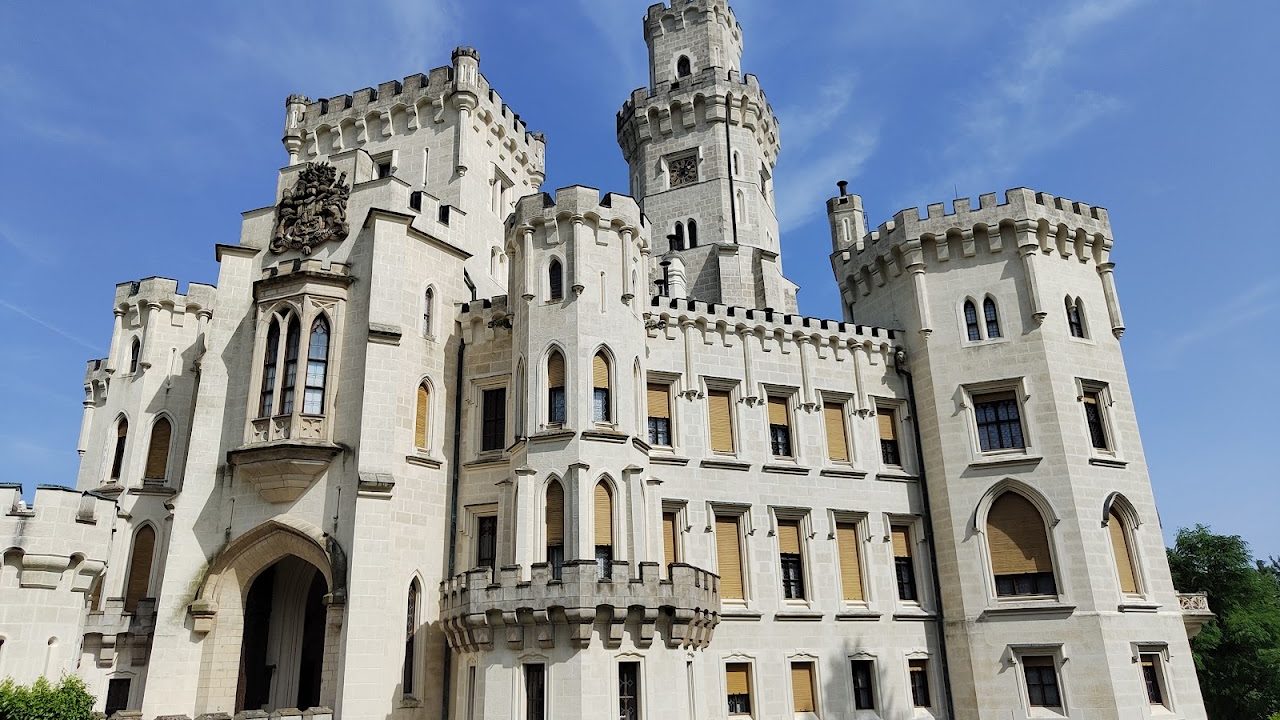
In the very heart of South Bohemia, on a rocky promontory above the river Vltava, stands a snow-white neo-Gothic castle that locals and guidebooks alike agree is the most beautiful in the country — Zámek Hluboká nad Vltavou. Its silhouette of crenellated turrets, bay windows and pointed-arch windows so closely resembles the residence of the English monarchs that it has earned the enduring nickname “the Czech Windsor.” The resemblance is no accident, but the deliberate architectural statement of an entire aristocratic family.
The site's history began far more modestly than its present fairy-tale appearance suggests. Hluboká Castle was founded in the mid-13th century, probably by King Wenceslas I, as part of a network of royal strongholds directed chiefly against the powerful Vítkovci clan. The castle changed hands and appearance many times: in 1561 the estate was acquired by the influential lords of Hradec, and within two years the new owners had rebuilt the Gothic castle into a Renaissance residence. Later, after the property of the Protestant Malovec family was confiscated, the estate passed to the Spanish general Don Baltasar de Marradas, and in 1661 Jan Adolf I of Schwarzenberg bought Hluboká from his nephew — beginning an almost three-century period during which the castle belonged to one of the wealthiest aristocratic families in Central Europe.
The castle's present appearance is the work of the Schwarzenbergs — specifically, a 19th-century princely couple. When Eleonore of Schwarzenberg visited Windsor Castle in the 1830s, she returned home inspired by what she had seen and set in motion the transformation of the Renaissance country house into one of the most extravagant examples of 19th-century castle romanticism. The rebuilding began in 1841, when Jan Adolf II of Schwarzenberg and his wife Eleonore commissioned a radical reconstruction in the Tudor Gothic style, drawing directly on Windsor Castle; the project took more than 30 years and included the present façade with its many towers, the state interiors and the landscape park. In terms of investment, the result was one of the most expensive private building projects in 19th-century Bohemia. Today the castle has 11 towers (the main one reaching 60 metres) and 140 lavishly furnished rooms, surrounded by an English landscape park.
Inside, the castle rewards a leisurely visit: its interiors are considered among the most sumptuous in Czechia. Carved wooden ceilings, thousands of tiles in the Delft faience style, Flemish and Dutch tapestries, and an armoury with hundreds of historic blades turn the state rooms into a genuine record of 19th-century aristocratic taste. A particular highlight of the collection is the famous set of mid-17th-century Brussels tapestries by Baudouin van Beveren depicting scenes from folk proverbs, while the castle chapel houses the so-called Netolice Altar from the 15th century. Book lovers will also appreciate the castle library — an extensive and valuable collection of 12,000 volumes beneath a beautiful coffered ceiling. Besides the state apartments, visitors can also tour the castle's real kitchen, which stretches the entire length of the building's basement.
The atmosphere at Hluboká is a blend of manorial ease and gentle theatricality: the white turrets are strikingly reflected in the greenery of the park, while inside there is heavy velvet, crystal chandeliers and portraits of the last owners, Prince Jan Adolf II and Princess Eleonore. Yet the family's fate ended dramatically: the Schwarzenbergs owned Hluboká until 1945, when their estates were confiscated under the Beneš decrees after the Second World War; the castle passed to the state in 1947 and opened as a museum in 1950. It is also worth remembering the anti-Nazi stance of the last owner — Adolph Schwarzenberg was a committed opponent of Nazism and made no secret of it even before the war began, which makes the castle's history not only architectural but deeply human.
An insider tip for anyone planning a visit: don't limit yourself to the state rooms. The former riding hall on the grounds now houses an art gallery, and a walk through the extensive park — with its Gothic-style tower and views over the Vltava — can easily fill a pleasant hour on its own. It's best to arrive on a weekday, right at opening time: the morning hours are ideal thanks to smaller crowds, and weekdays are generally the best time to visit.
Address: Zámek 142, 373 41 Hluboká nad Vltavou
Opening hours: main tourist season — April to October, daily, approximately 9:00 a.m. to 5:00 p.m. (in winter some routes are closed, but a heated winter route operates)
Prices: the basic ticket (Circuit I) costs around 200 CZK for adults and 140 CZK for children; the second circuit costs around 150/110 CZK
Hluboká is worth visiting for anyone looking for a postcard-perfect, almost Disney-like Czechia without the pomp of the big tourist hubs: lovers of architecture and English romanticism, families with children (the castle park and the Ohrada zoo are right nearby), and anyone heading south towards Český Krumlov who wants to see along the way how 19th-century Czech aristocracy reimagined British monarchical aesthetics on the banks of the Vltava.
See also:
Comments (0)
Please be polite. Spam and insults will be removed.