Geminids 2026: Best Nights 13–14 and 14–15 December in Czechia
Popular
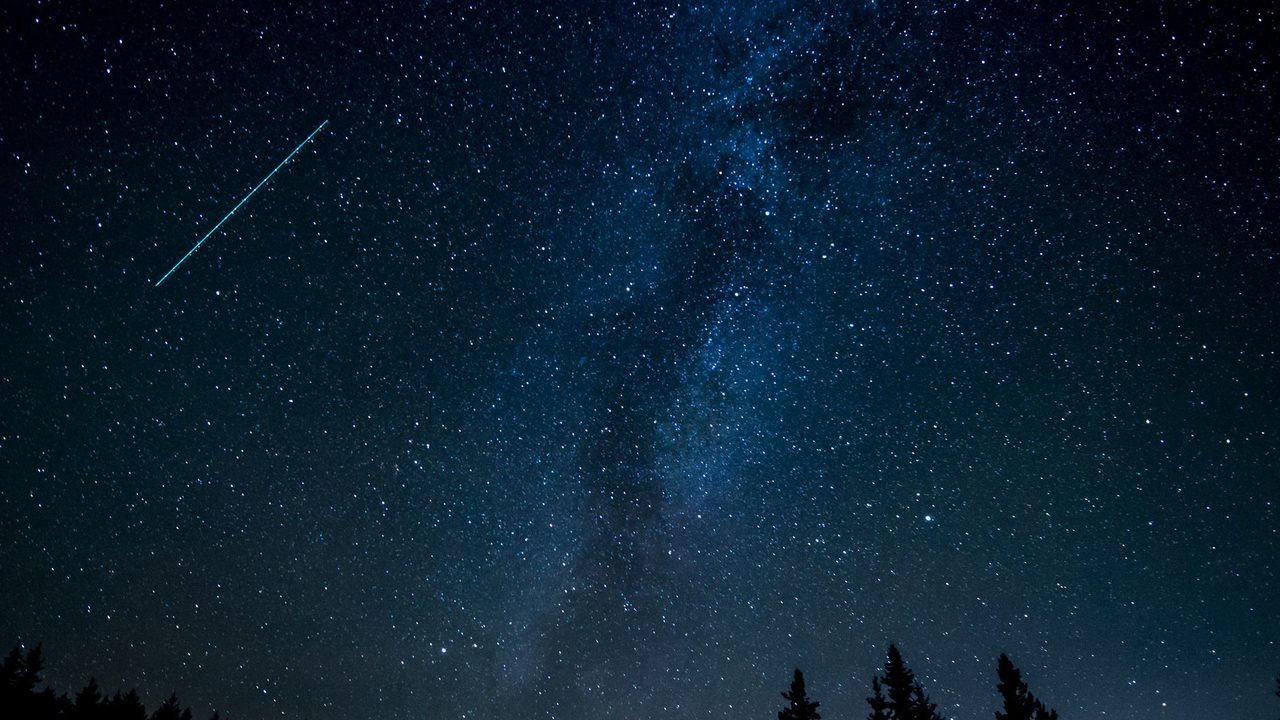
The Geminids peak on Monday 14 December 2026 at about 15:00 Prague time, which is in daylight. That leaves two best nights: 13–14 December (Sunday into Monday) and 14–15 December (Monday into Tuesday), between midnight and 4:00. The Moon sets in Prague at 20:07 and 21:18, so it will not get in the way. Under a very dark sky about 130 meteors an hour are possible; in central Prague you will see only a fraction of that. Here is when and where to watch from Prague, and what else is happening in the December sky. Around Prague checked the dates and sky data on 2 November 2026 against the International Meteor Organization (IMO), the Institute of Physics at the Silesian University in Opava and the US Naval Observatory.
Before the Geminids, the Leonids peak on the night of 17–18 November 2026; times, the Moon and the best places to watch are in our Leonid meteor shower 2026 guide.
When to watch: 13–14 or 14–15 December
The IMO expects the maximum on 14 December at 14:00 Universal Time, which is 15:00 in Prague. The shower is active from 4 to 20 December, but rates of 100 an hour or more last only about 10–12 hours. Reliably measured peaks from the past two decades correspond in 2026 to a window from 22:00 on 13 December to 19:00 on 14 December. Both nights are therefore worth it. If you can only do one, let the weather decide.
| Night | Moonset (Prague) | What to expect |
|---|---|---|
| Sat–Sun, 12–13 December | 18:56 | Fallback, with noticeably fewer meteors |
| Sun–Mon, 13–14 December | 20:07 | First main night, with the peak still ahead |
| Mon–Tue, 14–15 December | 21:18 | Second main night, with the peak just past |
- Time: the radiant, the point in Gemini near the star Castor from which the meteors appear to come, rises around sunset according to the IMO. By our calculation for Prague it stands about 25° high at 20:00, about 60° at midnight and about 73° at 2:00. The higher the radiant, the more meteors you see, which is why astronomers in Opava suggest midnight to 4:00.
- Moon: new moon falls on 9 December, and on the first main night about a fifth of the disc is lit. Once the crescent has set, the sky stays moonless until morning.
What makes the Geminids special
Most meteor showers come from comets, but the Geminids are linked to (3200) Phaethon, an object that looks more like an asteroid in its orbit and the way it reflects light. How the dust stream formed is still open: measurements by NASA's Parker Solar Probe point to a violent event such as a collision or a gas eruption. The meteors are relatively slow, at 35 km/s against 59 km/s for the Perseids, and bright, so they are easy to spot even for beginners.
How many meteors you will really see
The often-quoted 150 an hour is the ZHR, a calculated value for an ideal sky with the radiant overhead. For conditions in 2026 the institute in Opava gives about 130 meteors an hour. Your own count depends above all on how dark the sky is.
| Sky | Meteors an hour, roughly |
|---|---|
| Very dark, remote uplands | 130 |
| Dark, countryside without street lights | 80 |
| Village or edge of town | 30 |
| Central Prague | 10 |
The table is Around Prague's rough calculation, not a forecast: we start from 130 an hour and divide by the IMO's population index of 2.6 for each step of limiting magnitude. Haze, cloud and distance from the peak push the number lower, so under a good rural sky 60–100 is a more realistic hope than 150.
Where to watch
- Outside the city: any dark spot without street lights and with a wide view of the sky. The best are the official dark-sky parks: Jizera, Manětín and Beskydy. More about them in our guide to the northern lights in Czechia.
- In Prague: light pollution means you will see only the brightest meteors. Pick parks and hills away from street lights and face the darkest part of the sky.
- Where to look: not necessarily at the radiant, as meteors appear all over the sky. Lie down and take in as much sky as you can.
How to prepare
- Weather: December in Czechia is often cloudy. Check the ČHMÚ cloud forecast and stay flexible: if only one of the two nights clears, take that one.
- Cold: nights are usually around or below freezing. Bring a mat or sleeping bag, a thermos and warm boots.
- Eyes: give them 20–30 minutes to adjust to the dark and avoid looking at a bright phone screen.
- Photos: phone on a tripod, night mode or a series of long exposures; meteors are random, so shoot lots of frames in a row.
What else is in the December 2026 sky
- 5 December, morning: the waning crescent Moon about 7° from Venus.
- 17 December, evening: the Moon about 8° from Saturn.
- 21 December, 21:50: the winter solstice, the longest night of the year.
- Night of 22–23 December: peak of the Ursids at around 23:00. The shower is weak (ZHR 10) and the Moon is 96% lit.
- 24 December, 2:28: full moon in the night before Christmas Eve, about seven hours before perigee (356,649 km). The institute in Opava calls it the largest full moon of the year.
- Night into 28 December: the Moon passes about 6° from Jupiter, and on the morning of 28 December stands about 7° from Mars.
Frequently asked questions (FAQ)
When do the Geminids peak in 2026?
On 14 December 2026 at about 15:00 Prague time (14:00 Universal Time). It will be light then, so watch on the nights of 13–14 and 14–15 December.
What time will I see the most meteors?
Between midnight and 4:00, when the radiant is highest. You can see meteors from the evening, only fewer of them.
Will the Moon interfere?
Hardly. It sets in Prague at 20:07 on 13 December and at 21:18 on 14 December. After that the sky is moonless.
How many meteors will I see?
About 130 an hour under a very dark sky, according to the institute in Opava. Realistically 60–100 in the countryside and, by our rough calculation, about 10 in central Prague.
Where is the best place to watch in Czechia?
Somewhere dark without light pollution: the dark-sky parks (Jizera Mountains, Manětín, Beskydy) or simply well away from towns.
Sources: IMO: Meteor Shower Calendar 2026, Astrofyzikální proGResy, Silesian University in Opava: sky events 2026, US Naval Observatory: moonrise and moonset, US Naval Observatory: Moon phases, NASA: the origin of the Geminids. We calculated Moon–planet distances and the height of the radiant with JPL Horizons and the IMO coordinates. Times are given in Prague time (CET).
See also: Northern lights in Czechia, Prague Christmas markets 2026.
Cover photo: Neale LaSalle / Pexels.
Comments (0)
Please be polite. Spam and insults will be removed.