Leonids 2026: When to Watch from Prague, the UK and the US
Popular
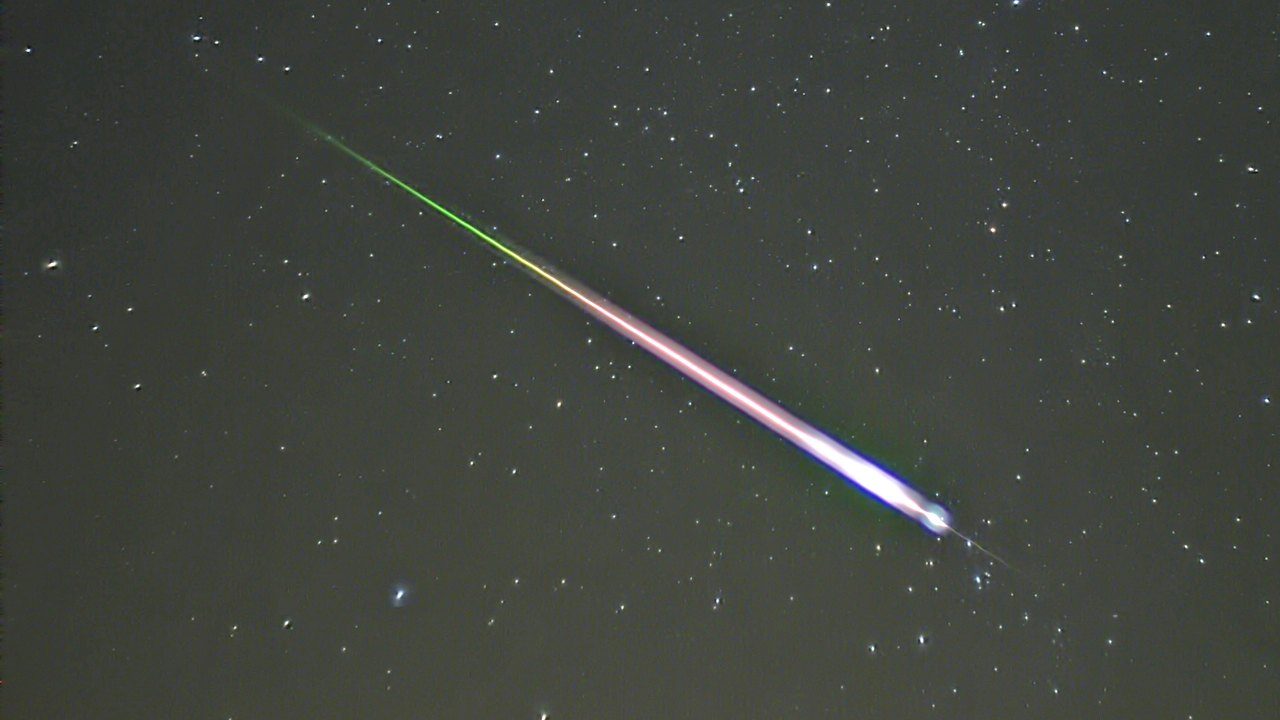
The Leonid meteor shower peaks in 2026 on the night of Tuesday 17 to Wednesday 18 November. The International Meteor Organization (IMO) expects the maximum at 23:45 UT on 17 November: 00:45 on 18 November in Prague, 23:45 GMT in the UK and 6:45 pm Eastern Time in the US. Under a dark sky expect about 10–15 meteors an hour at best, and far fewer from a city. The best time to look is between about 2:00 and 5:30 in the morning, when the radiant in Leo is high. The first-quarter Moon sets at 23:31 in Prague (23:29 in London, 11:56 pm in New York), so the hours before dawn are moonless. No meteor storm or outburst is predicted for 2026.
Around Prague checked the dates, times and Moon data on 11 November 2026 against the IMO Meteor Shower Calendar 2026, the American Meteor Society, NASA, Royal Museums Greenwich and the US Naval Observatory.
When is the Leonid peak in 2026?
The Leonids are active from 6 to 30 November. The IMO puts the regular maximum, when Earth crosses the densest part of the stream, at 23:45 UT on 17 November 2026. An alternative model by Mikhail Maslov, also quoted by the IMO, gives 16:00 UT on the same day with a similar rate. Royal Museums Greenwich names the evening of 17 November into the early hours of 18 November, while NASA and the American Meteor Society list the night of 16–17 November as the peak night. The Leonid peak is broad, so both mornings, 17 and 18 November, are worth a look.
| Event | Prague (CET) | UK (GMT) | US Eastern (EST) |
|---|---|---|---|
| Predicted maximum (IMO) | Wed 18 Nov, 00:45 | Tue 17 Nov, 23:45 | Tue 17 Nov, 6:45 pm |
| Radiant in Leo rises | about 22:30 | about 22:20 | about 11 pm |
| Moonset on 17 November | 23:31 | 23:29 (London) | 11:56 pm (New York) |
| Best window | 18 Nov, 2:00–5:30 | 18 Nov, 2:00–5:30 | 17 and 18 Nov, 2:00–5:00 am |
| Dawn begins (astronomical twilight) | 5:26 | 5:26 (London) | 5:12 am (New York) |
At the moment of maximum the radiant is still low over Europe, about 20° above the horizon in Prague, and below the horizon in North America. That is why the best counts come later in the night, once the radiant has climbed. In the US the maximum falls in the early evening, so the pre-dawn hours of 17 and 18 November are equally good bets; across the US the Moon sets between about 11 pm and just after midnight.
How many meteors will you see?
The IMO gives the Leonids a zenithal hourly rate (ZHR) of about 15, and Royal Museums Greenwich quotes 10–15 an hour. The ZHR is a calculated figure for a perfectly dark sky with the radiant straight overhead. What you actually see is lower and depends mainly on how dark your sky is.
| Sky | Leonids per hour, roughly (3:00–5:00 on 18 November) |
|---|---|
| Very dark (Jizera Mountains, Manětín) | about 10 |
| Dark countryside without street lights | about 7 |
| Village or edge of town | 2–3 |
| Central Prague | about 1 |
This is Around Prague's rough calculation, not a forecast: we took the IMO's ZHR of 15 and population index of 2.5, with the radiant about 50° high. Haze and thin cloud push the number lower. The good news is that the Leonids are the fastest of the major annual showers, at about 71 km/s, and the American Meteor Society notes that many of the brighter ones leave persistent glowing trains.
Best time to watch and the Moon
The radiant, the point in the Sickle of Leo from which the meteors appear to come, rises in the east-north-east at about 22:30 in Prague. By our calculation from the IMO coordinates it stands about 32° high at 2:00, 51° at 4:00 and 62° at 6:00. Astronomical dawn begins at 5:26, and after that the sky brightens quickly. That makes roughly 2:00 to 5:30 the best window. Evening watching brings very few Leonids, because the radiant is not yet up.
The Moon reaches first quarter at 12:48 Prague time on 17 November, according to the US Naval Observatory. A half-lit Moon would wash out fainter meteors, but it sets before the radiant gets high:
| Night | Moonset in Prague | What to expect |
|---|---|---|
| Mon–Tue, 16–17 November | 22:19 | A good night just before the peak. 17 November is a public holiday in Czechia, so you can sleep in. |
| Tue–Wed, 17–18 November | 23:31 | The main night, with the maximum at 00:45 |
| Wed–Thu, 18–19 November | 00:43 | Rates falling; models show weak dust trails at about 4:30–4:50 |
A bonus in the same part of the sky: Jupiter and Mars are in Leo, near the bright star Regulus. According to the Institute of Physics at the Silesian University in Opava, they pass just 1°11′ apart at 3:06 on 16 November, and they are still close together high in the south-east before dawn on the Leonid nights.
Where to watch near Prague
- Brdy, about 90 km (roughly 1.5 hours by car): the Czech Astronomical Society measured sky brightness at ten points in this protected landscape area. The most promising are the open fields around Míšov and Teslíny in the south, easy to reach via road I/19, and the Padrť ponds. It is not perfectly dark, as the glow of Prague and Plzeň reaches this far.
- Manětín dark-sky area, about 110 km (roughly 1.5 hours): a 346 km² area in the thinly populated north of the Plzeň region, declared in 2014.
- Jizera dark-sky park, about 130 km (just under 2 hours): the Czech–Polish area around Jizerka, declared in 2009 as the world's first international dark-sky park, and one of the darkest places within reach of Prague.
- Closer options: the Czech Astronomical Society says Křivoklátsko and the central Vltava valley have skies about as dark as Brdy. Any spot without street lights and with an open view to the east and south will do.
- In Prague: light pollution leaves only the brightest meteors. Pick a park, hill or field at the edge of the city, away from street lamps.
Prague's observatories (Štefánik Observatory on Petřín, Ďáblice Observatory and the Prague Planetarium) had no special Leonid event in their published programme for 11–24 November when we checked on 11 November 2026. Their public programmes end in the evening, well before the best hours.
How to watch
- No telescope or binoculars: meteors appear anywhere in the sky, so your eyes are the best tool.
- Let your eyes adapt: give them 20–30 minutes in the dark and keep away from your phone screen. If you need light, use a red one.
- Lie back: a deckchair or camping mat lets you take in as much sky as possible. Face east to south-east, towards Leo, but look about halfway up the sky rather than straight at the radiant: meteors seen away from it have longer trails.
- Give it time: at these rates, plan for at least an hour. Meteors come at random, with quiet gaps and small clusters.
- Dress for winter: mid-November nights in Czechia are often close to freezing. Bring a sleeping bag or blanket, a hat and a thermos.
- Photos: a camera or phone on a tripod, a wide angle and a long series of 15–30 second exposures aimed at a dark part of the sky. The more frames, the better your odds.
Weather: will the sky be clear?
Cloud is the biggest risk. November is one of the greyest months in Czechia, and low cloud or fog can sit over the Vltava valley while higher ground is clear. Check the cloud forecast on the evening of each night and stay flexible: if only 16–17 or 18–19 November clears, take that night. Our live Prague weather page shows the current forecast and any ČHMÚ warnings.
What are the Leonids?
The Leonids are dust from Comet 55P/Tempel–Tuttle, which orbits the Sun every 33 years. Each November Earth crosses its debris, and the particles hit the atmosphere at about 71 km/s. The comet's next perihelion is due on 20 May 2031, according to the IMO.
The shower is famous for its storms. The American Meteor Society lists storms in 1833, 1866, 1966, 1999, 2001 and 2002. In 1966, NASA says, thousands of meteors a minute fell during a 15-minute period. For 2026, model calculations by Vaubaillon and Sato quoted by the IMO show encounters only with old, low-density dust trails, so no storm or outburst is expected, at most a modest increase. The AMS adds that even the comet's 2031 return may not bring a storm, though displays of more than 100 meteors an hour are possible.
Frequently Asked Questions (FAQ)
When do the Leonids peak in 2026?
The IMO expects the maximum at 23:45 UT on 17 November 2026, which is 00:45 on 18 November in Prague and 6:45 pm Eastern Time on 17 November. The best viewing is in the early hours of 18 November, with the early hours of 17 November a close second.
What time should I watch the Leonids?
Between about 2:00 and 5:30 in the morning local time, after the Moon has set and while the radiant in Leo is high. The radiant only rises at around 22:30–23:00, so the evening brings very few Leonids.
Will the Moon interfere?
Only in the evening. The Moon is at first quarter on 17 November and sets at 23:31 in Prague, 23:29 in London and 11:56 pm in New York. The hours before dawn are moonless.
How many meteors will I see?
About 10 an hour at best under a very dark sky, a handful in the countryside and one or two an hour from inside Prague. The IMO's theoretical ZHR is about 15.
Will there be a Leonid meteor storm in 2026?
No. The IMO and the models it quotes expect only weak encounters with old dust trails. The last Leonid storm was in 2002, according to NASA.
What is the next big meteor shower?
The Geminids, the strongest shower of the year, with a maximum on 14 December 2026 at 15:00 Prague time. The best nights are 13–14 and 14–15 December; see our Geminids 2026 guide.
Sources: IMO: Meteor Shower Calendar 2026, American Meteor Society: meteor shower calendar, NASA: Leonids, Royal Museums Greenwich: Leonid meteor shower, US Naval Observatory: moonrise and moonset, US Naval Observatory: Moon phases, Silesian University in Opava: sky events 2026, Czech Astronomical Society: dark sky in Brdy, Prague Observatory and Planetarium: programme. Radiant heights, dawn times and hourly counts are Around Prague's calculations from the IMO data. Cover photo: Navicore / Wikimedia Commons, CC BY 3.0.
Related: November sky guide, Geminids 2026 in Czechia, northern lights in Czechia, Prague weather, 17 November holiday in Prague.
Comments (0)
Please be polite. Spam and insults will be removed.