Australian Moths Navigate by Earth's Magnetic Field When Stars Are Hidden
USD 22,23
Popular
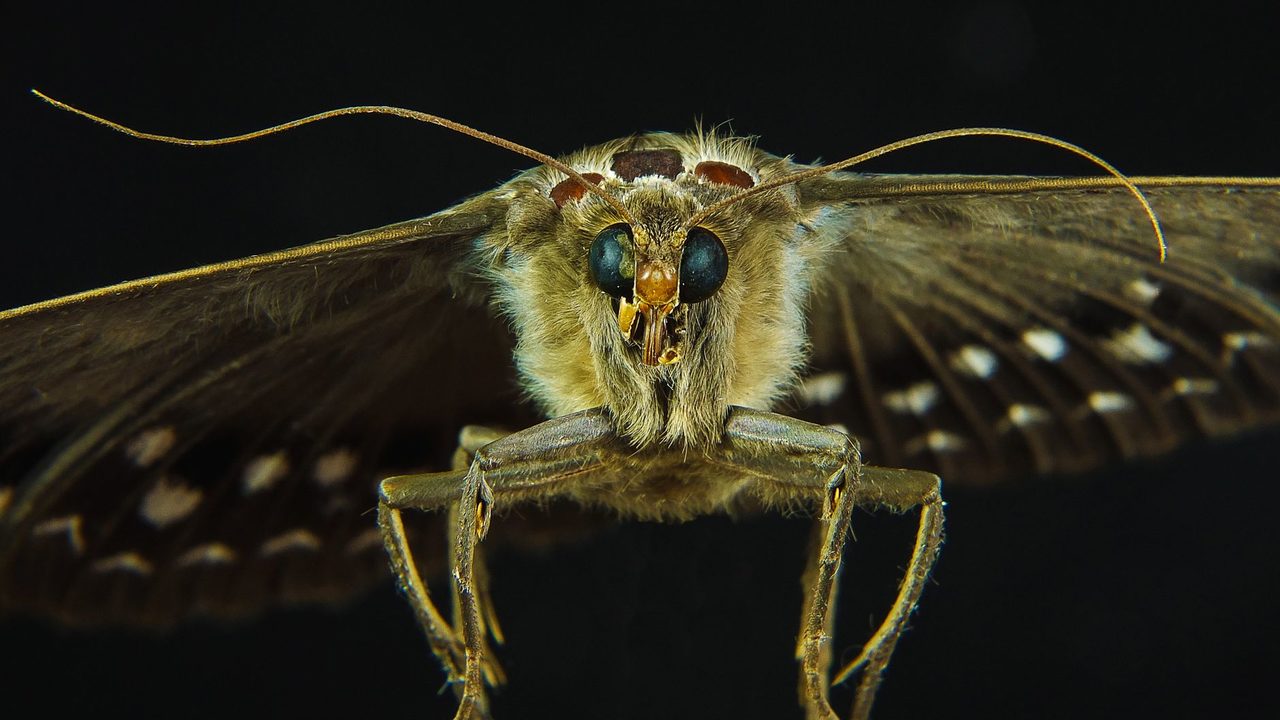
Every year, masses of endangered bogong moths in Australia travel up to 1,000 kilometers (620 miles) south, and each moth makes the trip for the first and only time in its short life. A new study in Nature shows they are guided in part by Earth's magnetic field, even when starlight is not available, according to ScienceAlert.
The research was led by neuroethologist Eric Warrant of Lund University in Sweden. It suggests the moths carry a built-in magnetic compass that works alongside their ability to read the night sky.
How the moths make their journey
In spring, young bogong moths (Agrotis infusa) leave breeding grounds spread across Australia's south-east outback and move further toward their destination each night. They gather at a few caves in the Australian Alps, where they spend the summer in dormancy until the cooler weather of autumn calls them back to breed.
Last year, Warrant and his colleagues showed that the moths can find their way using starlight alone. Magnetism might be involved, but the moths' sense of direction held up without it. Stars, however, are often hidden by clouds, and the moths do not seem to be deterred, which pointed the researchers toward a second cue.
What the experiments showed
The team set up light traps on Mount Selwyn, about 70 kilometers north of the moths' summer hideout, and caught moths passing by during two migrations, one in spring and one in autumn. The insects were taken to a dark laboratory built without magnetic metal, where each was tethered inside a flight simulator.
Inside the arena, a moth saw cardboard silhouettes of trees, grass and hills, a dim moving pattern on the floor to mimic the ground passing beneath it, and a projected sky. The sky showed either a natural moonless Australian night or a scrambled pattern of stars meant to confuse the insect. The whole setup sat inside a 3D Helmholtz coil, a device that creates a controlled magnetic field.
- With the stars scrambled but the magnetic field intact, the moths still found their way.
- When the field was cancelled out, the moths became entirely disoriented.
- When the field was turned by 180 degrees, or its inclination inverted, the moths flew in the opposite direction. When only its polarity was inverted, they did not turn.
- Weak radiofrequency noise, or filtering out violet-blue light, also left the moths disoriented.
The researchers concluded that the moths use the geomagnetic field as an inclination compass for long-distance navigation at night. The radiofrequency and light results mirror what is known in other animals that navigate magnetically, such as European robins and monarch butterflies. ScienceAlert reported that the team therefore thinks the moths' sensor may rely on a light-triggered chemical reaction known as a radical-pair mechanism, though the sensor itself has not yet been found.
Why it matters for a vulnerable migrant
The absence of starlight is far more common than a total absence of Earth's magnetic field, according to the report, although the field does sometimes shift, flip and waver. The authors propose that having both a magnetic and a stellar compass lets the moths keep to their inherited migratory direction even when one cue fades, for example under overcast skies or during a magnetic storm. They suggest the same may be true of other moths.
The result comes from lab simulations of moths caught during their migration, so it shows how the insects behave under controlled conditions rather than tracking them across the continent. The researchers say how the moths combine magnetic and visual cues in their senses and brains remains a promising area for future investigation.
Around Prague, based on reporting by ScienceAlert