Northern Lights in Czechia: When and Where to See Them (2026)
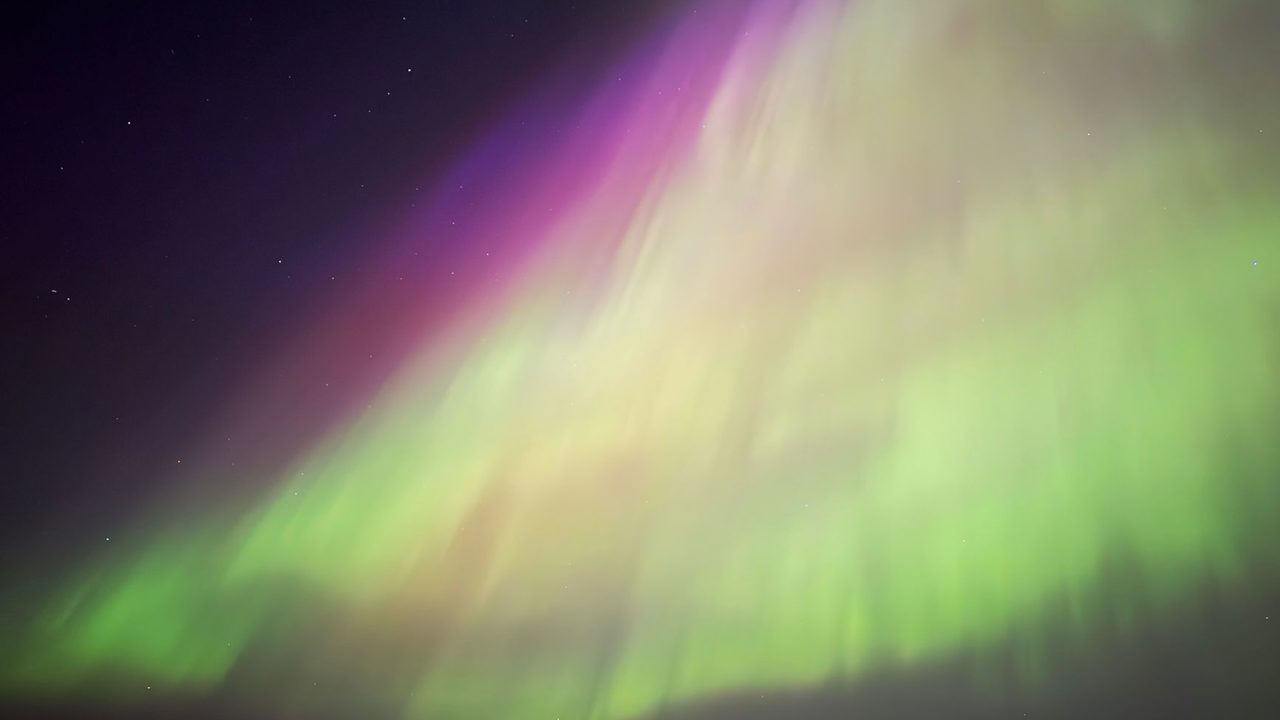
The northern lights are still rare over Czechia, but no longer a once-in-a-lifetime event: on 19 January 2026 they were briefly visible even from larger towns, and they last showed faintly on 10 October 2026. You need a strong geomagnetic storm: the Astronomical Institute of the Czech Academy of Sciences puts the threshold at Kp 7 or higher, ideally 8. The solar cycle peaked in October 2024, but the chances remain real in 2026–2027. Here is which forecast to watch, where to go from Prague and how to photograph the aurora with your phone. Around Prague checked the dates and thresholds on 2 November 2026 against GFZ Potsdam, NOAA, Belgium's SIDC and the Czech Astronomical Society.
When the aurora was seen over Czechia
| Date | Highest Kp (GFZ) | NOAA scale | What was seen |
|---|---|---|---|
| 5 November 2023 | 7+ | G3 | Red aurora photographed near Znojmo and in Trutnov, brightest around 18:15 |
| 10–11 May 2024 | 9 | G5 | Extreme storm, the strongest aurora since 2003 according to ČHMÚ |
| 10–11 October 2024 | 9− | G4 | Bright, in several waves, visible to the naked eye |
| 1 January 2025 | 8 | G4 | Clouds spoiled the view in many places |
| 11–12 November 2025 | 9− | G4 | Mostly red, visible even without a camera |
| 19–20 January 2026 | 9− | G4 | Very bright, briefly visible even from larger towns |
| 10–11 October 2026 | 7+ | G3 | Faint, but visible to the naked eye from dusk, for example near Ústí nad Labem |
The Optické úkazy v atmosféře archive lists 12 nights with aurora over Czechia and Slovakia in 2026 up to mid-October. Most were faint and showed up only in photos, so the table covers just the best-known events.
Which forecast you need
The aurora reaches Czechia only during a strong geomagnetic storm. The Astronomical Institute of the Czech Academy of Sciences recommends watching the Kp index: for good visibility over Czechia it should reach at least 7, ideally 8. That matches levels G3 and G4 on the NOAA scale. At Kp 5–6 the chances are slim. How to read the Kp index and the NOAA aurora forecast is explained in this guide to the northern lights forecast.
- Kp index and storm forecasts: SpaceWeatherLive, NOAA SWPC (the G1–G5 scale and a 30-minute aurora oval forecast) and SolarHam.
- Cloud cover: the ČHMÚ forecast. Even a strong storm is invisible behind clouds.
- Lead time: the NOAA forecast gives you 30–90 minutes, which is how long the solar wind takes to travel from the L1 measuring point to Earth. On the evening of 19 January 2026 Kp at first barely passed 3, and by around 20:00 the northern sky had turned red.
- Season: astronomers at the Silesian University in Opava see the best chances in spring and autumn.
What it looks like in Czechia
Don't expect the green curtains of Norway. As the Czech Astronomical Society describes it, the typical sight is a red aurora with a green fringe near the horizon. Most of the time it is faint and shows up clearly only in photos. A phone camera sees it more vividly than the eye, so if the sky looks "a bit pink", take a night-mode shot. Strong storms such as those of November 2025 and January 2026 did not need a camera at all.
Where to watch
What matters is darkness far from towns and an open view to the north. In Prague itself light pollution means you will only see the aurora during an exceptionally strong storm. Drive out of the city to high ground without street lights.
- Jizera Dark Sky Park: the world's first international area of its kind, shared by Czechia and Poland, declared in 2009 (about 75 km²). Roughly two hours from Prague.
- Manětín Dark Sky Park: 346 km² in the sparsely populated north of the Plzeň Region, declared in 2014. About an hour and a half from Prague.
- Brdy: not an official park, but the closest option to Prague at about 90 km, or roughly an hour and a half. Astronomers have measured the sky here and recommend the unforested areas around Míšov and Teslíny. The glow of Prague and Plzeň is still noticeable.
- Beskydy Dark Sky Park: shared with Slovakia, about 300 km², declared in 2013, centred on the village of Staré Hamry. More than four hours from Prague.
Travel times are our own route-planner estimates, and in winter the trip takes longer. If you head into the mountains in winter, dress warmer than you think you need and don't stop on the hard shoulder. For ideas, see our 17 day trips from Prague.
How to photograph the aurora with your phone
- Use night mode and turn off the flash.
- Put the phone on a tripod or something steady: a 3–10 second exposure needs it still.
- Focus on a bright star, or set focus to infinity if you have a manual mode.
- Turn the screen brightness down and give your eyes 15–20 minutes to adjust to the dark.
Frequently asked questions (FAQ)
Can you see the northern lights in Czechia?
Yes, during a strong geomagnetic storm. Since 2023 they have been seen several times, including with the naked eye in May 2024, November 2025 and January 2026. The most recent sighting, as of 2 November 2026, was on 10 October 2026.
What Kp index do you need in Czechia?
The Astronomical Institute of the Czech Academy of Sciences recommends at least 7, ideally 8.
Can you see the aurora from Prague?
Only during a very strong storm, and faintly. On 19 January 2026 ČHMÚ reported that it was briefly visible even from larger towns. It is better to drive to a dark place with an open northern horizon.
Why does the aurora look brighter in photos?
A long exposure collects more light, and the human eye is poor at seeing the faint red of the aurora in the dark.
Will there be auroras in 2026–2027?
The chances are there. The cycle peaked in October 2024, but SIDC expects periods of strong activity over the next one to two years, and the Czech Astronomical Society notes that the strongest events often come in the declining phase. Only a live forecast can say more.
Sources: GFZ Potsdam: Kp index, NOAA: space weather scales, NOAA: aurora forecast, SIDC: solar cycle 25, Czech Astronomical Society: the aurora of January 2026, Optické úkazy v atmosféře: auroras over Czechia, Astrofyzikální proGResy, Silesian University in Opava, Novinky.cz: Pavel Suchan on Kp, Novinky.cz on 5 Nov 2023, ČT24 on May 2024, ČT24 on October 2024, ČT24 on January 2026, Počasí a Radar on 1 Jan 2025, Počasí a Radar on November 2025, Kudy z nudy: Jizera Dark Sky Park, Novinky.cz: Manětín, ČT24: Beskydy, Czech Astronomical Society: measurements in Brdy.
See also: Geminids 2026: the meteor shower in Czechia, 17 day trips from Prague.
Cover photo: Victor Lucas / Pexels.
Comments (0)
Please be polite. Spam and insults will be removed.