Germany–Czechia Border Controls 2026: Dates and Documents
Popular
Yes: Germany is still checking its land border with Czechia. The European Commission's list gives 16 September 2026 to 15 March 2027. Austria checks its border with Czechia over the same period. Carry a valid ID card or passport on both borders; non-EU residents of Czechia should carry their passport and Czech residence permit. The EU describes the Entry/Exit System (EES) as a system for external Schengen borders, not for the German–Czech border. Around Prague checked the official sites of the European Commission, the German Federal Police and the Austrian Interior Ministry on 9 November 2026. Rules can change at short notice.
What applies in November 2026
The Commission's page on the temporary reintroduction of border control (list dated 16 October 2026) gives Germany the period 16.09.2026 to 15.03.2027. The Czech Republic is among the land borders named. The stated reasons are high irregular migration, migrant smuggling and strain on the asylum system. The legal basis is Articles 25 and 28 ff. of the Schengen Borders Code.
The Federal Police (Bundespolizei) reported on 17 February 2026 that Interior Minister Alexander Dobrindt had extended the controls beyond 15 March 2026 by six months. We found the latest extension from 16 September 2026 only in the Commission list: the German Interior Ministry's own release could not be opened because bmi.bund.de blocks automated requests. The Czech foreign ministry still gives 15 September 2026 as the end date, and that page is out of date.
Austria's Interior Ministry (page updated 15 September 2026) says Austria carries out checks "until 15 March 2027 inclusive" at its land borders with Czechia, Hungary and Slovenia. Czechia itself has no entry in the Commission's list.
Who checks and how
- Germany: the Bundespolizei. According to the Czech foreign ministry (as of 2 March 2026), checks are spot checks on roads, motorways and trains, both stationary and mobile; the inside of a vehicle can be searched. The Bundespolizei may also check up to 30 kilometres inside Germany (page of 19 May 2026).
- Austria: the ministry says only that checks take place and asks travellers to always carry a valid travel document. It does not say whether they are stationary or mobile.
- Bus and train: carriers are not legally required to check documents on journeys inside Schengen (Bundespolizei, 1 June 2025). The police may still check.
Which documents to carry
| Traveller | Carry | Source |
|---|---|---|
| EU citizens (including Czechs) | valid ID card or passport; the Czech foreign ministry says Czech eDoklady are not yet accepted in Germany | Bundespolizei, Czech foreign ministry |
| Non-EU residents of Czechia with a residence permit | passport and residence permit card; up to 90 days in any 180 in another Schengen state | Bundespolizei, Czech Interior Ministry |
| Ukrainians with temporary protection in Czechia | passport and the Czech protection document; 90 days in 180 in other EU countries | European Commission |
| Visitors from visa-free countries | passport; a visa where required | Bundespolizei |
Which Czech papers count as the temporary protection document is set by Czechia, and we could not verify it. Carry everything the Czech authority issued, plus your biometric passport. For how long protection lasts, see our guide to extending it.
Children: each needs their own document
The Bundespolizei says every child needs their own recognised travel document for trips abroad, including babies. German children can use a passport or ID card (temporary versions too). Germany has not issued child passports since 1 January 2024; existing ones stay valid until they expire but are not accepted everywhere. The Czech foreign ministry also requires a separate passport or ID card for each child. A child from a non-EU country who needs a visa needs their own visa or residence permit.
If a child does not travel with both parents, the Bundespolizei recommends (it is not an obligation) an informal written consent from the other parent with contact details and a copy of the ID page. If the adult has a different surname, a birth certificate or custody document helps. Custody checks can take longer.
What about EES?
According to the Commission, the EES has been fully operational at all external Schengen border crossing points since 10 April 2026. It registers non-EU nationals on a short stay "each time they cross the external borders". The Czech border with Germany and Austria is an internal border. The pages we read do not say outright that EES is not applied at internal borders; they describe it as an external-border system. Holders of a residence permit or long-stay visa are generally not registered (exception: permits from Cyprus and Ireland).
Queues and practical tips
Neither the Bundespolizei nor the ministries publish official waiting times. The Czech foreign ministry only says travellers should expect delays.
- By car: keep documents in the glove box, not in the boot. Buy the Czech motorway vignette beforehand, see our vignette guide.
- By train or bus: keep your ID on you, not in checked luggage. Prague to Dresden, Berlin and Munich is covered in our train guide.
- Expired papers: an expired ID is not enough. Check the date before leaving.
- Insurance: see our travel insurance guide.
Border controls Germany and Czechia (FAQ)
Are there border controls between Germany and Czechia in 2026?
Yes. The Commission's list gives 16 September 2026 to 15 March 2027.
Do I need a passport or is an ID card enough?
EU citizens need a valid ID card or passport. Non-EU citizens need a passport and, if they have one, a residence permit.
How long are the waits?
There are no official figures. Spot checks are usual and delays are possible.
Does the EES apply at the German–Czech border?
The EU describes the EES as an external-border system. The German–Czech border is internal.
Do children need their own passport?
Yes, every child needs their own document, babies included.
Can the controls be extended after 15 March 2027?
Yes, states decide this themselves. Check the current status before you travel.
Sources: European Commission: border control, Bundespolizei: extension, Bundespolizei: border area, Bundespolizei: cross-border travel, Bundespolizei: minors, Austrian Interior Ministry, Czech foreign ministry, European Commission: EES, Czech Interior Ministry, European Commission: temporary protection. Checked on 9 November 2026; controls and dates can change.
See also: Trains to Prague, Czech highway vignette, Prague walking tours, Is Prague safe?.
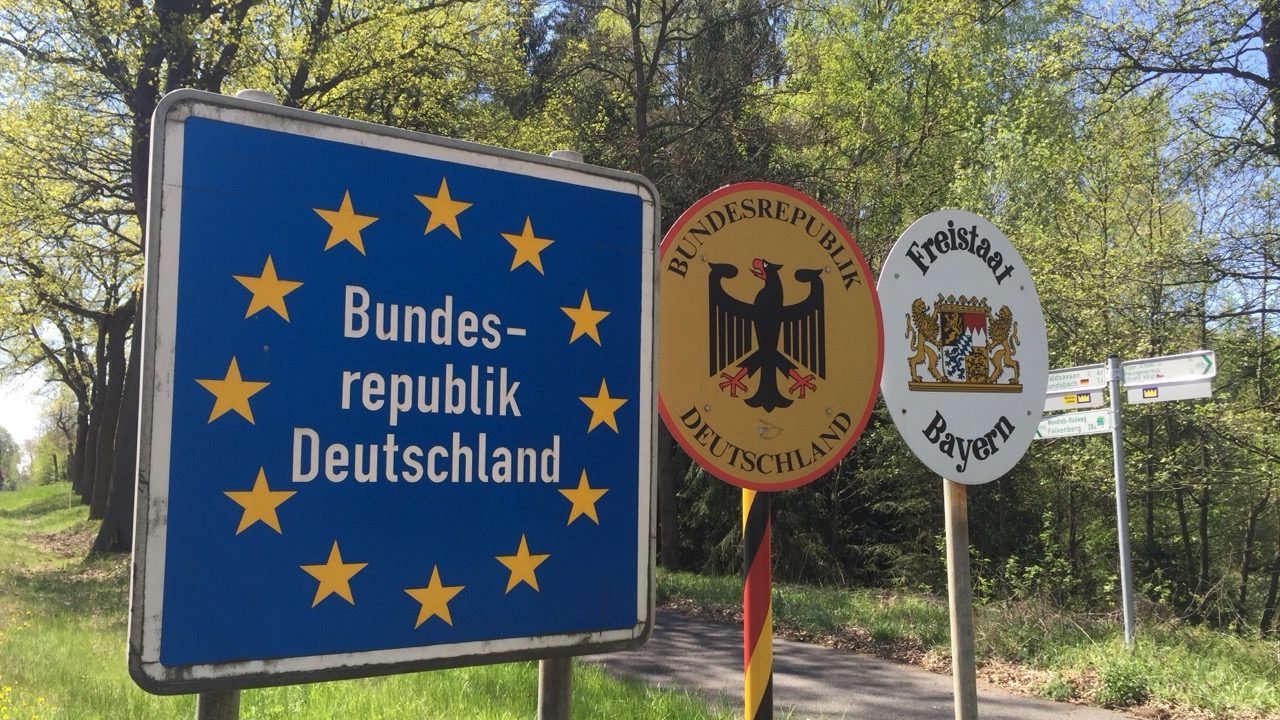
Photo: Signs at the Czech–German border. Kobzarius, Wikimedia Commons, CC BY 3.0.
Comments (0)
Please be polite. Spam and insults will be removed.