Did humans stop a new ice age? Scientists dispute the claim
USD 22,23
Popular
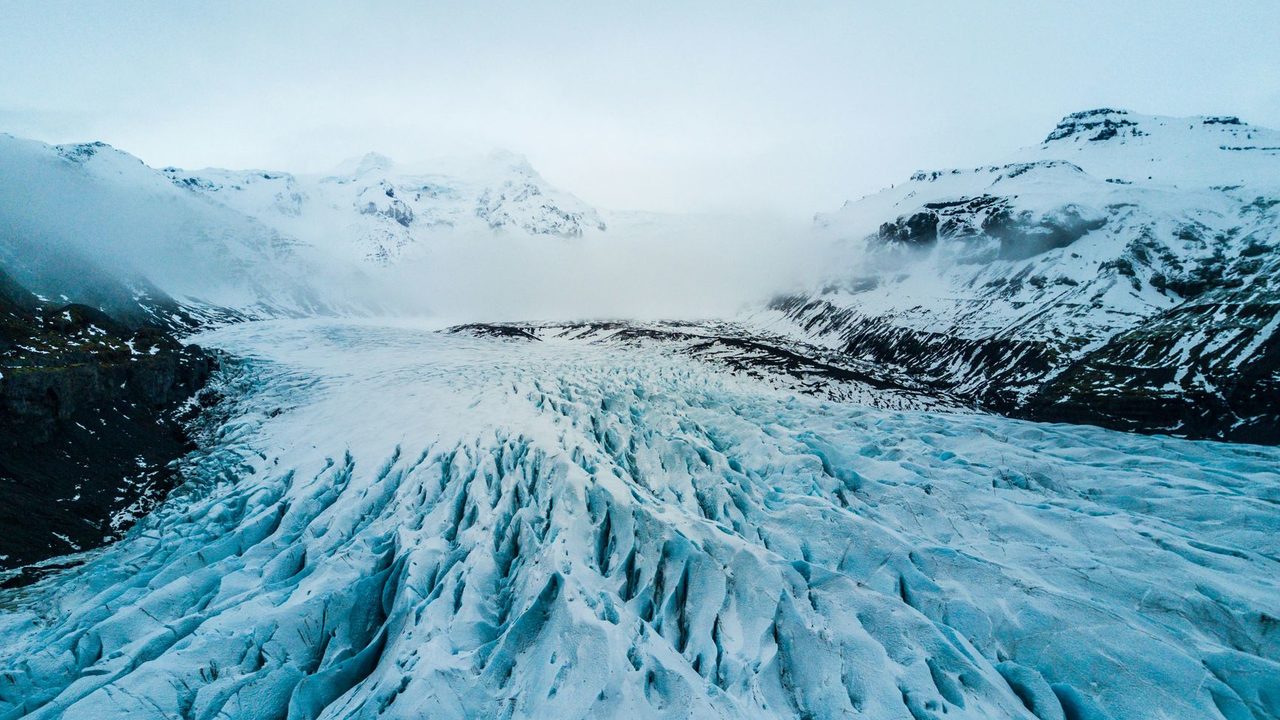
A new study in the journal Science claims that humans may have stopped the onset of a new ice age: a glacier on Canada’s Baffin Island grew for about two thousand years, but since 1960 it has been retreating because of warming. Many climate scientists consider the authors’ conclusions too bold.
The journal’s editors framed the question this way: did human-caused warming prevent the next glacial cycle? The authors, led by Young, believe it probably did.
What was found on Baffin Island
The study concerns the Barnes Ice Cap on Baffin Island. According to the authors, it is the last remnant of the Laurentide Ice Sheet, which 20,000 years ago, at the peak of the last glaciation, covered about a third of North America.
The team reconstructed the glacier’s history over the past two thousand years from the remains of dead mosses and from rocks. The age of the mosses was determined by radiocarbon dating, while the rocks showed how long they had been exposed to cosmic radiation, that is, how long ago they emerged from under the ice.
According to these data, the ice began to grow slowly but steadily about two thousand years ago: by meters a year, and sometimes less. From 1960 to 2024 the glacier retreated by hundreds of meters. The authors call the start of the growth “the beginning of a new glaciation” and consider 1960 its end, brought about by human-caused warming.
Why colleagues disagree
The dispute is not about the measurements themselves but about how to interpret them. Usually the onset of glaciation is identified when the picture changes worldwide: for example, oxygen isotopes in ocean sediments show that sea level drops noticeably. Young took a different approach and placed the start of the process tens of thousands of years earlier than it would show up in global indicators.
The editors approached six scientists besides Young, and each had objections, sometimes serious ones. The critics’ main argument: the growth of a single glacier does not mean the growth of a whole ice sheet, let alone the start of an ice age, without data from other regions. Some specialists acknowledged that the work offers an interesting occasion for scientific discussion. The harshest was the paleoclimatologist Andrey Ganopolski of the Potsdam Institute for Climate Impact Research: in his view, too large a conclusion is drawn from a find in a single place.
Could emissions have canceled an ice age?
Almost no one doubts that emissions can disrupt the natural cycle of glacial and interglacial periods. Ganopolski was among the first in the world to warn about this: as early as 2005, his group showed that emissions could delay the next ice age by 100,000 years, that is, from 50,000 to 150,000 years.
Eric Wolff and Didier Paillard believe that current emission levels rule out glaciation for the next several thousand years, while John Jansen says the chances of it are practically nil. The Czech scientists Martin Margold and Jiří Laurin agree: the climate has already been knocked off course so much that a new glaciation will not arrive for tens of thousands of years. Concentrations of carbon dioxide and methane are now higher than in all the interglacials of the Quaternary period and are approaching values from more than 2.5 million years ago.
At the same time, none of those surveyed regards today’s warming as a form of protection. An ice age would arrive very slowly and would do humanity no harm in the foreseeable future, whereas modern warming is incomparably faster and is already causing problems now.
Where we are in the glacial cycle
In the broad sense, we are still living in an ice age: the Late Cenozoic one began 34 million years ago with the glaciation of Antarctica. In the Quaternary period, glacials and interglacials are triggered by Milankovitch cycles, that is, changes in Earth’s orbit and the tilt of its axis, on which the amount of summer sunlight reaching the high latitudes of the Northern Hemisphere depends.
Over the past million years, glacial periods have lasted about 100,000 years and interglacials 10,000 to 15,000 years, sometimes up to 30,000. The last ice age ended 11,700 years ago. According to the surveyed scientists, the next conditions favorable to glaciation will arrive in 50,000 years or in several tens of thousands. Margold mentioned a study from last year suggesting it could happen in as little as 8,000 years. But given the warming that has already happened and is still expected, a new ice age will almost certainly come much later.
Around Prague, based on reporting by seznamzpravy.cz