Babiš Is Pushing Czechia Into a Debt Spiral — Without Admitting It Even to Himself
USD 21,69
Popular
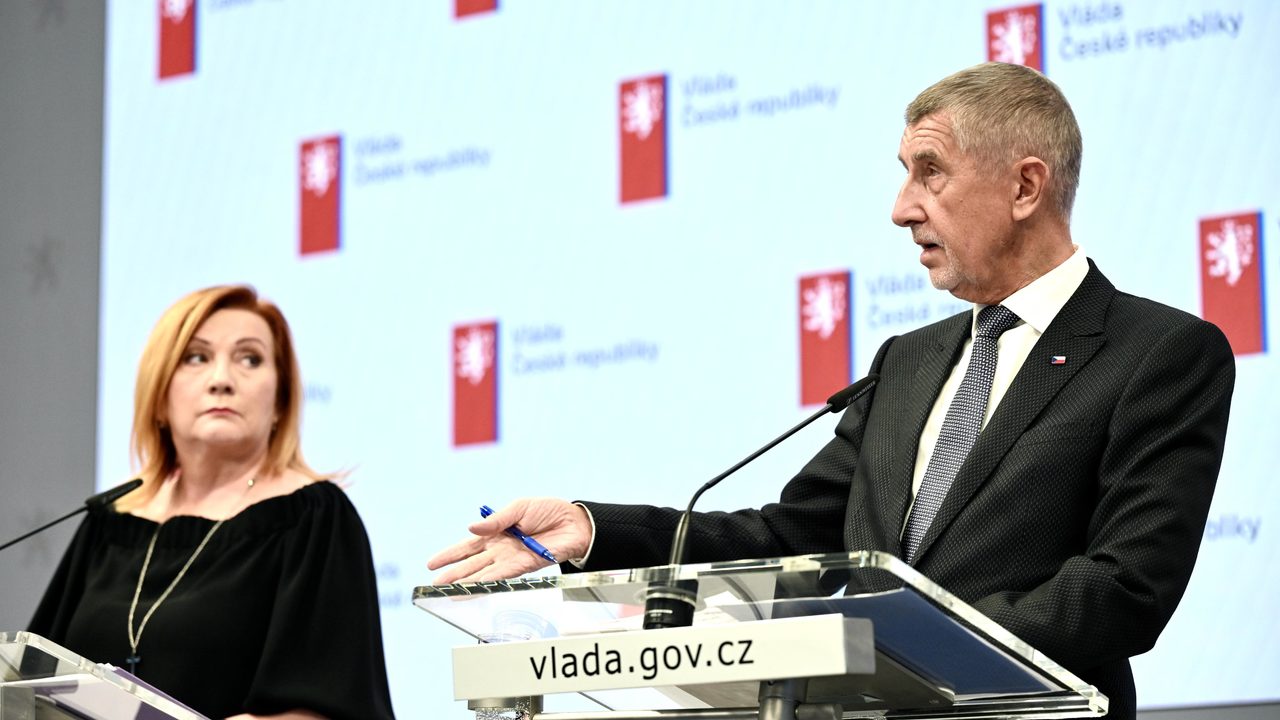
Andrej Babiš's government is beginning work on its first full-fledged budget — for 2027, since the current 2025 budget is effectively just a reworking of Petr Fiala's cabinet plan. But already, according to estimates from the Czech National Budget Council, the country risks breaching the safe deficit threshold of 350 billion crowns — a move that could trigger an immediate reaction from financial markets and higher taxes down the line.
Three weeks ago the prime minister said the budget deficit would be "significantly below 400 billion crowns." Experts see this phrasing as disingenuous: if the deficit exceeds 350 billion, it will become a serious problem the country will feel immediately.
A Game of Percentages and Billions
Within the European Union, one of the key indicators of a country's fiscal health is its ability to keep the budget deficit below three percent of GDP. For a small country with its own currency, like Czechia, this matters especially. Babiš formally acknowledges this: data already submitted to Brussels shows the cyclically adjusted deficit at 2.9% of GDP — right at the limit.
In practice, however, these percentages don't square with the actual figures. If we take the prime minister's words about a deficit "significantly below 400 billion" at face value — say, around 380 billion crowns — that would already far exceed the permissible three percent of GDP, which the National Budget Council calculates at roughly 350 billion crowns, give or take a billion.
According to the central bank's forecast, the deficit has already crossed the three-percent mark and is expected to reach 3.1% of GDP. And given Babiš's growing list of promises — from pension hikes to increased defense spending — staying within the three-percent limit is becoming practically impossible.
The Only Window of Opportunity
The way out is well known — a so-called consolidation package, meaning a set of strict budget-tightening measures. The term has been discredited since the 1990s, when Václav Klaus tried to soften the perception of harsh fiscal policy by calling it a "package," as if it were a gift from grandma. Such measures are almost always painful, and sometimes — as Fiala's government experience showed — they come with heavy political costs for only modest financial gains.
Right now, though, Babiš has a unique window of opportunity. After this autumn's Senate and municipal elections, there's an electoral lull until 2027, during which he could afford a temporary dip in popularity without risking his grip on power. Claims by the prime minister and Finance Minister Alena Schillerová that tough measures can wait seem unrealistic — it's hard to imagine the ruling ANO party wanting to jeopardize its results in the 2028 presidential and regional elections, or the 2029 parliamentary vote.
Does He Have the Courage to Take Responsibility?
Babiš is now effectively deciding one of the most important questions of his term. The first path is to truly take responsibility for the state of public finances: announce, after the municipal elections, a consolidation package worth roughly 40–50 billion crowns. Even then, the country's finances would remain in a difficult state, but there would at least be some confidence that the budget deficit had returned to relatively safe territory.
That would require serious political courage — for example, radically cutting the share of tax revenue redistributed to municipalities and regions in favor of the deficit-ridden central budget, refusing to index pensions above the legal minimum, not increasing contributions for state-insured individuals, and at the same time raising certain taxes — in particular, shifting some goods from the reduced VAT rate to the standard one.
How likely is it that Babiš will take such steps? Probably not very. That leaves the second path — debt that keeps getting more expensive, eventually becoming one of the priciest in Europe. Interest payments on public debt, which over the past decade hovered around 40 billion crowns a year and barely bothered anyone, will reach 110 billion this year, 130 billion next year, and could eventually climb to a figure that's hard to even imagine today.
Source: seznamzpravy.cz