Czech inflation set to rise this autumn on oil and fuel costs
USD 21,69
Popular
Czech economists are tracking a fresh rise in energy prices: since the outbreak of the Gulf conflict, oil, natural gas and electricity have been getting more expensive on world markets, while from 1 October the government is simultaneously introducing fuel price regulation. According to the Czech Statistical Office, energy accounts for 11.2% of the consumer basket used to calculate overall inflation.
When will it hit Czechs' bills
For now, high energy prices are barely visible in inflation figures, but economists warn it is only a matter of time. “The question is whether such high prices will last longer than, say, a year. If they do, it really will show up across all kinds of goods and could add a certain percentage to inflation,” says Josef Kotrba, head of the Czech Energy Union.
Ludvík Baleka, chairman of the board of Pražská plynárenská, holds a similar view: in his words, the rise in energy prices should not affect inflation in the coming months, but “from the New Year, companies will start buying more expensive gas and electricity,” and that is when the effect is most likely to show up.
Vít Hradil, chief economist at Investika, believes the pass-through of energy prices into inflation will be very gradual and will stretch over years — partly because energy suppliers usually buy it well in advance for long periods. Companies will absorb part of the price rise by cutting their margins in the competition for customers, while fixed contracts protect a significant share of consumers from price swings.
Czechs still remember the 2022-2023 inflation shock
Czech households remember the 2022-2023 wave of price rises well: back then energy played a notable role in driving up prices, and companies cited costlier resources to justify raising prices for customers. “We saw this back in 2022, when it was one of the arguments used throughout the entire production chain to justify price increases. In reality, inflation turned out to be an order of magnitude higher than the actual rise in costs would have warranted,” says Michal Macinauer, strategy director at energy consultancy EGU. According to him, double-digit inflation like that seen three years ago — when Czechia had almost the worst rate in the whole of Europe — would certainly not be a justified consumer price reaction this time.
Gas is supplied to Europe mainly from Norway or the US in liquefied form (LNG). As Josef Kotrba explains, the normal price of gas is around €30 per megawatt-hour, whereas in the US it is about €8-9 per megawatt-hour. Liquefaction, transport and regasification themselves are not cheap — over €20 — and any additional markup on top of that essentially reflects a shortage premium caused by the closure of the Strait of Hormuz.
The main threat is expensive diesel
Economists say a bigger problem than rising electricity and gas prices is the rising cost of fuel. “Oil is the bigger problem. Transport is needed everywhere, it's present in every supply chain. A justified impact would be within a few percentage points, but if the situation drags on, it could keep growing,” says Michal Macinauer.
Rising fuel prices are already feeding into inflation. According to the Czech Statistical Office, petrol and diesel were 26.2% more expensive year-on-year in August, up from 16.8% in July.
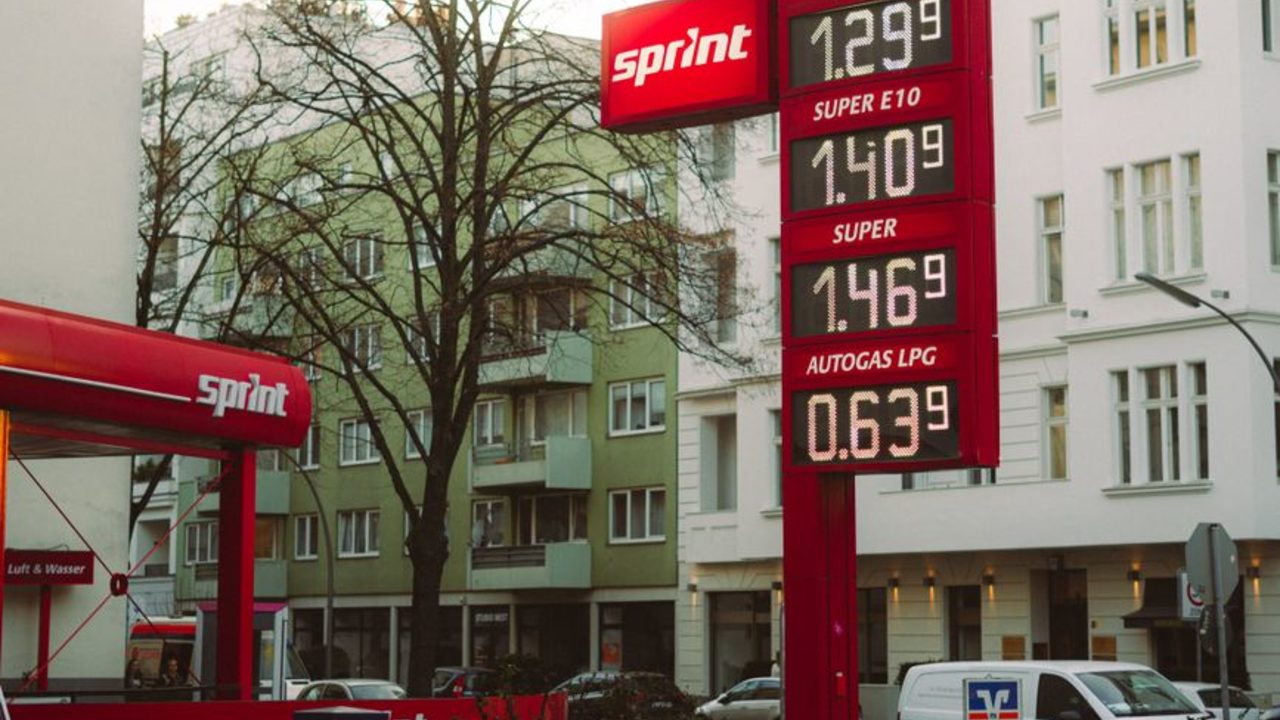
“In recent weeks, fuel's contribution to overall inflation has been around 0.8 percentage points. In recent days, however, the situation has become even more acute, and if prices stay at current levels, their overall contribution to inflation could rise to about 1.2 percentage points,” says Vít Hradil. According to him, pricier fuel will also drive up inflation in other goods and services: this effect will build up gradually and, by rough estimates, will amount to roughly half of the direct effect visible on fuel station price boards.
Authorities are introducing fuel price regulation
Still, the hit to wallets from petrol and diesel prices should not be too sharp — the government has already announced fuel price regulation. “From 1 October we are bringing back tried-and-tested fuel price regulation and, at the same time, cutting the excise duty on diesel to the European minimum for one month. This measure will have a marked anti-inflationary effect, will ease the burden on both companies and households, and will keep fuel prices in Czechia at one of the most favourable levels in the EU,” said Finance Minister Alena Schillerová (ANO).
According to Vít Hradil, limiting margins will not have much effect. “Cutting the excise duty on diesel will indeed lower inflation slightly, but it's more of an optical illusion: drivers with diesel engines will of course save money, but the resulting shortfall in budget revenue will have to be made up by other taxpayers. The only way to truly cut fuel prices would be to address the real source of the price rise — that is, the situation in the Persian Gulf or at oil refineries,” the expert believes.
Consumer prices rose by 1.9% year-on-year in August, and fuel was one of the main drivers of that increase.
Source: seznamzpravy.cz