Czech farmer explains why forests hold water better than fields
USD 21,69
Popular
Czech farmer and forester Libor Lev, who lives in the foothills, has criticized the country's current approach to fighting drought. Based on his many years of observation, an ordinary field holds back around 25 mm of rainfall during prolonged rain, a meadow around 50 mm, and a forest almost 100 mm — only after that does surface runoff begin.
Forests hold water far better than fields
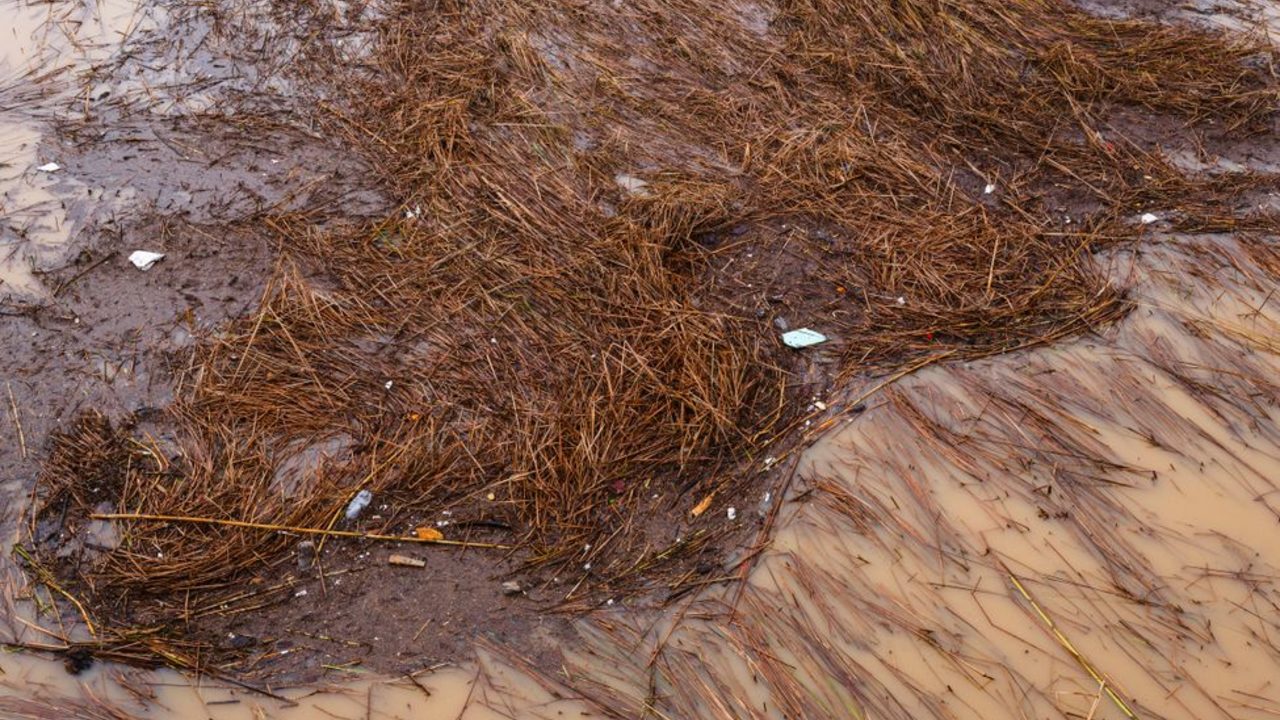
According to the author, the difference shows up not only in how much moisture is retained, but also in its quality. Runoff from meadows and forests is practically clean water, while runoff from fields carries away the fertile topsoil as well, causing erosion. The contrast is even more striking during heavy downpours: water running off a meadow is clear, while runoff from ploughed land — especially under maize or after fresh ploughing — is essentially mud. The author recalls a case where a road below a slope with a maize field was buried under a layer of silt more than half a metre thick.
Drainage speeds up water loss instead of slowing it
Lev disputes the common belief that drainage systems only carry away water when there is a surplus. According to him, drainage always takes water away, even when there objectively isn't much of it: in undrained soil a drop of water takes longer to “work” its way through the ground, giving plant roots a chance to intercept it, whereas in a drainage pipe it disappears immediately with no benefit at all.
As an example, he cites the story of the owner of a former mill who, after the 1990s, decided to restore it to generate electricity. It turned out that the installed turbine could run for less than three months a year: during a strong flood it would have to be shut down for safety reasons, while for the rest of the time the stream simply wouldn't have enough water — because drainage had “destabilized” the runoff curve, even though the average annual water volume had barely changed. In the author's view, old drainage systems didn't replace natural water sources — they effectively destroyed them.
Lev points out that water used to be drained from wet plots differently — a single drainage pipe would direct it not into a stream but onto a neighbouring meadow, so the grass wouldn't “burn out” during a drought. The problem with the large-scale drainage projects of the past, he says, is that they were carried out en masse without regard for local conditions — simply to meet planned targets.
Trees create their own water cycle
Shrinking fields and planting trees, the farmer notes, won't stop climate change — that's not their purpose. Their real role is to reduce erosion and preserve species diversity. He calls the idea that forests worsen a landscape's water balance completely pointless. A tree, especially a deciduous one, spreads out precipitation over time: some of the water is held in the canopy and gradually drips to the ground once the soil is able to absorb it again. The evaporating moisture, meanwhile, cools and humidifies the surrounding air — the author calls this the “small water cycle”: moisture evaporates and falls again as rain a few kilometres away. According to him, this is clearly visible on radar images, where rain clouds sometimes seem to appear out of nowhere rather than arriving as a single front from the west.
Lev considers it equally absurd to adapt to climate change by planting trees from the Caucasus or the Mediterranean: the problem isn't just heat and drought, but a whole range of other conditions that simply don't exist in Czechia. Similar experiments have already been tried — for instance, with trees resistant to polluted air — but they didn't produce results: what actually helped was filters on industrial smokestacks and stricter environmental standards, not the trees. Climate fluctuations, the author says, occurred even before the Little Ice Age, and trees survived them — what changed was simply the species composition of forests. Going forward, he predicts, oaks and birches will predominate rather than alder and ash.
Subsidies, ploughing and old dams
The farmer also addresses the topic of agricultural subsidies. In his view, the idea that nature is a “perpetual motion machine” from which one can only take and never give back is promoted not by “green” citizens but by technocrats disconnected from nature — large investment groups that today organize protests and claim they can't survive without subsidies. At the same time, the author notes, their administrative apparatus is able to absorb far more subsidy money than small farms, which simply lack the resources to constantly chase support programmes. He also asks: if farming is so unprofitable without subsidies, why are landowners constantly flooded with offers to buy their land — which, in his view, is precisely what distorts the land market.
As for the “greening” requirements, Lev explains their purpose in simple terms: turning land along watercourses into grassland reduces erosion, while sowing mixed cover crops or temporarily seeding grass before reploughing improves soil structure and fertility. The author himself sows cover crops after every harvest without any subsidies at all — on his small plot he simply isn't eligible for them — and does it purely to improve the soil. He has nothing against ploughing as such: in his observation, it helps keep down the vole population, since voles rarely survive ploughing and don't have time to breed. That said, he admits, in dry years ploughing under stubble is worse than leaving temporary grass cover.
The author recalls that plans for building reservoirs in Czechia were already drawn up back in the 1920s: a special commission travelled around the country marking any suitable terrain on maps. As recently as the 1990s, a zoning plan above his village still showed a large dam on a stream with no meaningful flow — fortunately, that marking has since been removed. In the village of Zbečno on the Berounka River, a dam planned decades earlier blocked any construction or utility work there for years — simply because “a dam is going to be here.” Lev attributes algae blooms in ponds and reservoirs not to shallow depth but to fertilizer runoff from overfed fields — a problem that even large, deep reservoirs face.
One of the main obstacles to adapting to climate change, the author says, is not only the radical views of some activists but also the mindset of so-called “old guard” professionals — both in science and in practice: what a person once learned, they often treat as unchangeable regardless of new evidence. Today, he says, there are various farming models — classical, agroforestry, no-till farming, regenerative agriculture — and only time will tell which of them turns out to be a dead end.
Read also: 8 best swimming spots near Prague: lakes, quarries and beaches an hour from the capital
Source: ekolist.cz