Évora’s Church of the Saviour of the World: azulejos and altars
USD 21,69
Popular
The Portuguese city of Évora is home to one of its smallest and least-known sights: the Church of the Saviour of the World (Igreja do Salvador do Mundo) of a former convent founded in 1610. It has been a protected cultural monument since 1922, and fans of sacred architecture will find plenty to see.
What remains of the convent
Of the complex of the Franciscan friars and Poor Clare nuns, only the Baroque church, part of the cloister gallery and the remains of a 14th-century tower survive. The tower once belonged to the city fortifications, and the nuns later turned it into a lookout. The convent was partly set up in the former palace of the Counts of Sortelha.
Azulejos and gilded altars
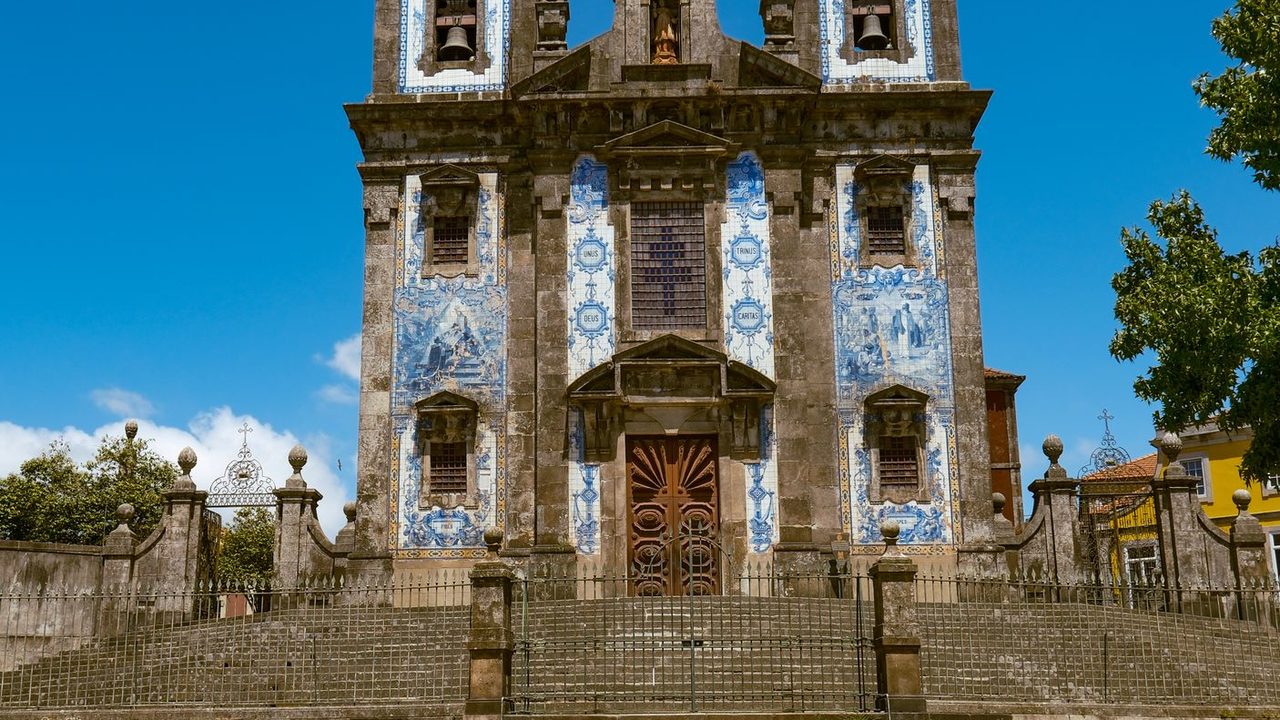
The church has a single nave, and its walls are entirely covered with 17th-century azulejo tiles. The domed ceiling of the chancel, the arcades and the sacristy are also decorated with tiles in unusual designs, while the walls of the Chapel of Mercy are covered with 18th-century albarrada-type tiles.
Particularly noteworthy are the unique Indo-Portuguese altars with branches, birds and exotic animals, commissioned by Sister Helena do Espírito Santo. The Baroque altars are decorated with “Solomonic” columns and gilded woodcarving. The fine carving and sculptures were made by Sebastião Vaz, while the painting and gilding in 1625–1626 were done by Pedro Nunes and António Vogado. The 18th-century side altars are dedicated to Saint Joseph and the Virgin Mary of the Immaculate Conception. The façade stands out for its triangular pediment and marble oculus.
How to get inside
The former convent stands on Évora’s Praça do Sertório, at Rua do Salvador, 2. The church is open only on weekdays: from 9:00 to 12:30 and from 14:00 to 17:30. Besides weekends, it is closed on January 1, Easter Sunday, May 1, June 29 and December 25. Admission is free.
Читайте также: 9 galleries and art spaces in Prague where art meets industrial aesthetics: a guide for those tired of the Baroque
Source: turistika.cz