Science & Space By

A Hidden Brake in Injured Nerves May Explain Why They Rarely Heal
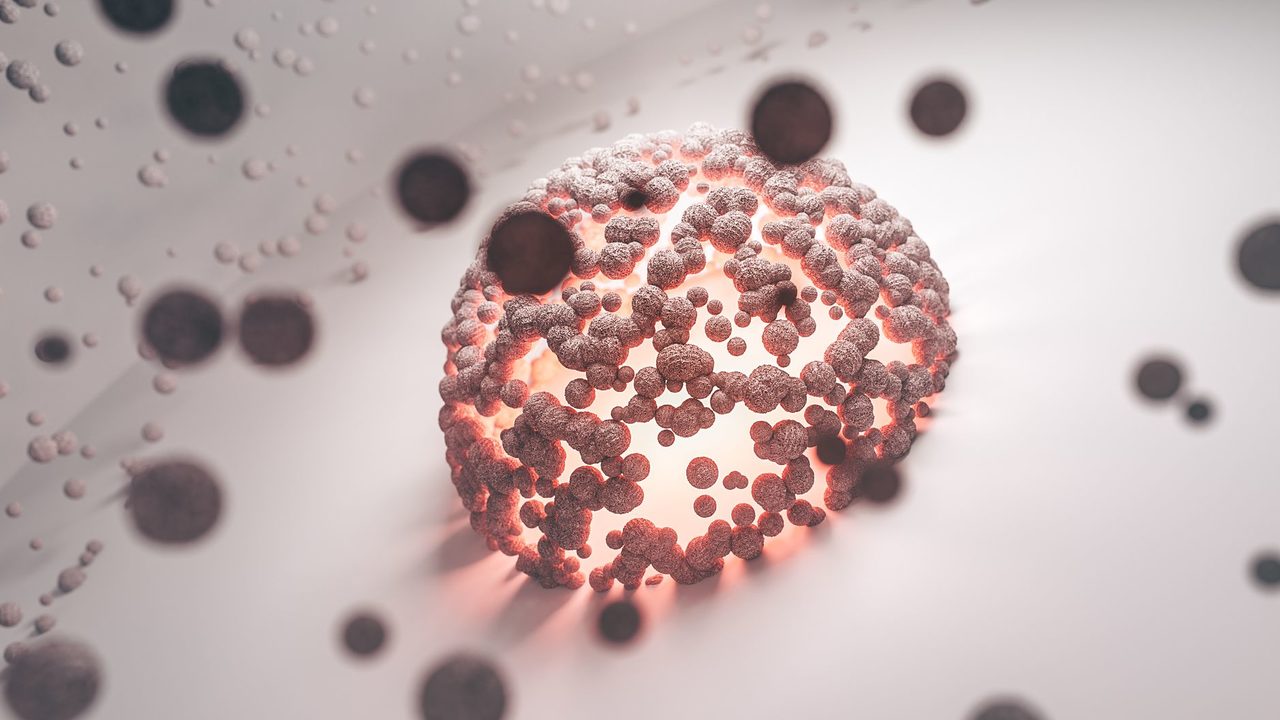
Scientists at the Icahn School of Medicine at Mount Sinai have identified a protein that appears to act as a brake on nerve repair. When they switched it off in injured mice, damaged nerve fibers regrew more effectively and the animals recovered more movement and sensation, according to a study published in the journal Nature and summarized by ScienceDaily.

The result is an early step, not a treatment. It does suggest a new direction for spinal cord and other nerve injuries that often leave people with lasting disabilities.

What the researchers found

Nerve cells send signals along long, thin fibers called axons, which link the brain, spinal cord, muscles and sensory organs. When axons are cut or damaged, restoring those connections is essential to recovering lost function. Yet neurons in adult mammals have a limited ability to regrow them, especially in the brain and spinal cord.

The Mount Sinai team found that a protein called the aryl hydrocarbon receptor, or AHR, limits that regrowth. When the researchers genetically removed AHR from neurons, or blocked its activity with drugs, injured nerve fibers regenerated better. The benefit showed up in mice with spinal cord injuries and in mice with injuries to peripheral nerves, the ones that connect the brain and spinal cord to the rest of the body.

How the brake works

Hongyan Zou, a professor of neurosurgery and neuroscience at Mount Sinai and the study's senior author, said an injured neuron has to cope with stress while also trying to regrow. She described AHR as a brake that pushes neurons toward managing stress rather than rebuilding connections.

According to the report, AHR switches on protective mechanisms that keep proteins properly folded and stop damaged or abnormal proteins from building up inside the cell. That defense helps neurons survive an injury, but it also limits the production of new proteins, including those needed to rebuild axons.

When AHR is inhibited, the cells shift priorities. They make more protein and turn on pathways that encourage fiber growth. The team also found that this regrowth depends on a second protein, HIF-1α, which is best known for helping cells adapt to low oxygen.

The finding is somewhat unexpected. AHR was first identified as a sensor for foreign chemicals such as environmental toxins and pollutants. The new work indicates it also helps decide whether an injured neuron stays in a protective state or moves toward repair.

Why it matters

Serious nerve and spinal cord injuries can cause permanent impairment, and understanding what keeps neurons from repairing themselves has long been a major challenge in neuroscience. A specific, identifiable brake gives researchers a concrete target.

One encouraging detail is that several drugs designed to inhibit AHR are already in clinical trials for other diseases. Those programs could offer a starting point for testing the idea in nerve injury, according to the report.

The limits are significant, though. The experiments were done in mice, and the researchers say much work remains before the approach can be tested safely in patients. They need to learn how well AHR inhibitors work across different kinds of nerve damage, find the best timing and dose, and determine how suppressing the protein affects other cell types involved in the injury response.

What happens next

The Mount Sinai team plans to study both drugs that block AHR and gene therapy approaches that lower its activity selectively in neurons. They want to find out whether releasing the brake can improve nerve fiber regrowth further and help recovery after spinal cord injuries, strokes and other neurological conditions.

Around Prague, based on reporting by ScienceDaily

Share: Telegram WhatsApp

More science news

Blackbirds Attack Fake Gopher Snakes but Almost Never Touch Rattlesnakes
Red-winged blackbirds are famously aggressive when guarding their nests, yet new research suggests they know when a predator is too risky to hit. In experiments in western Oregon, the birds struck mod
Exploding Mini Black Holes Smaller Than an Atom May Have Heated the Newborn Universe
Black holes that may have been smaller than an atom could have supplied the heat that filled the very young universe with hot plasma, according to new computer simulations. Universe Today reported on
A Hidden Planet Beyond Pluto? New Models Point to One 2 Earths Heavy
A new computer-modeling study suggests that an undiscovered planet roughly one to two times the mass of Earth could be orbiting far beyond Neptune, according to Universe Today. Researchers from Japan,
Was Britain's Iron Age King Verica Actually a Queen? An Archaeologist Thinks So
A ruler long assumed to be a man may have been a woman, and she may have helped set Rome's conquest of Britain in motion. Archaeologist Miles Russell of Bournemouth University in the United Kingdom ha
Ancient Australians Were Picky Eaters 45,000 Years Ago, Bones Reveal
Ancient Australians were not scraping by on whatever they could catch. A decade-long study of animal bones from two sites in Western Australia suggests people living there roughly 45,000 years ago ate
Wormhole Travel Explained: Why Exotic Matter and the Casimir Effect Matter
A wormhole wide enough to cross in about six days is a neat piece of mathematics, but the idea rests on a long chain of assumptions. The calculation by physicist Mauricio Cataldo of the University of

Related news

Red-winged blackbirds are famously aggressive when guarding their nests, yet new research suggests they know when a predator is too risky to hit. In experiments in western Oregon, the birds struck model gopher snakes more than 80 times but
Black holes that may have been smaller than an atom could have supplied the heat that filled the very young universe with hot plasma, according to new computer simulations. Universe Today reported on the study, which was published in Physic
A new computer-modeling study suggests that an undiscovered planet roughly one to two times the mass of Earth could be orbiting far beyond Neptune, according to Universe Today. Researchers from Japan, the United States and Australia say suc
A ruler long assumed to be a man may have been a woman, and she may have helped set Rome's conquest of Britain in motion. Archaeologist Miles Russell of Bournemouth University in the United Kingdom has proposed that Verica, an Iron Age lead
Ancient Australians were not scraping by on whatever they could catch. A decade-long study of animal bones from two sites in Western Australia suggests people living there roughly 45,000 years ago ate a wide range of animals by choice, not
A wormhole wide enough to cross in about six days is a neat piece of mathematics, but the idea rests on a long chain of assumptions. The calculation by physicist Mauricio Cataldo of the University of Bío-Bío in Chile describes what Einstein
Researchers at Purdue University have developed an insulating material for future moon bases that combines simulated lunar dust with fiber from cardboard waste, Space.com reported. The material is an aerogel, and the team says it could shie
A copper-colored seaweed that scientists had not seen in its mature form for nearly a century has turned up off the east coast of Australia, ScienceAlert reported. Researchers found it growing in a dense underwater forest near Lord Howe Isl
Yale researchers say they have found a possible shortcut to some of the anti-aging benefits of eating less. According to ScienceDaily, which published a summary from Yale School of Medicine, the work centers on an immune protein that fights
Astronomers have found a ring of galaxies about 1.3 billion light-years across, a structure that does not fit any known way the universe builds things. ScienceAlert reported that the find, named the Big Ring, could force cosmologists to ame
The joint European-Japanese BepiColombo spacecraft has entered orbit around Mercury, according to Universe Today. Mission leaders said it completed its orbit insertion on Nov. 21 at 18:27 UTC, making it the second mission to circle the inne
The rings and gaps in the dust disk around a young star called V1094 Scorpii do not all come from newborn planets, according to a new analysis of existing data from the ALMA telescope array in Chile. Universe Today reported that a Japanese