A Comet Split in Two, Vanished, and Left Behind 2 Great Meteor Storms
USD 22,31
Popular
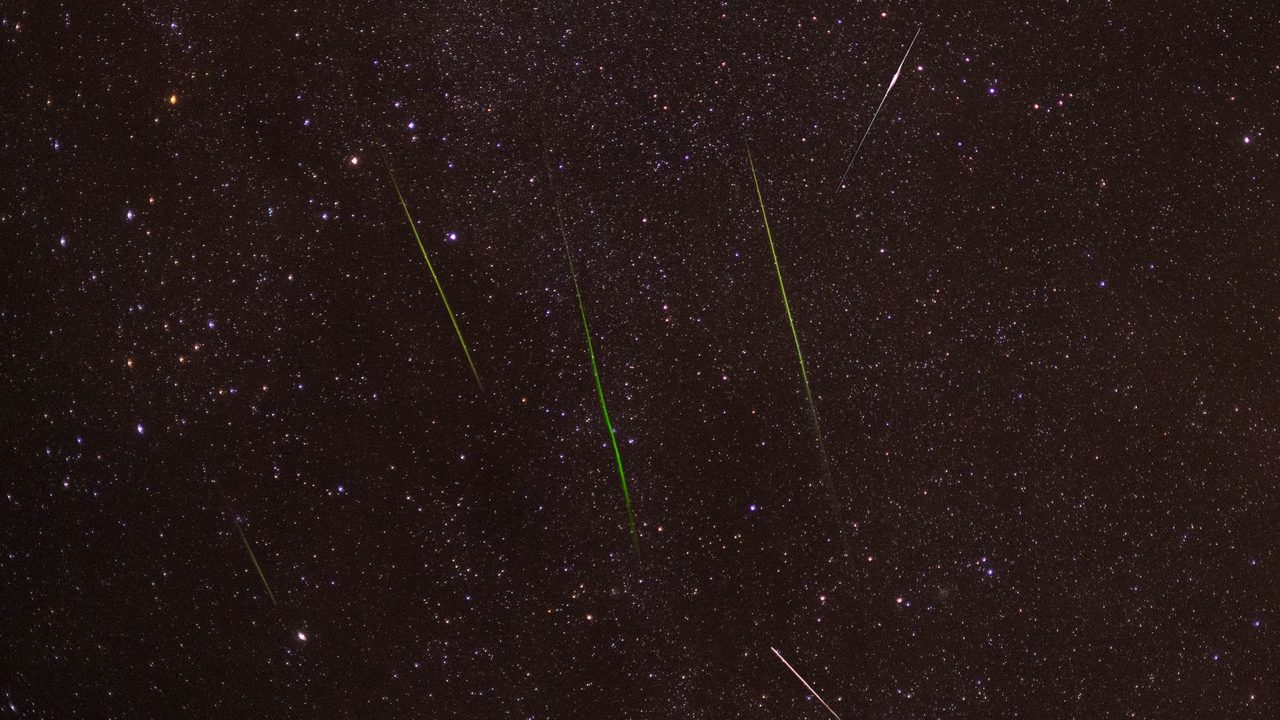
EarthSky reported that the Andromedid meteor shower, which peaks around late November, is the leftover debris of Biela's Comet, whose lost remains once produced two of the most spectacular meteor storms on record.
Today those meteors are too dim to see with the unaided eye, but the shower still returns every year. The connection to the comet is clear because the stream of debris follows the same orbit as Biela's Comet, according to EarthSky.
How a comet became a meteor shower: the key dates
- 1741: the Andromedid meteor shower is first reported.
- 1772: French astronomer Jacques Montaigne spots the comet. It is seen again in 1805 and 1826.
- 1826: Austrian astronomer Wilhelm von Biela calculates that the comet returns every 6.6 years.
- 1832: the comet returns as predicted and takes Biela's name.
- 1846: the comet looks pear-shaped, then splits in two about 10 days later. One half trails the other by about 170,000 miles (274,000 km).
- 1852: the two halves have drifted far apart, by almost a million miles (1.6 million km) according to the International Meteor Organization, and one finishes an orbit about 15 days before the other. Neither has been seen since.
- 1867: three astronomers, Edmond Weiss, Heinrich d'Arrest and Johann Galle, independently link the Andromedid shower to the comet.
- Nov. 27, 1872: the first great meteor storm.
- Nov. 27, 1885: the second great storm, 13 years later.
The 1872 storm: a prediction comes true
The three astronomers compared the comet's orbit with the path of the meteor stream and concluded that Earth might cross the stream again in 1872. They were right. Astronomers watching on the evening of Nov. 27, 1872, saw meteors pour from the constellation Andromeda in numbers so large that observers struggled to count them. Some estimates put the rate at several thousand meteors per hour.
The timing added to the excitement. Biela's Comet had been expected back in the inner solar system around then but had not been seen since 1852. Astronomers realized that Earth was instead passing through material from the missing comet.
The 1885 storm: astronomers were ready
When the Andromedids erupted again 13 years later, observers were prepared. In Scotland, J. Smieton began watching at 5:30 p.m. and counted about 25 meteors per minute. By 6 p.m. the rate had climbed to 100 per minute. After a short lull, activity picked up again.
At Guildown, England, J. Rand Capron estimated 40 to 50 meteors per minute at the busiest moments. He described the brightest as white, with long yellow or reddish-yellow trails, and said some looked three or four times brighter than Jupiter.
The display also made astronomy history. Austrian astronomer Ladislaus Weinek captured what is generally considered the first successful photograph of a meteor.
Why it matters: proof that comets leave trails
The 1872 storm was a major confirmation that comets can leave behind streams of debris that produce meteor showers, EarthSky reported. Astronomers had predicted that Earth would meet the stream, and the sky delivered.
For skywatchers today, the practical takeaway is more modest. The Andromedids, sometimes called the Bielids, still arrive each year with a radiant in the constellation Andromeda, the Chained Lady, but the meteors are too faint to notice without help. The storms of 1872 and 1885 remain the shower's high points, and the comet that caused them has never been seen again.
Read next
Leonid Meteors Peak Nov. 17, but a Storm Isn't Expected This Year
The First Photo of a Meteor Was Taken in a Storm of Thousands an Hour
Comet Brightened Thousands of Times as Gas Blasted Off Its Crust
Around Prague, based on reporting by EarthSky