Czech FAU site inside Precheza chemical plant sold for 122M crowns

USD 21,65
Popular
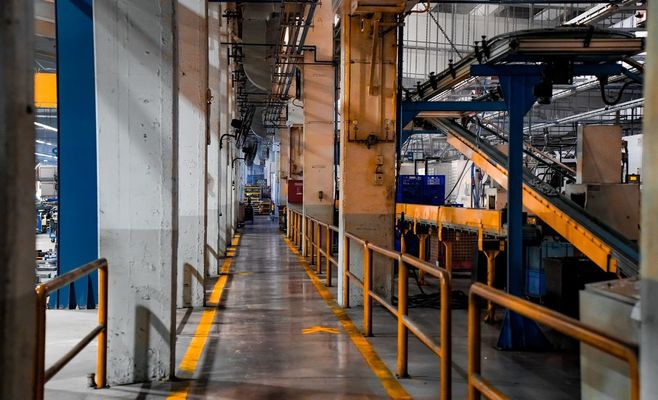
The site of the bankrupt company FAU in Přerov, surrounded by the workshops of the Precheza chemical plant owned by Andrej Babiš's Agrofert group, has a new owner. Eurobit Terminal, a company of Hrudim businessman Michal Trpkoš, bought it during the bankruptcy proceedings. According to the insolvency administrator, it paid 122 million crowns for the site and other assets.
So, ten years later, the story of the Opava-based company FAU has a sequel: its end was accompanied by Financial Administration inspections and suspicions that Babiš, then finance minister, used political power to settle business matters.
What the new owner plans
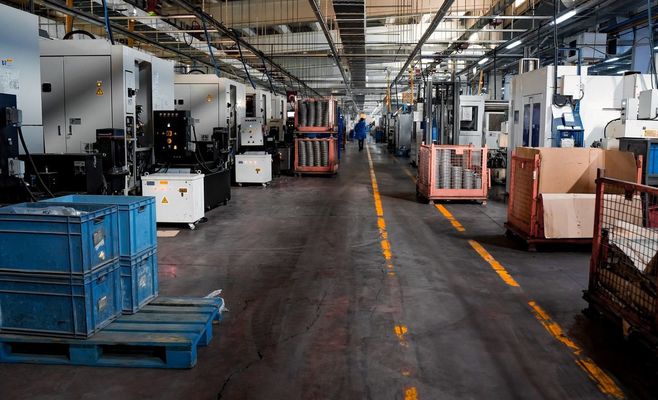
A reporter who visited the site saw building materials and scaffolding around the main building on the former FAU grounds. The new owner's plans are unknown. Trpkoš said by phone that he was in Slovakia, would not give an interview, and hung up. He also did not answer questions about how he sees living next to Precheza or whether he would sell the site to the chemical plant.
Like FAU, Trpkoš's company trades in fuel and owns a chain of gas stations. There is another parallel: the sister company Eurobit Group also once clashed with the Financial Administration. In 2014, when Babiš had only recently become finance minister, officials issued twenty security orders against it over VAT. The courts later overturned them, as with FAU.
The FAU and Eurobit cases
FAU was suspected of involvement in tax fraud in fuel trading. In September 2016, the authorities issued orders worth more than 540 million crowns. The administrative courts later overturned them, but the intervention contributed to the end of the firm's business. In June 2026, a criminal court acquitted the defendants because the alleged offense could not be proven. The ruling is not yet final, and the case awaits an appeals court.
In the Eurobit Group case, the Specialized Tax Office issued 20 security orders in 2014. According to available information, the courts overturned all of them. Financial Administration spokesman Patrik Madle said the court mainly faulted the agency for insufficient justification, after which the service adjusted its methodology. Eurobit Group appears in some of the fuel chains in which FAU also operated, but a direct link between the orders and the FAU case has not been proven.
A railway spur in the heart of a chemical plant
FAU's original owners bought the site together with the railway spur back in 1993. Babiš obtained a majority stake in neighboring Precheza through the company Precolor in 1996. The main advantage of the fenced-in site was the spur leading directly to a depot with four fuel tanks: gasoline and diesel arrived in large volumes by rail and were then distributed by tanker trucks.
Vojtěch Čabí, a co-owner and manager of FAU who joined the firm in 2008, testified in court that as turnover grew, so did the number of fuel trains. According to him, Babiš tried to buy the spur, but the parties could not agree. “We did not want to sell it, and then our problems began,” Čabí claimed.
One important supplier was Slovnaft of Bratislava, and it was deals with that company that stood at the center of the criminal case. According to the prosecution, 75 trains with fuel arrived at the Přerov depot from Slovakia in 2013, with the fuel passing through chains of companies. The prosecution alleged that some of them were “missing traders” that did not pay VAT, while other links deducted the tax.
The recording with Babiš
The decisive moment came on Sept. 23, 2016, when the financial and customs authorities issued security orders against FAU worth hundreds of millions of crowns. They took effect immediately and were a devastating blow to the firm. FAU soon went bankrupt.
The case received wide publicity after the anonymous profile Skupina Šuman published a secretly recorded conversation with Babiš in 2017. In the recording he spoke about the spur on the Precheza grounds and about FAU, and remarked that “our people” had gone after FAU, and that the firm was now bankrupt and its accounts frozen. In court, Babiš later claimed that he did not know FAU and linked the crackdown to the Financial Analytical Office.
According to court testimony, Eurobit Group was among the most important buyers of fuel arriving in Přerov through other traders from Bratislava. From the verdict, summarizing Čabí's testimony: the largest buyer was Eurobit. This alone does not prove the company's involvement in possible tax fraud: neither it nor its owner is among the defendants. According to a source familiar with the case, the 2014 events were not connected to the FAU case. The Financial Administration declined to comment on Eurobit's role, citing its duty to preserve tax secrecy.
Agrofert spokesman Pavel Heřmanský said Precheza never sought to acquire the site: it sold it in 1993 as unneeded, before Agrofert arrived, and showed no interest in the 1998 tender either. “We have no use for the site,” he said.
Around Prague, based on reporting by seznamzpravy.cz