Brent Crude Rises to $97.18 as Tanker Strikes and OPEC+ Meeting Raise Supply Fears
USD 22,31
Popular
Oil prices rose again on Friday after new attacks on tankers near the Strait of Hormuz and on a Saudi refinery kept supply worries alive, according to Anadolu Agency. Attention is now turning to a meeting of OPEC+ on Sunday, Nov. 29, where members are expected to discuss production policy for 2027.
Brent crude futures for January delivery were up 0.6% at $97.18 a barrel at 09.44 a.m. local time, Anadolu reported, after closing at $96.57 the day before. The price climb follows a recent slump, with renewed Middle East supply threats outweighing earlier concerns about a global surplus, OilPrice.com said.
The key numbers behind the move
- $97.18 a barrel: Brent for January delivery on Friday, up from $96.57 at the previous close, according to Anadolu.
- $86.16 a barrel: West Texas Intermediate, the U.S. benchmark, up 1.5% from $84.92, per Anadolu.
- $89.37 a barrel: Brent's settlement on Monday, the lowest in nearly three months, OilPrice.com reported, so Friday's level is well above it.
- 1.1 million barrels: the rise in U.S. commercial crude inventories to 418.9 million barrels in the week ended Nov. 20, a third consecutive weekly build, per OilPrice.com.
- 3.3mb/d: the upward revision the International Energy Agency made to its fourth-quarter supply estimate, according to Standard Chartered.
What happened in the Gulf
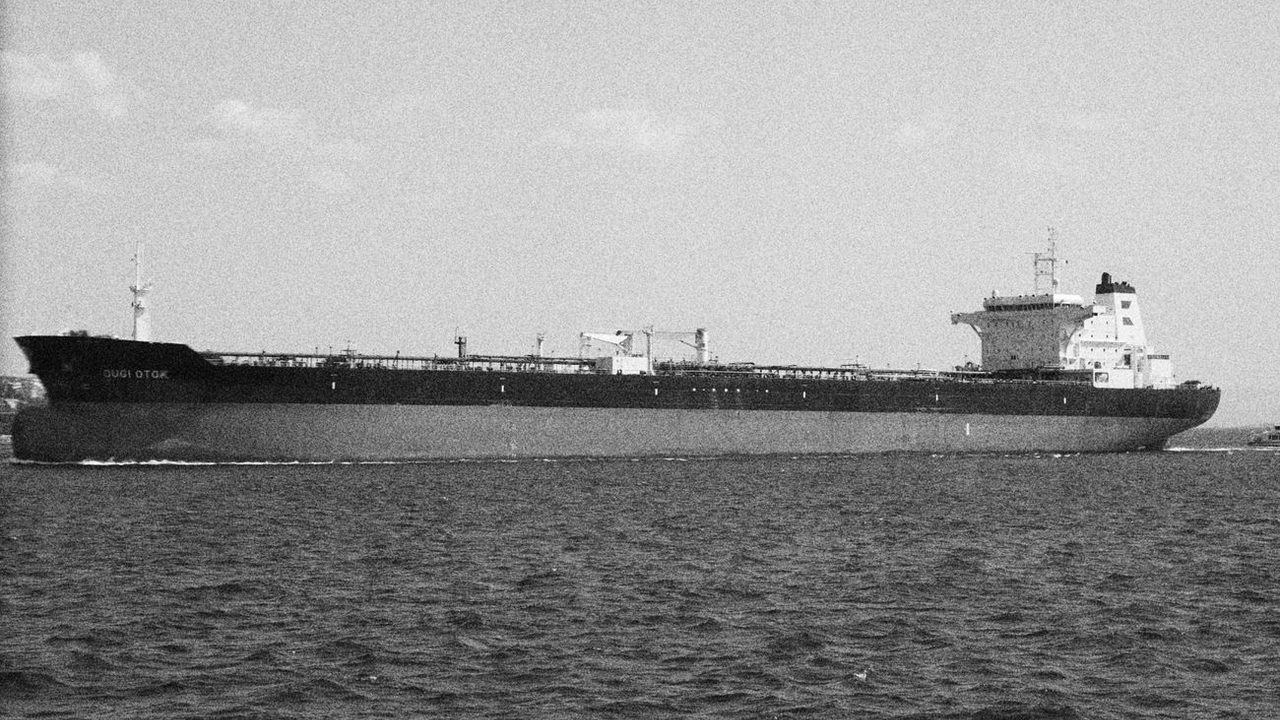
The UK Maritime Trade Operations said a tanker passing through the Strait of Hormuz was struck by an unidentified projectile off the coast of Oman. Separately, Iran's Islamic Revolutionary Guard Corps said two oil tankers caught fire after hitting sea mines in the northern part of the strait, alleging they had used an unauthorized shipping route.
In Saudi Arabia, the Energy Ministry said the Jazan refinery was hit by an aerial projectile that started a fire. One worker was killed and several were wounded, and some operations were temporarily suspended, the ministry said. The Saudi-led coalition supporting Yemen's internationally recognized government blamed the Iran-backed Houthi rebels.
The attack came a day after the Houthis said they had targeted the Ras Tanura refinery, Saudi Arabia's largest and a major export hub, according to Anadolu. OilPrice.com reported that satellite imagery from NASA and Planet Labs showed thick black smoke over that site. The Houthis also claimed multiple strikes on Riyadh's financial district, where Saudi civil defense reported 11 people injured in a strike on a tower housing the Public Investment Fund.
Risks are not limited to the Middle East. Anadolu said the Slavyansk refinery in Russia's Krasnodar region was heavily damaged in a drone attack, with an oil spill reported.
What analysts say
Standard Chartered said oil is unlikely to fall below its recent lows without clearer evidence of sustained inventory builds or a faster recovery in physical supply, according to OilPrice.com. The bank described the recent price correction as having already discounted much of the expected surplus.
It also pointed to easing in related markets this month: European jet fuel and Asian fuel oil prices fell 24% and 31%, and the European diesel crack declined 21%. The bank said absolute prices and transport costs remain elevated, and that a diplomatic breakthrough between Washington and Tehran could speed up the return of physical flows, while renewed disruption to export infrastructure or shipping routes could quickly challenge surplus expectations.
What it means for energy markets
For anyone who follows fuel costs, the sources point to a market pulled in two directions: attacks on tankers and refineries push prices up, while forecasts of a supply surplus and rising U.S. stockpiles pull them down. Standard Chartered said the muted price response suggests the market is increasingly discounting persistent hostilities unless they cause material additional supply losses.
What to watch on Sunday
OPEC+ meets on Sunday, three months after it completed a rollback of 1.65 million bpd of voluntary cuts with a final 188,000 bpd increase in September, according to OilPrice.com. The group then agreed to hold September targets through December. Standard Chartered said members must decide whether to add barrels, hold steady or cut again, and settle their 2027 production baselines without splitting the group.
The bank said Iraq's weight in the group grew after the United Arab Emirates left in May, though not necessarily its formal influence. Baghdad has a long record of producing above its quota and wants OPEC+ to recognize its higher capacity. Recent meetings barely moved prices, the bank said, but Sunday's could, especially if members agree to act together on supply again.
Moneycontrol, in a separate report, carried a headline saying the United States pushed Venezuela and Iraq to consider leaving OPEC. It added that OPEC has discretion to disregard unpaid membership fees and is not planning to expel Venezuela over the issue.
Earlier on Around Prague: Why Oil Prices Are Rising Again After Strikes on Saudi Refineries
Read next
Brent Crude Hits $112 as Gulf Attacks Raise Fears for Oil Supply
Brent Crude Hits $96.57 After Houthi Claim on Saudi Refinery: Key Numbers
Why Oil Prices Are Rising Again After Strikes on Saudi Refineries
Around Prague, based on reporting by Anadolu Ajansı, Moneycontrol.com, Crude Oil Prices Today | OilPrice.com