Czech minister Macinka rejects Finnish EU visa ban for Russians
USD 21,62
Popular
Czech Foreign Minister Petr Macinka (Motorists) has not backed the Finnish initiative to ban the issuing of tourist visas to Russians across the whole European Union. He made the decision against the advice of the leading experts at his own ministry, who recommended joining, according to internal correspondence of the department.
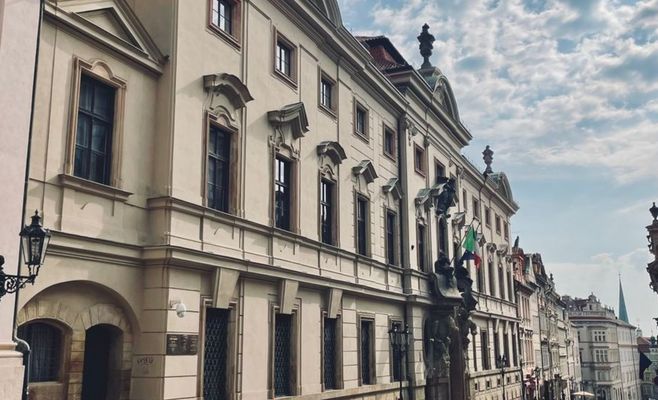
This week a letter from Finnish Foreign Minister Elina Valtonen arrived at the Czernin Palace. She asks for support for a proposal that would substantially restrict the entry of Russians into the entire EU. “Schools, hospitals and homes remain under attack. Russian sabotage and other hybrid operations threaten the European Union. The Kremlin judges our resolve by our actions. Where it meets hesitation, it keeps pushing,” Valtonen wrote, calling for visas not to be issued for non-essential travel, including tourism.
What Finland proposes
- stop issuing Schengen visas for non-essential travel, including tourism;
- ban visas for people in Vladimir Putin's circle and for those who support individuals and organizations on EU sanctions lists;
- refuse visas to Russian athletes with ties to the Russian government;
- ban Russian soldiers and former soldiers from entering the EU.
Helsinki has made the same appeal to other EU countries. By Wednesday, when the Finns asked for a reply, Czechia had not sent its support. The minister confirmed this to journalists.
Macinka: “Reality is reality”
Foreign Ministry spokesman Adam Csörgő first answered evasively: Czechia has long applied strict restrictions when issuing visas to Russians, and its practice matches the goal of the initiative. Macinka himself explained his position this way: “We already apply this, and given the very large number of EU countries that have not joined the Finnish initiative, it is clear there will be no Europe-wide solution. So we are staying with national regulation.” He added: “There are countries that do not want this, and they are the majority.”
He recalled that about a quarter of a year ago Czechia had already backed a similar Estonian initiative: the letter was signed by him together with Interior Minister Metnar on 3 June. But since then the situation in Europe has changed noticeably, according to the author of the report, so the appetite of hesitant countries to restrict Russians may now be higher.
Ministry experts were in favor
The ministry's specialists saw it differently. Jan Buben, director of the Western Europe department, wrote in an internal position paper: “Since we are among the strictest in this area, we have long applied most of the proposed measures, and we are very active in appealing to hesitant countries, it would be perfectly natural to support Finland and join the statement.” Čeněk Hajný, head of the office of the director-general of the European section, stressed that the content of the letter fully matches Czech positions, and Petr Svačina, deputy head of the Czech Permanent Representation to the EU, added that partners would understand if Czechia joined. The experts warned that without this, the country's foreign policy would look chaotic and the chances of applying diplomatic pressure on the hesitant would fall.
Sabotage and drones
Recent events also argue for tightening. In September the German government, in an unprecedented statement, accused Russia of a hybrid attack: on 4 August an airport employee in Leipzig found a drone carrying explosives next to a Ukrainian Antonov aircraft, and a faulty detonator most likely alone prevented a tragedy. Diplomats in Brussels are discussing the risk that such actions will become more frequent and that Europeans could die.
The EU now issues almost half a million tourist visas to Russians every year, most of them by Italy and Spain. Western intelligence services warn that Russians inside the EU can be used for hybrid operations, and that monitoring their movement between countries is practically impossible. Journalists recently exposed an operation by the sanctioned propaganda center Rybar: two of its staff came to Czechia from Germany, Czech police expelled them from the country, but they returned to Berlin without any problem.
Michal Koudelka, director of the Czech counterintelligence service BIS, warned last week at a security conference in the Chamber of Deputies of a growing threat: “The worsening trend is obvious. First there were the so-called Telegram agents who set warehouses on fire. Then came incendiary parcels in warehouses and aircraft, and now, as recently in Leipzig, we face drones with explosives aimed at specific aircraft. They are no longer controlled by primitive Telegram agents; these must be trained attackers with clear goals and plans.”
Source: seznamzpravy.cz