Ukraine's Ex-Commander Says Russia Can No Longer Advance, Disputes Critics
USD 21,79
Popular
Ukraine's former commander-in-chief, Gen. Oleksandr Syrskyi, says his country has stabilized the front line and "broken Russia's ability to advance" by inflicting heavy losses on Russian troops. He made the claim in a BBC interview, his first since he was removed from his post this summer.
Syrskyi also defended his record against critics who said he was too traditional to lead a technology-driven army. Soldiers who served under him and his former political rival, ex-Defense Minister Mykhailo Fedorov, have made sharply different accounts of his leadership.
What Syrskyi says about the front line
According to the BBC, Syrskyi said Russia's overall losses in the war are six times higher than Ukraine's. Counting only the dead, he said, the gap is as much as 11 times. He said this difference, together with technological advances and a strategy of striking weak points in Russian lines while containing advances elsewhere, explains the current stalemate.
He said Russia seized 61 square kilometers in the first six months of 2026, which he called a sign that the front has stabilized. The Institute for the Study of War, a U.S. research group, reported a similar trend. The Independent reported that the group assessed a net Russian loss of 80.81 square kilometers in September 2026, with 175.54 gained and 256.35 lost.
Neither Russia nor Ukraine officially publishes its war dead, and the BBC noted that Ukraine's claim of record Russian losses in September cannot be verified. Outside estimates vary. UK intelligence chiefs put Russian deaths at around half a million, and the BBC said GCHQ gave a figure of nearly 500,000 in May. The Center for Strategic and International Studies estimates Ukrainian deaths at between 125,000 and 150,000 as of June 2026, and Russian deaths at between 400,000 and 450,000. The Independent also reported that the Russian outlet Mediazona has identified by name 258,989 Russian military personnel killed.
How Syrskyi answers his critics
Syrskyi was appointed commander-in-chief in 2024, after earning praise for the defense of Kyiv in 2022 and the autumn 2022 counteroffensive east of Kharkiv. The BBC reported that President Volodymyr Zelensky dismissed him this summer after a public clash between Syrskyi and Fedorov. Zelensky first fired Fedorov, but mass street protests then led him to remove Syrskyi as well. Maj. Gen. Mykhailo Drapatyi, 43, replaced him.
Syrskyi rejected the idea that he could not manage a modern war. He told the BBC that drone use reached unprecedented levels under his command, including strikes more than 2,000 km (1,200 miles) behind enemy lines. He said Ukraine was the first country to set up a separate Unmanned Systems Forces branch, and that drones now account for 80% of Russia's losses.
On his dispute with Fedorov, Syrskyi said the minister "didn't take into consideration the interests of the army" when buying weapons and supplies. He said Fedorov's emphasis on drones created an imbalance, leaving out unmanned ground vehicles, pickup trucks and motorbikes. Even for drones, he said, the army received only half of what it needed.
What his critics and former soldiers say
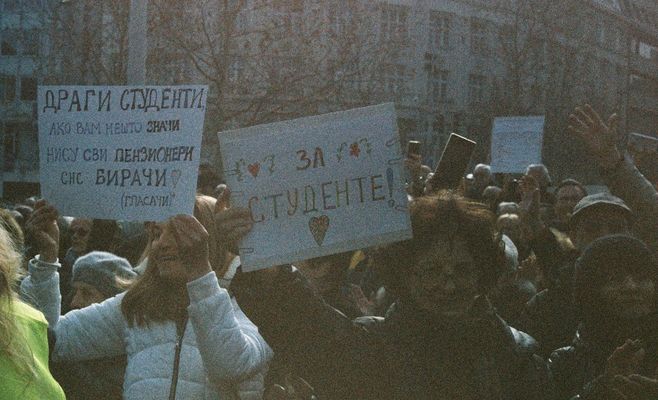
Fedorov, a popular minister known for digital and technology initiatives, had said the army under Syrskyi blocked his efforts to adapt to the changing war, according to the BBC. The Independent reported that Fedorov, who took office in January, is often credited with improving the army and that demonstrators demanded his reinstatement.
Soldiers who previously spoke to the BBC said they were ordered to hold positions at all costs and were told to withdraw only when Russian forces had almost surrounded them. The BBC also noted that Ukrainian troops carried out chaotic withdrawals from Avdiivka, Vuhledar and the area around Pokrovsk under his command.
Syrskyi did not deny that such situations happen. He said Ukraine faces a much stronger army: in 2025, he said, Russia had an 18-to-one advantage in jets and bombs and two-and-a-half times more artillery and shells. He added that Russia can draw on four million militarily trained men to mobilize.
On the Kursk incursion that began in August 2024 and ended in a retreat the following spring, which some soldiers described as catastrophic, he said the operation was a necessity. He argued that Russian forces were then pushing on all main directions with up to six times more troops than Ukraine had. In his view, Kursk forced Moscow to redirect forces and gave stretched Ukrainian brigades time to recover.
What's at stake
The interview shows a disagreement over how Ukraine should fight the next phase of the war and what the past two years of fighting achieved. Syrskyi said he expects the conflict to become even more technological, with more robots, automated systems and artificial intelligence, and with both sides racing to build active defense systems for armored vehicles. He said people will still play the decisive role on the battlefield.
He also urged European partners who doubt that Russia has territorial ambitions beyond Ukraine to start preparing now and drop all illusions that war will not reach them. Because casualty figures are unofficial and estimates differ widely, his claims about the balance of losses cannot be independently confirmed.
Sources: BBC News, The Independent