Czech TV and radio fee poll: symbol of a political feud

USD 21,81
Popular
The reform of public media in Czechia has turned into a symbol of the confrontation between the government and the opposition. That is the finding of a poll by the NMS agency: three quarters of voters of the governing parties support cutting the budget of Czech Television and Czech Radio, while 71% of opposition voters reject it.
According to NMS political analyst Tereza Friedrichová, the issue “escalated practically overnight”, and government voters have rallied around their parties. The government and the opposition disagree on every point: both on the new funding and on how the amendment was handled in the Chamber of Deputies last Friday and Saturday.
Who backs the budget cut
The budgets of Czech Television and Czech Radio are to fall by 15%. This means that from the state budget they would receive roughly 1.4 billion crowns a year less than they currently collect in fees. The cut is supported by 83% of SPD voters. It is opposed by 80% of STAN voters and 69% of Spolu voters.
At the same time, as Friedrichová noted, almost two thirds of ANO voters watch Czech Television at least once a week, and among Motoristů voters it is more than a third. In a May poll, even ANO supporters wanted public media to keep news, educational and children’s programmes. Support for the cuts, in her words, “runs up against the fact that people do not want to lose the services”.
Does the government want to influence broadcasting
Asked whether the reform is aimed at increasing the cabinet’s influence over broadcasting, opinion split: 44% rather or fully agree, 42% rather or fully disagree. Since May, the position of government supporters has shifted noticeably. Among Motoristů voters, the share of those certain that the goal is not to increase influence rose from 32% to 40%, and among ANO voters from 36% to 47%.
Friedrichová explains it this way: in May the reform was an abstract proposal, but after the night-time session and the opposition’s sharp criticism it became a symbol of the dispute, and government supporters began to defend it more strongly.
How important the issue is to voters
For ANO voters the reform is a promise kept. According to the analyst, Andrej Babiš won the election with an economic message and presents the reform as savings for households. The prime minister linked the fees to the defeat in the Senate elections, where the movement won not a single seat: “Our voters are unhappy that we did not manage to abolish the television and radio fees.”
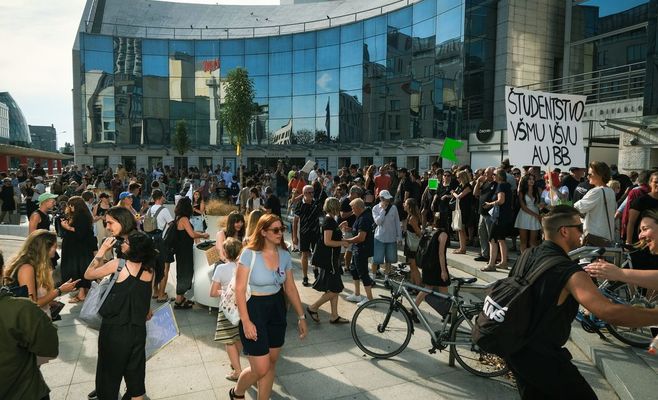
The governing majority then put the abolition of the fees on the Chamber of Deputies’ agenda and voted to send it further into the legislative process, which provoked a stormy reaction and protests from the opposition. But even for government supporters the issue is important rather than paramount: only a fifth of ANO voters call it essential (another 36% consider it important but not a priority), as do 15% of SPD voters and 2% of Motoristů voters.
For opposition voters the issue matters even less: only 15% of Spolu supporters consider it essential. They see the reform as an attack on media independence and democracy.
Around Prague, based on reporting by novinky.cz