Prague Castle Prepares a Veto: Pavel Could Block Babiš's Budget Plans as Early as This Week
USD 21,75
Popular
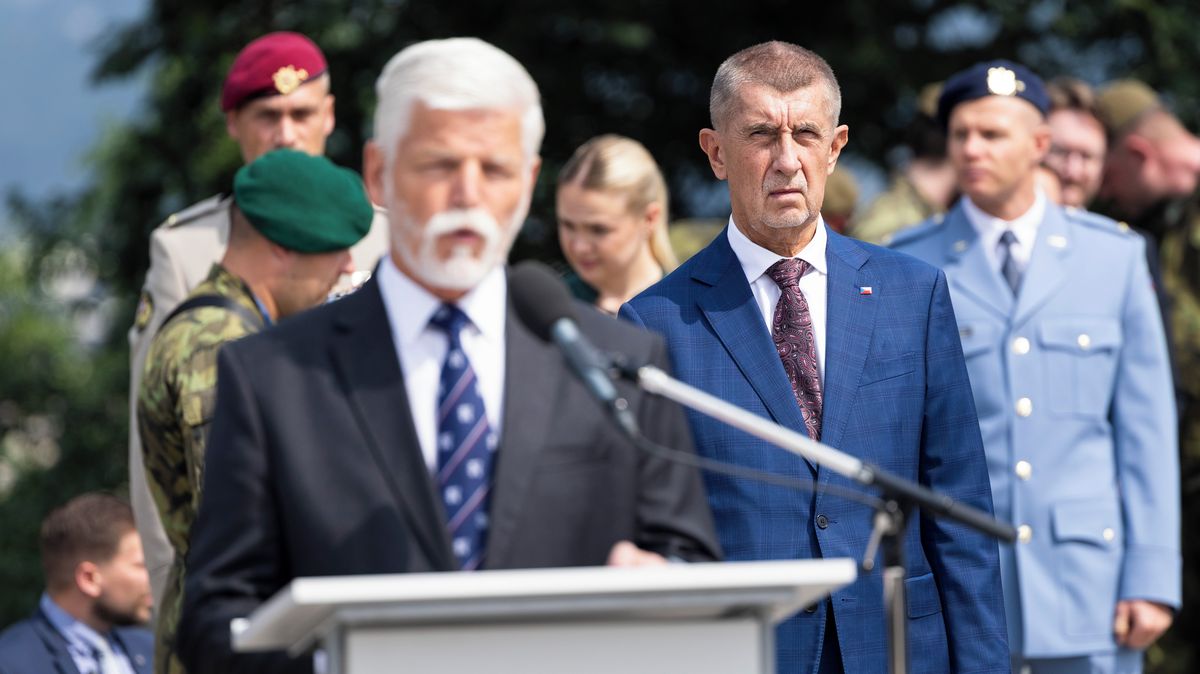
Czech President Petr Pavel is considering whether to refuse to sign — or outright veto — the government's amendment to the budgetary laws pushed through by Andrej Babiš's cabinet. A decision from Prague Castle is expected within days, amid a sharp escalation in tensions between the president and the prime minister.
ANO leader Babiš, who until recently at least publicly maintained correct relations with the president, has sharply criticised the head of state several times over the past week. He called Pavel a "manipulated puppet" in the hands of his advisers and accused him of caring more about his own re-election than about the country.
The president responded that he has no intention of causing harm out of spite, but he is not defenceless against the government either. "The president also has tools that can noticeably complicate life for the government," Pavel said, adding that one such tool is the presidential veto. He noted that if a law turns out to be genuinely bad, or makes the situation worse rather than better, he will likely have to veto it. He made these remarks during a debate at the Colours of Ostrava festival.
The first real test of that veto power could come with the fiscal responsibility law. The amendment would allow the government to exceed approved state budget spending by up to 10% in the event of a deteriorating security situation, and to exclude certain expenditures from the budget deficit calculation.
Critics argue this would open the door to a sharp rise in public debt — the opposition intends to take the matter to the Constitutional Court. Over concerns about the deficit, senators already sent the amendment back for revision, but the ruling coalition overrode the veto with 101 votes. That is roughly the number of votes the government would likely need again should the president veto the bill. If the cabinet does not want to wait until autumn, it will have to convene an extraordinary parliamentary session during the deputies' recess.
Besides the fiscal rules themselves, the state budget could become another flashpoint — Pavel has already twice considered vetoing it. The first time was over the 2025 budget prepared by then-Finance Minister Zbyněk Stanjura (ODS), where the president objected to underestimated spending and overestimated revenue. His advisers recommended a veto at the time, but the president ultimately relented, saying responsibility for the budget lies with the government. He acted similarly when approving this year's budget, though he criticised Finance Minister Alena Schillerová (ANO) for low defence spending.
In the 2027 budget, the cabinet has pledged to increase defence spending, and part of the coalition promises the deficit will not grow, despite critics' doubts. If that promise is broken, the president is expected to change his stance.
The government, for its part, also has leverage of its own over budgetary matters — it is the one that sets the budget for Prague Castle and the president's office. Voices within the coalition have already suggested that if the president refuses to cooperate, he should lose part of his funding. Moreover, tucked into the fiscal rule changes is a little-noticed amendment giving the finance ministry greater power to adjust the budgets of several institutions, including the president's office.
The threat of a presidential veto also looms over other laws the coalition has pledged to pass. This year, that could include the government's plan to scrap TV and radio licence fees and fund public broadcasters directly from the state budget. Also uncertain is the amendment to the building law, which the president has repeatedly criticised, citing concerns from municipalities and regional governors that the reform is not adequately prepared.
A veto would not block these laws outright, but it would at least delay the government's fulfilment of its election promises. "I really don't see how things can continue like this — the president and the prime minister simply have to talk to each other," Pavel said, noting that such a veto would significantly restrict the government's ability to carry out its own programme and pass new laws. The prime minister, for his part, has repeatedly portrayed the president as a mouthpiece for the opposition, while Pavel describes such statements as part of Babiš's personal campaign against him.
The appointment of ambassadors could become another battlefield. The president has made clear that if Babiš wants his own people in diplomatic posts, he will have to negotiate with the Castle. The Czech Republic has around a hundred such positions, roughly a quarter of which turn over each year. "No ambassador can go abroad or come home without the president's signature. The government is naturally interested in having some ambassadors appointed according to its own priorities," Pavel noted.
The president's consent was last needed this spring, when the cabinet postponed sending out an entire group of ambassadors appointed under the previous Fiala government. Authorities originally planned a complete overhaul, but after negotiations with the president, only four candidates were changed — most notably, former minister from Babiš's earlier government Jakub Kulhánek is set to become ambassador to the United States, while Babiš wants to appoint his current security adviser, Hynek Kmoníček, as permanent representative to the UN in New York.
Ambassadors are traditionally appointed for four-year terms, so next year the government will be able to replace diplomats appointed in 2023 — including the ambassadors to Australia, Canada, Israel, Ireland and Hungary, as well as Spain, which has been floated as a possible posting for current Health Minister Adam Vojtěch. Even here, however, the government is not willing to give the president the upper hand — SPD deputy Libor Vondráček has proposed stripping the president of the power to appoint and recall heads of permanent missions to international organisations. The Castle sees no need for such a change.
Disagreements also extend to the country's foreign representation more broadly. Although the government sets foreign policy, the Constitution reserves certain powers for the president — he concludes and ratifies international treaties and represents the state internationally, including at NATO summits and UN sessions.
Pavel has repeatedly called for resuming regular meetings of senior constitutional officials on foreign policy matters, but Babiš has refused, citing a lack of time, his own foreign policy strategy, and a reluctance to become part of the presidential campaign. In response, Pavel said he would be forced to "conduct foreign policy on his own," further straining relations.
Still, both politicians publicly say they want to ease the tension. "I can't imagine this continuing — the president and the prime minister simply have to talk to each other," Pavel stressed. "I understand society doesn't like conflict, and neither do I. If negotiations are needed, we'll negotiate. If not, we won't," the prime minister said after Monday's cabinet meeting.
Source: seznamzpravy.cz