98-Million-Year-Old Amber Mantis Wore Leaf-Like Disguise on Its Abdomen
USD 22,10
Popular
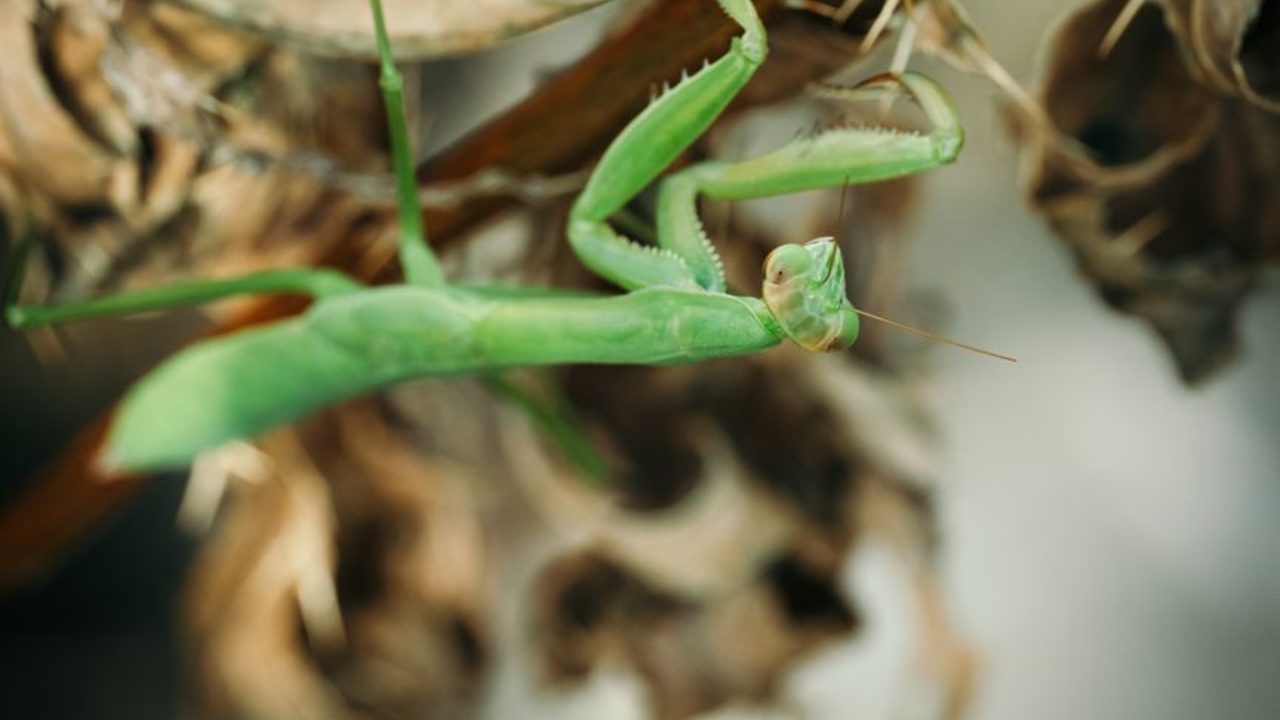
A praying mantis preserved in amber for 98 million years is the earliest clear fossil evidence of mantises imitating plant leaves, according to ScienceAlert. Scientists say the insect carried leaf-like structures on its abdomen that resemble an extinct plant, a disguise style that has not been reported before.
The insect lived in a tropical rainforest in what is now Myanmar, in the mid-Cretaceous, when sticky tree resin trapped it. Researchers have named it Folimantis hyalinala in a paper published in the journal New Phytologist.
What did the researchers find?
The mantis's abdomen closely resembles Selaginella grimaldii, an extinct plant also known from amber found in the same region. The genus name Folimantis means 'leaf mantis,' while the species name refers to the glass-like transparency of its wings.
Paleoentomologist Hongru Yang and colleagues wrote that insect-plant mimicry has evolved over at least 200 million years, yet reliable fossil examples are scarce. They also noted that no modern mantis species imitates Selaginella.
Why would a mantis look like a plant?
Modern mantises offer clues. Many have spent so many generations on particular plants that they resemble them. ScienceAlert pointed to the orchid mantis, Hymenopus coronatus, a Southeast Asian species that looks like a flower, right down to its pink and cream colors and the way it sways like a bloom in the wind.
Flowering plants had not yet taken over when F. hyalinala lived, so its body evolved to resemble leaves instead. According to the report, mantises that looked slightly more like their host plant had a better chance of sneaking up on prey and avoiding their own predators. The plants may have benefited too, because the mantises could protect them from plant-eating insects. Over many generations, evolutionary theory says, that advantage would produce an increasingly close match.
What is unusual about this fossil?
Many modern plant-mimicking mantises show leaf-like features on several parts of the body. F. hyalinala has them on the abdomen only. ScienceAlert said this could hint that plant mimicry began at the rear of the insect, with changes to other body parts such as the wings and thorax appearing later. That is a suggestion rather than a settled conclusion.
Other insects were also developing plant-like features around this time, the report said, including some cockroaches, grasshoppers and stick insects.
Why it matters
The fossil shows that plant mimicry has been part of the mantis toolkit for at least 98 million years. It also gives researchers a rare, well-preserved example of how closely the lives of plants and insects were tied as both groups spread across land.
The finding sits within a long mantis history. According to ScienceAlert, mantises share an ancestor with cockroaches that lived around 274 million years ago, and recent taxonomic research suggests the first distinct mantises appeared around 185 million years ago, in the Jurassic. That long span, the report said, may help explain why mantises are so widespread, diverse and well adapted to their surroundings.
How was the specimen obtained?
ScienceAlert noted that mining and trade of Kachin amber is linked to ongoing sociopolitical turmoil in Myanmar, and that there are concerns the trade helps fund violence. Myanmar banned fossil exports in 2015, but specimens inside amber fall into a legal gray area. In 2021, the Society of Vertebrate Paleontology called for a halt to publishing amber fossils from Myanmar sources obtained after January 2021, following a military coup.
The mantis was acquired by a collector, Fangyuan Xia, in 2015. Later that year, Xia donated it to the insect evolution lab at Capital Normal University in Beijing.
Read next
A Cave Fossil in South Africa Suggests Homo Erectus Is 200,000 Years Older
Gold Bear Figurine Found in 2,200-Year-Old Kazakhstan Burial Mound
Armored Amphibian Fossils From China Suggest a Creature That Never Left the Sea
Around Prague, based on reporting by ScienceAlert