Earth Has a New Minimoon, a 6-Foot Rock That Will Orbit Into 2027
USD 22,10
Popular
Earth has a temporary new companion. Astronomers have confirmed that a tiny asteroid called 2026 QQ8 was pulled into orbit around the planet in April, and it is expected to stay until January 2027, Live Science reported.
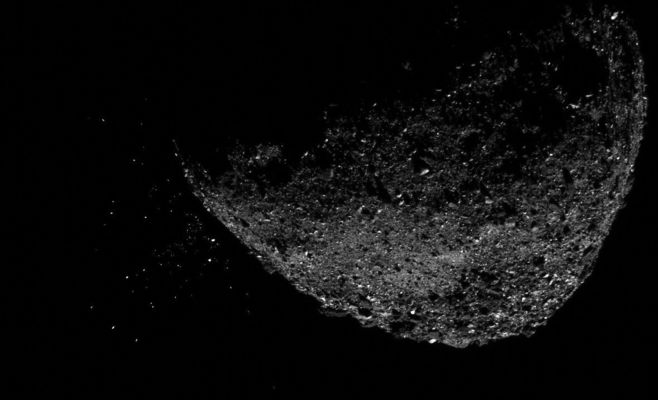
The object is about 6 feet (2 meters) across, according to the International Astronomical Union (IAU). That makes it a so-called minimoon: a space rock held by Earth's gravity for a limited time before it drifts away again.
How 2026 QQ8 was found and confirmed
Hungarian researcher Krisztián Sárneczky first observed the object in August. The IAU's Minor Planet Center, the body that logs and confirms new objects in the solar system, officially reported it on Oct. 29.
According to Live Science, the rock is currently orbiting at about 1.5 times the average distance of the moon. Its stay is expected to run through the holiday season before it breaks free of Earth's influence in January 2027.
What kind of asteroid it is
2026 QQ8 takes 359 days to circle the sun, almost a full Earth year, and it comes close to our planet about every 10 years. It is classified as an Aten asteroid. Members of this group occasionally cross into Earth's orbit and have orbits that, on average, sit closer to the sun than ours does.
Live Science noted that large Aten asteroids are considered the most dangerous type, because they can be lost in the sun's glare before heading toward Earth. This one, however, is far too small to pose a threat.
Why it matters: Earth probably always has a minimoon
The discovery is a reminder that Earth regularly collects small passengers. The first minimoon on record was 1991 VG, which measured around 30 feet (10 meters) in diameter when it was detected in November 1991. Astronomers now think Earth captures minimoons fairly often and is likely to have at least one at any given time, according to Live Science.
Most of these objects stay for less than a year. A handful may remain in Earth's gravitational pull for decades.
For people on the ground, the practical message is reassuring. If an object this small came too close to Earth, it would probably burn up in the atmosphere, and researchers do not think there is much chance of that happening with 2026 QQ8. The IAU's size estimate and the object's distance from Earth are the key reasons why.
What comes next for minimoon hunting
New telescopes are expected to help astronomers spot more minimoons as they enter and leave Earth's orbit. Live Science pointed to the Vera C. Rubin Observatory in Chile, which began operating earlier this year. It scans the whole Southern Hemisphere sky every few days.
The observatory has already spotted what may be a new dwarf planet in the outer solar system, as well as a new satellite galaxy of the Milky Way, Live Science reported. Over its planned 10-year mission, Rubin is expected to detect millions of previously unknown moving objects in space, which should make temporary visitors like 2026 QQ8 easier to catch.
For now, 2026 QQ8 is expected to remain in orbit through the end of the year, and then leave in January 2027.
Read next
Tiny Asteroid Becomes Earth's Mini-Moon, Circling Farther Out Than the Moon
Three Capsules Now Orbit Earth Growing Cancer Drug Crystals in Space
Moon Rocks That Fell to Earth May Reveal What Apollo Missed
Around Prague, based on reporting by Live Science